Supreme Court presents new weighted caseload study as lawmakers press for apples‑to‑apples comparisons
Get AI-powered insights, summaries, and transcripts
SubscribeSummary
Chief Justice John Wiemer presented a new weighted caseload (work point) study showing high participation (100% appellate, 96% district) and case weights that reflect time‑intensive matters. Legislators raised concerns about geographic disparities in filings and judge distribution and asked for district‑level analyses.
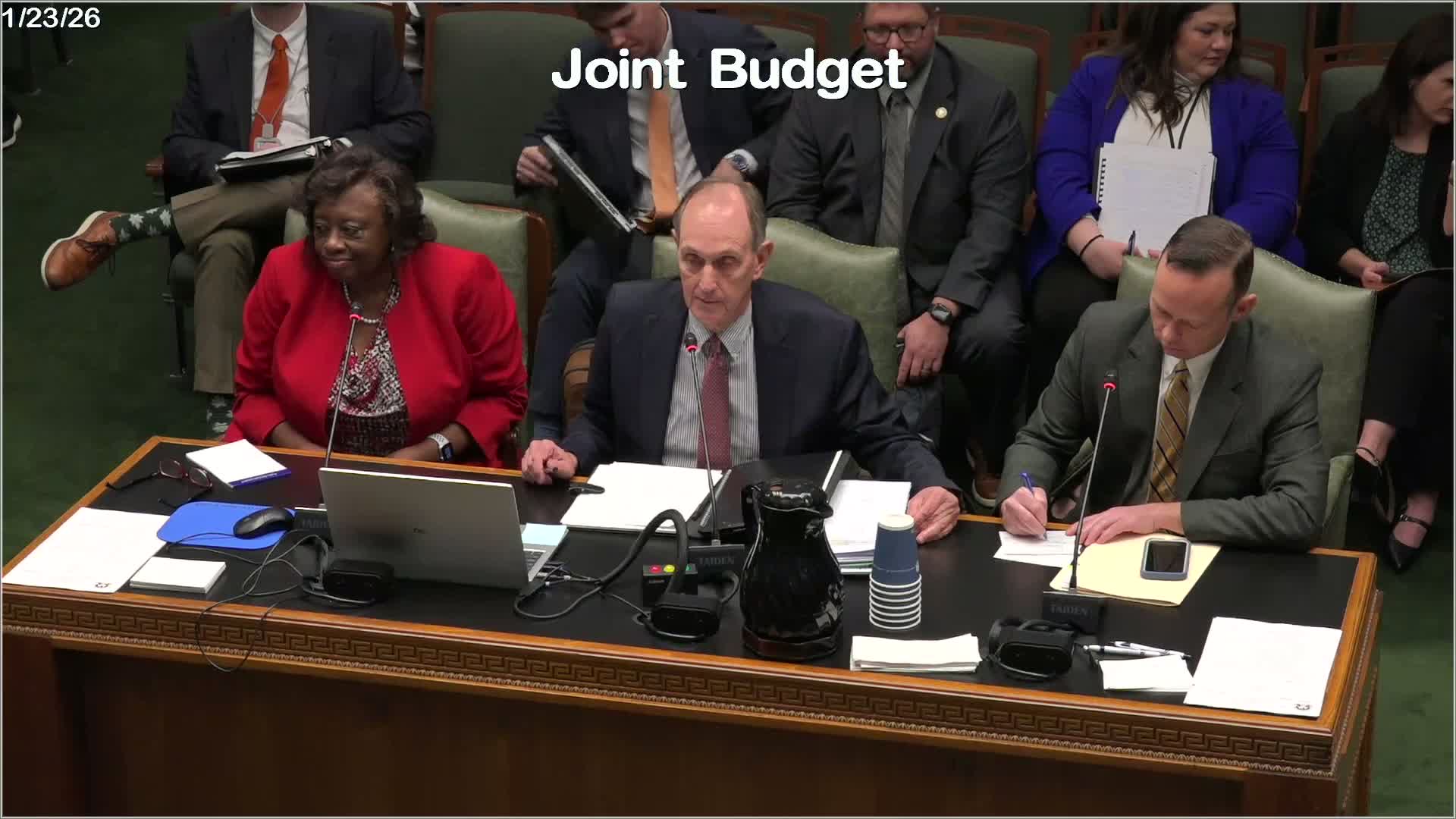
The Joint Budget Committee received a presentation and extensive discussion on a new weighted caseload study for Louisiana’s judiciary on Feb. 3.
Chief Justice John Wiemer described the study’s methodology — a time‑log approach developed with the National Center for State Courts in which judges tracked working time (district judges for five weeks, appellate judges for eight weeks) that was aggregated into case weights. Wiemer said participation exceeded the National Center’s validity thresholds: “There was 100% participation by the Court of Appeal judges,” and “for the district court judges, a 96% participation,” giving the study a high validity standard.
Wiemer explained the study is intended to provide objective information about judge workload and to update an older formula that no longer reflected specialty courts and modern case complexity. He emphasized that the judiciary did not create judgeships; the legislature authorizes new positions.
The presentation prompted sustained questions from legislators about how to use the data. Several members said filings and raw counts can be misleading when comparing parishes because local court structures differ (municipal, juvenile, traffic, and specialty courts can shift workload). Representative Bakalal and others pressed the point with concrete local examples, arguing certain parishes appear to carry a disproportionate caseload compared with judge counts; Chief Justice Weimer urged a careful, collaborative review before reallocating judicial resources.
Representative Bacalal summarized a common concern bluntly: some parishes with fewer judges were handling substantially more filings than larger parishes. Chief Justice Wiemer responded with a cautionary note about the complexity of filings and the need to go behind raw numbers: he said the study was designed to account for complexity and specialty‑court time, not to single out individual judges. In a memorable line, Wiemer told the committee: “Don’t take my judge from me. Don’t take his or her judge. Take the judge from the man behind the tree.”
Judicial administrator Brian Wiggins added that commissioners and magistrates participated in the study and that the judiciary is auditing clerk‑submitted filing data for 2025 to produce validated district‑level results. Several legislators requested access to more granular data and recommended the Judicial Council run the weighted caseload formula for districts that receive significant state general fund support.
No formal committee action was taken on the study itself; members agreed it should inform future requests for judgeships and that lawmakers and the judiciary should collaborate on district‑level analyses and potential resource reallocation.
What’s next: committee leadership said it will send a letter to the Judicial Council requesting application of the weighted caseload formula to districts spending more than $1 million in SGF on trial courts and further district‑level analysis ahead of the legislative session.