
Committee hears competing views on bill to require cities to allow step housing
Get AI-powered insights, summaries, and transcripts
Subscribe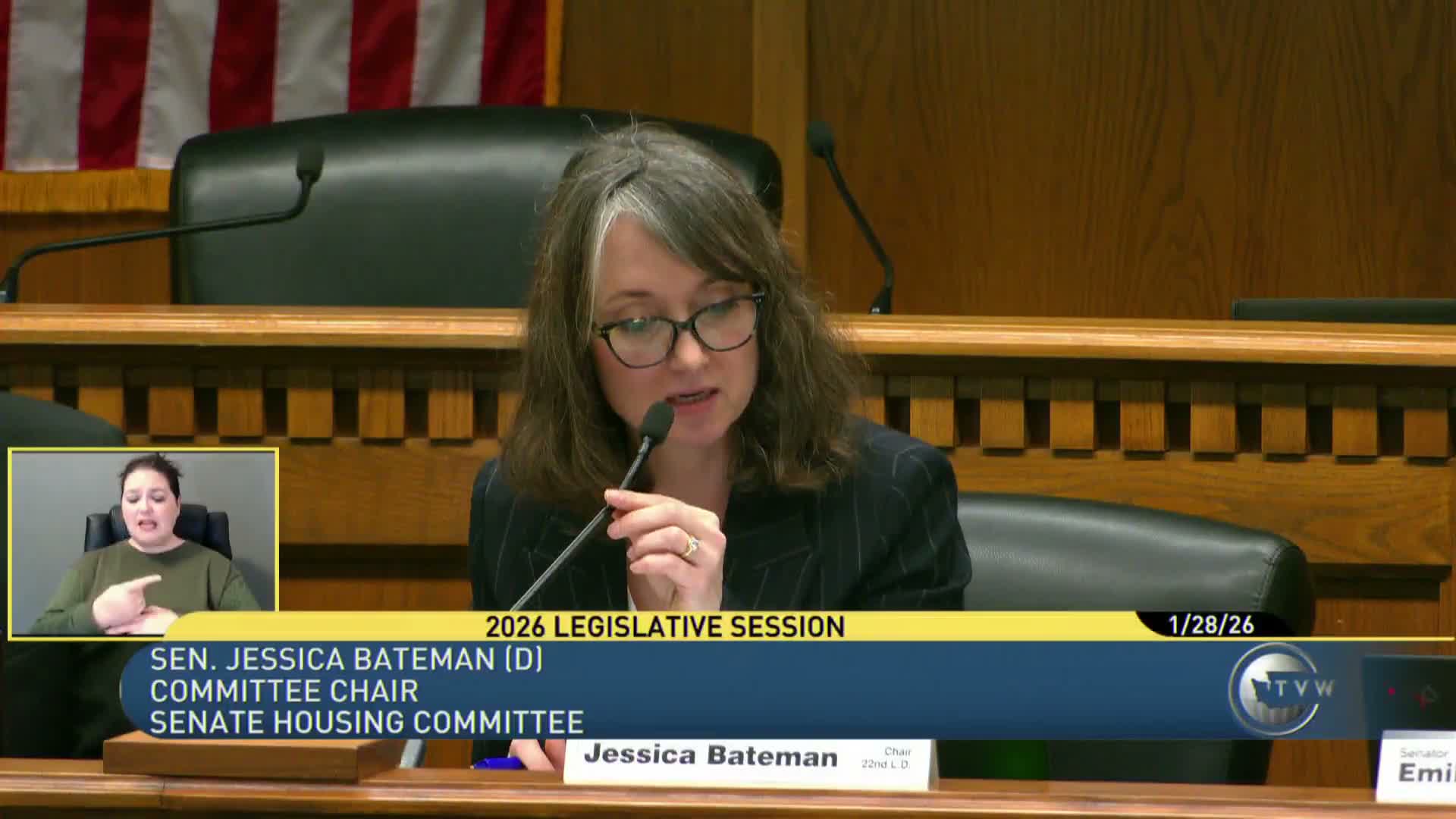
Summary
SB 6,069 would limit local barriers to siting permanent supportive housing, transitional housing and indoor emergency shelters (collectively "step housing"); proponents argued it removes discretionary hurdles that delay projects, while cities urged preservation of operational agreements and local review when the city is contributing land or funds.
Staff briefed SB 6,069 as a bill that would prohibit cities from banning step housing (permanent supportive housing, transitional housing, indoor emergency housing and shelters) in most zones except industrial areas and would require local standards to be no more restrictive than those applied to other residential development. The briefing said local jurisdictions could still impose objective development standards for public health and safety but could not use discretionary processes to effectively block siting.
Prime sponsor Senator Alvarado framed the bill as an urgent step to remove local barriers that delay shelter and housing for people experiencing homelessness: "If we want folks to go away, we need to give shelter and housing, and we have to do it now," she said.
Supporters included Plymouth Housing, Disability Rights Washington, county and nonprofit leaders, and the Attorney General’s office, which argued that inconsistent local requirements were delaying access and in rare cases creating discriminatory outcomes. Sarah Dickmeyer of Plymouth Housing described patterns of discretionary requirements that delay projects and push people to the margins. The Attorney General’s office witness said people experiencing homelessness are disproportionately members of protected classes and inconsistent siting standards can amount to unlawful discrimination.
Local governments and associations expressed concerns. Karl Schreier of the Association of Washington Cities and city officials from Spokane Valley and Redmond said step housing types are distinct and sometimes require operational agreements, service infrastructure and tailored siting to function safely and sustainably. Redmond said it needed operating agreements when it provided city land and funding to a provider in order to secure community support for a project.
Committee members debated whether the bill should be more narrowly targeted at jurisdictions that create barriers and whether administrative review could be used to streamline approvals while preserving operational commitments. Several speakers urged more tailored language to avoid undermining jurisdictions that already partner effectively with providers.
The committee closed public testimony; no floor action on SB 6,069 was taken at this meeting.