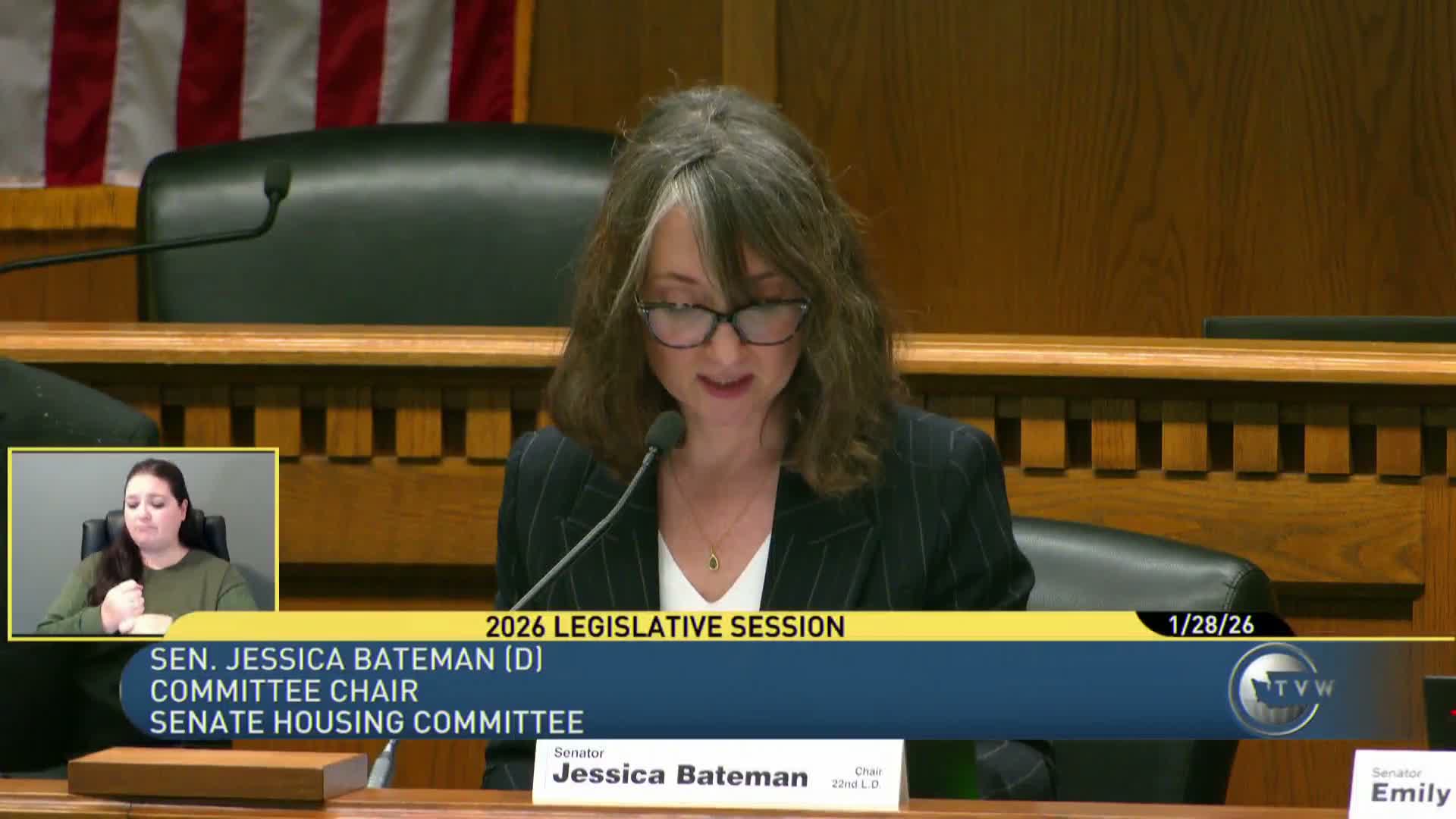
Senate panel hears testimony on tax and REIT exemptions for social housing agencies
Loading...
Summary
Lawmakers heard from advocates and sponsor Vandana Slatter on SB 6,201, which would extend property‑tax and real‑estate excise tax (REIT) exemptions to public development authorities that operate permanently affordable social housing if at least 50% of units serve households at or below 80% AMI and a 15‑year covenant is recorded.
Senator Vandana Slatter, the bill’s prime sponsor, told the Senate Housing Committee that Senate Bill 6,201 would extend the same property‑tax and real‑estate excise tax exemptions now available to public housing authorities to newly created “social housing” public development authorities that pledge long‑term affordability.
"These are emerging, innovative public development authorities ... designed to develop, own, lease, and maintain mixed income housing that's permanently affordable," Slatter said, describing the tool as a way to help teachers, firefighters and service workers afford homes in high‑cost communities. She said the proposal requires at least 50% of dwelling units to serve households at or below 80% of area median income and a recorded covenant restricting uses to social housing for at least 15 years.
Melissa Van Gorkom, staff to the committee, briefed lawmakers that the bill would exempt real and personal property used by a social housing agency when those occupancy and financing conditions are met, add a REIT exemption for qualifying transfers, and allow partial exemptions for temporarily unoccupied properties undergoing renovation if they will meet requirements within three years. Van Gorkom summarized a partial fiscal note estimating Department of Revenue implementation costs of about $117,000 in the 2025–27 biennium and roughly $24,000 in 2027–29, and cautioned the bill’s impact on REIT collections was indeterminate.
Proponents said the exemptions would translate into tangible tenant savings and development flexibility. Jeff Paul of House Our Neighbors testified the change "could immediately bring down costs for each social housing project — potentially around 10% per project on average," and James Mateman of Seattle Social Housing said the exemption could lower operating expenses in Seattle by about $1,800 to $2,400 per unit annually, reducing rents by roughly $150 to $200 per month in his estimate.
Committee members sought clarification about how the occupancy threshold would be enforced at time of acquisition. Senator Gildan asked how the 50% occupancy test applies to unoccupied purchases; staff said transfers require covenants and certifications and that Department of Revenue enforcement mechanisms would address noncompliance.
The committee suspended the public hearing on SB 6,201 twice for gubernatorial appointment business and other hearings before closing the public comment portion; no formal vote on SB 6,201 occurred in this session.
Next steps: SB 6,201 remains in the committee’s hearing record for further consideration and potential amendment as it moves through the legislative process.