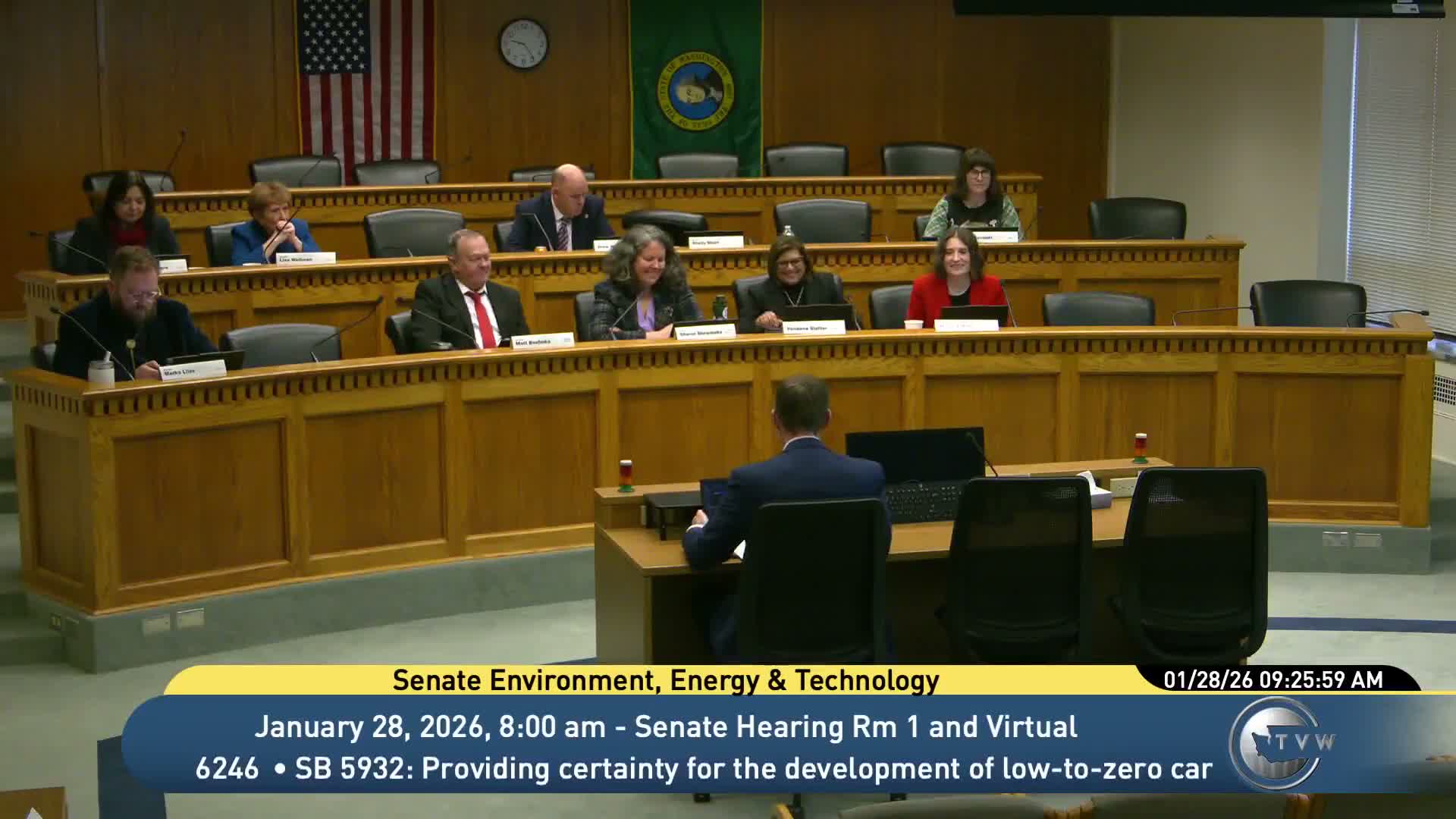
Committee hears support for ending legacy coal exemptions in SB 6172
Loading...
Summary
SB 6172 would remove longstanding preferential statutory treatment for a coal‑fired power plant after its scheduled retirement dates by limiting cap‑and‑invest and sales/use tax exemptions and expiring prohibitions on additional emission performance standards; conservation groups supported ending exemptions while utilities and trade groups asked for flexibility on allowance budgets.
Committee staff briefed SB 6172 as legislation to remove legacy exemptions that were adopted to manage the orderly retirement and remediation of a large coal‑fired plant. The bill would limit the Climate Commitment Act exemption that has applied to the coal facility to emissions occurring before 01/01/2026, expire restrictions on state agencies imposing additional performance standards after 12/31/2025, and repeal a state sales and use tax exemption for coal used at that facility.
Sponsor Senator Lias framed the bill as a policy to close a chapter on coal generation that has been phased out in Washington and to remove special treatment that is no longer necessary. "We should be proud that Washington state has phased out coal energy in our state," the sponsor told the committee and described environmental harms tied to the plant’s past operations.
Conservation groups including Washington Conservation Action and Climate Solutions testified in strong support, urging the state to affirm the transition away from coal and to resist federal actions that would extend the plant’s operation. WISPA and business groups registered neutral or asked for technical adjustments; industry representatives cautioned that if the plant were to be pulled into the cap and trade program again, additional allowances or adjustments to the allowance budget may be needed to avoid market disruption.
Witnesses raised specific implementation concerns: if operations changed and the plant reentered compliance coverage, Ecology might need flexibility to adjust allowance budgets; utilities worried about allowance scarcity driving allowance prices and downstream fuel costs. The committee closed the public hearing and the record shows significant support from environmental organizations alongside neutral/technical concerns from industry and utilities.