
Committee advances substitute for electronic monitoring notice bill after amendment fights
Get AI-powered insights, summaries, and transcripts
Subscribe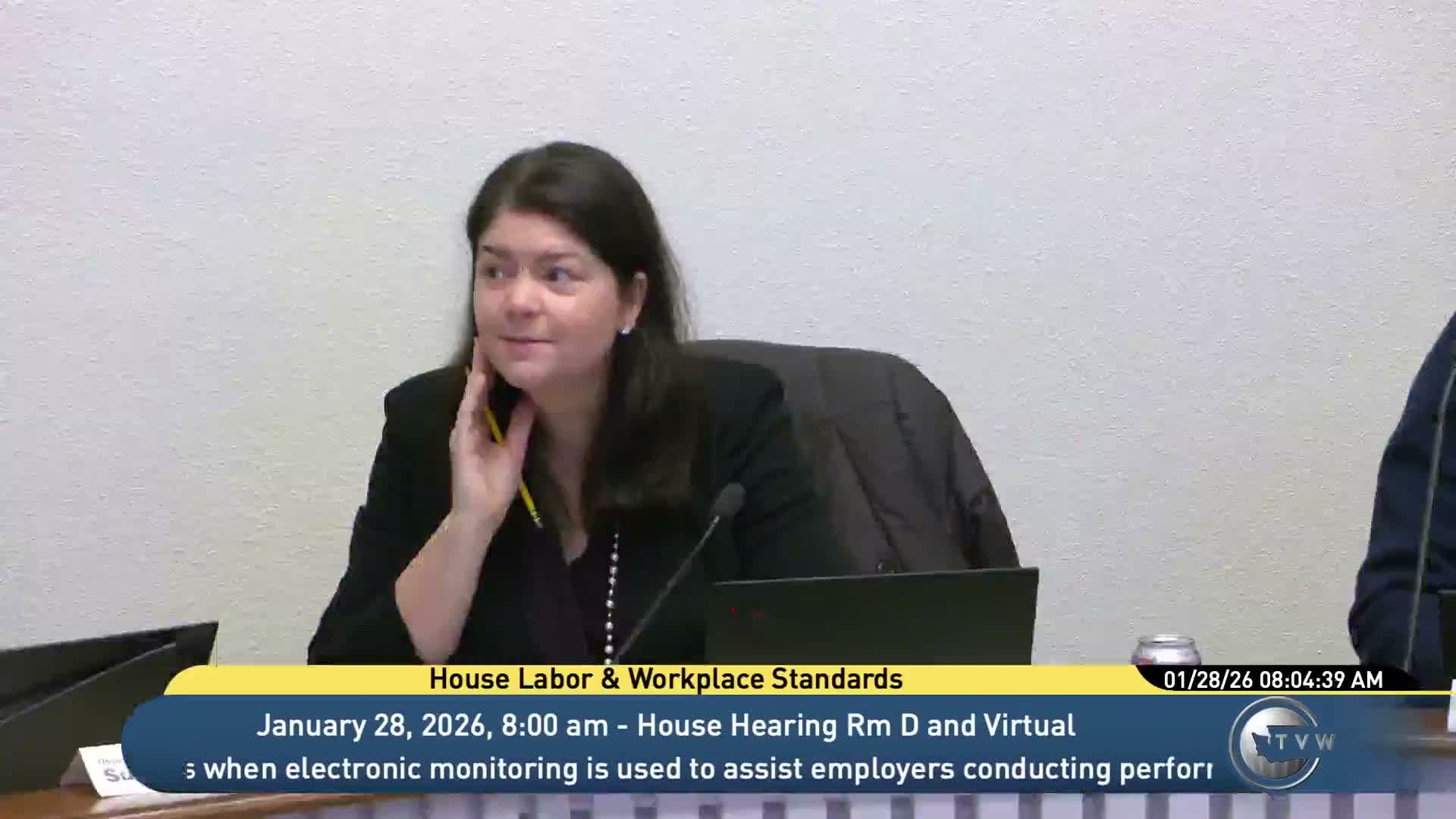
Summary
The committee reported the proposed substitute to HB 21 44 out with a due-pass recommendation (6–3) after adopting clarifying amendments; debate centered on notice timing, exemptions for public safety, and private right of action.
The Labor and Workplace Standards Committee on Jan. 28 moved a proposed substitute to House Bill 21 44 out of committee with a due-pass recommendation after considering several amendments.
The proposed substitute requires employers to give written notice to employees when electronic monitoring is used primarily for performance evaluations. The substitute shortens notice windows (from 60 to 30 days), delays the bill’s effective date to July 1, 2028, requires notice to exclusive bargaining representatives, lists covered technologies (computer monitoring, keystroke tracking, cameras, audio recording, AI systems, GPS tracking), mandates three-year record retention, and exempts law enforcement and firefighting agencies from the notice requirement.
Committee amendments were vigorously debated. Ranking Member Schmidt moved an amendment (Tang 194) to remove the word “imminent” from the safety exception; that amendment failed after committee discussion about unintended consequences of removing the imminence requirement. Vice Chair Scott successfully moved an amendment (Tang 189) clarifying the bill does not supersede statutes governing intercepting and recording private communications. An amendment (Tang 190) to remove the bill’s private right of action failed; proponents said removing private enforcement would gut the bill’s enforcement.
Proponents said the bill does not ban monitoring, only requires notice so employees can make informed choices. Opponents warned of regulatory overreach into private workplaces and questioned whether statute should micromanage employer-employee arrangements.
On the roll-call vote for the proposed substitute as amended the committee recorded six ayes and three nays; staff announced the substitute was reported out of committee with a due-pass recommendation.
The bill will proceed through the Legislature’s scheduling and referral process.