Lifetime Citizen Portal Access — AI Briefings, Alerts & Unlimited Follows
Senate committee hears bill to clarify in‑home dependency use after fentanyl‑linked child fatalities
Loading...
Summary
Senate Bill 5,979 would direct DCYF to develop guidelines and trainings for use of in‑home dependency proceedings, emphasize high‑potency synthetic opioids when assessing risk, and require clearer petition statements when removal is not sought. Supporters say it fills guidance gaps; DCYF cautions it duplicates existing processes.
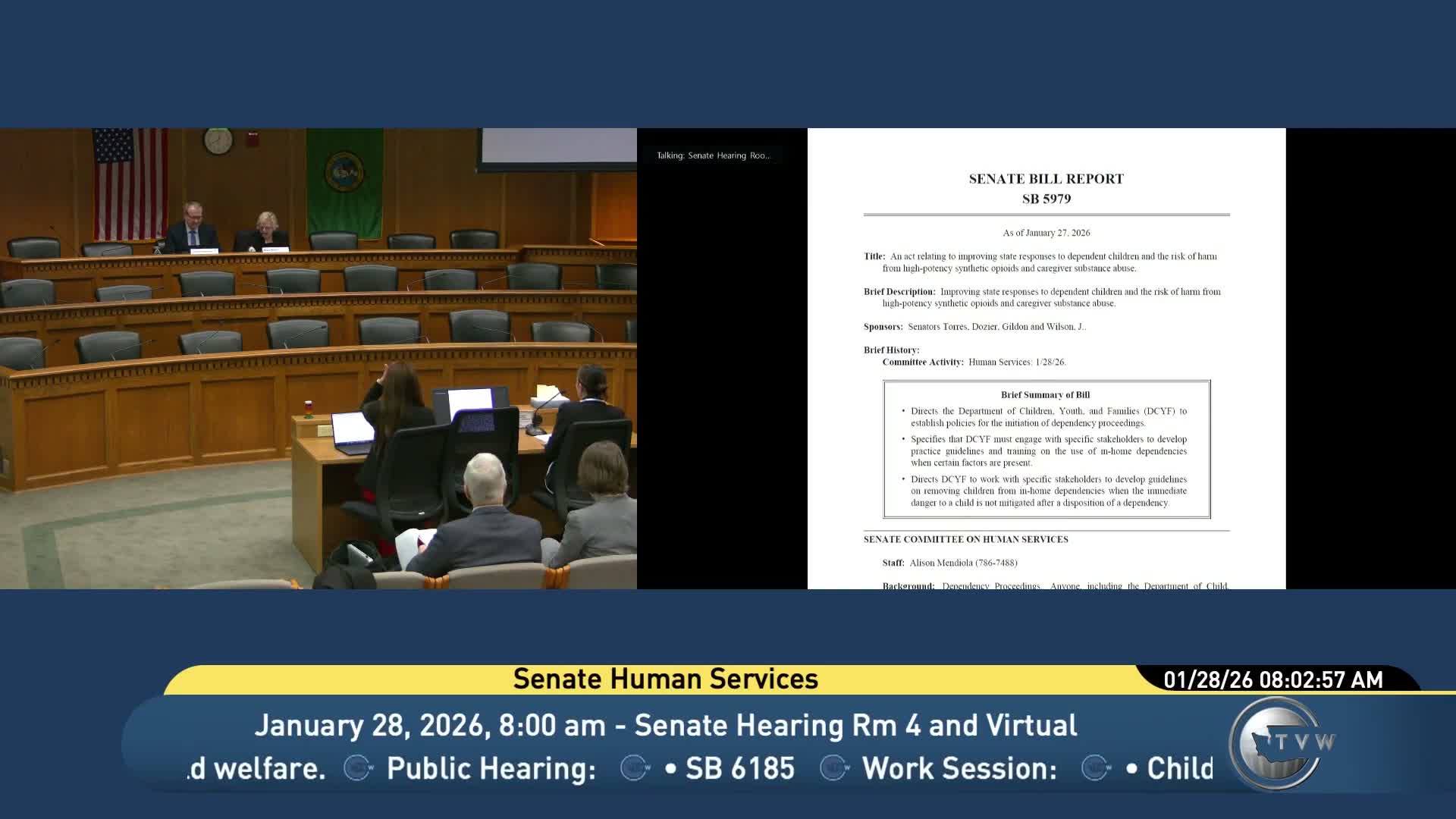
Senate Bill 5,979, sponsored by Sen. Nikki Torres, was the first bill the Senate Human Services Committee briefed on the morning of Wednesday, Jan. 28, as lawmakers focused on child welfare responses to a rise in fentanyl‑related critical incidents. The bill would require the Department of Children, Youth and Families (DCYF) to work with judicial officers, court administrators and child‑welfare professionals to develop practice guidelines and trainings for the use of in‑home dependency proceedings and to weigh the presence of high‑potency synthetic opioids when initiating dependency proceedings.
Allison Mendiola, committee staff, told the panel the bill directs petitioners to include a “clear and specific statement” explaining the harm that will occur if court‑ordered services are not provided when a petitioner is not seeking removal. The bill also sets parameters for DCYF on initiation of dependency proceedings (including a five‑year lookback for referrals) and contains an emergency clause. The fiscal note cited an estimated cost of $170,000 for the current biennium, with $41,000 expected to be reimbursed by the federal government.
Sen. Nikki Torres framed the measure as an effort “to protect children from preventable harm,” citing Office of the Family and Children’s Ombuds (Ofco) findings and local child‑fatality reviews that identified fentanyl in a high share of infant and toddler overdose deaths. “This legislation takes those lessons seriously,” she said, arguing that clearer practice guidance will help courts and DCYF use in‑home dependency as one option to provide ongoing services without immediate removal.
Supporters at the committee hearing, including Kim Justice of Partners for Our Children and Sarah Yankee, a Clark County resident, said the bill fills a practice gap and could provide consistent training and clearer standards so protective supervision can be provided before tragedy occurs. “Decisions around dependency filings are consequential and complex, and they warrant clear practice guidance, thoughtful review and appropriate training,” Justice said.
DCYF and some defense advocates urged caution. Julie Watts, speaking for DCYF, said the agency already uses safe‑child consults and multidisciplinary review processes to determine whether an in‑home dependency is appropriate and warned the bill could duplicate existing work. “To file for what is commonly known as an in‑home dependency, the department must show by a preponderance of the evidence that the child has no parent capable of adequately caring for the child,” Watts said, adding that in‑home dependencies are used only in certain circumstances. Amelia Watson of the Office of Public Defense raised constitutional and access‑to‑counsel concerns related to shifting thresholds and procedures earlier in cases.
Legal Counsel for Youth and Children (LCYC) urged the committee to amend the bill to preserve private petitioners’ ability to file dependency petitions when the department does not act, calling a proposed requirement for paid petitioners to justify petitions a potential access‑to‑justice barrier.
The committee took public testimony but did not vote. Chair Wilson closed the morning session with procedural reminders about amendment deadlines and said the committee would reconvene later the same day for additional bill hearings and testimony.
The bill briefing and public testimony set out the core tradeoffs lawmakers will weigh: supporters argue clearer guidance and training will standardize protective supervision and reduce delayed responses to high‑risk households; opponents warn the statute should not preempt existing clinical and legal safeguards or create unintended due‑process or funding risks without accompanying service investments.