
Committee considers kratom regulation: age limits, labeling and bans on concentrated synthetics
Get AI-powered insights, summaries, and transcripts
Sign Up Free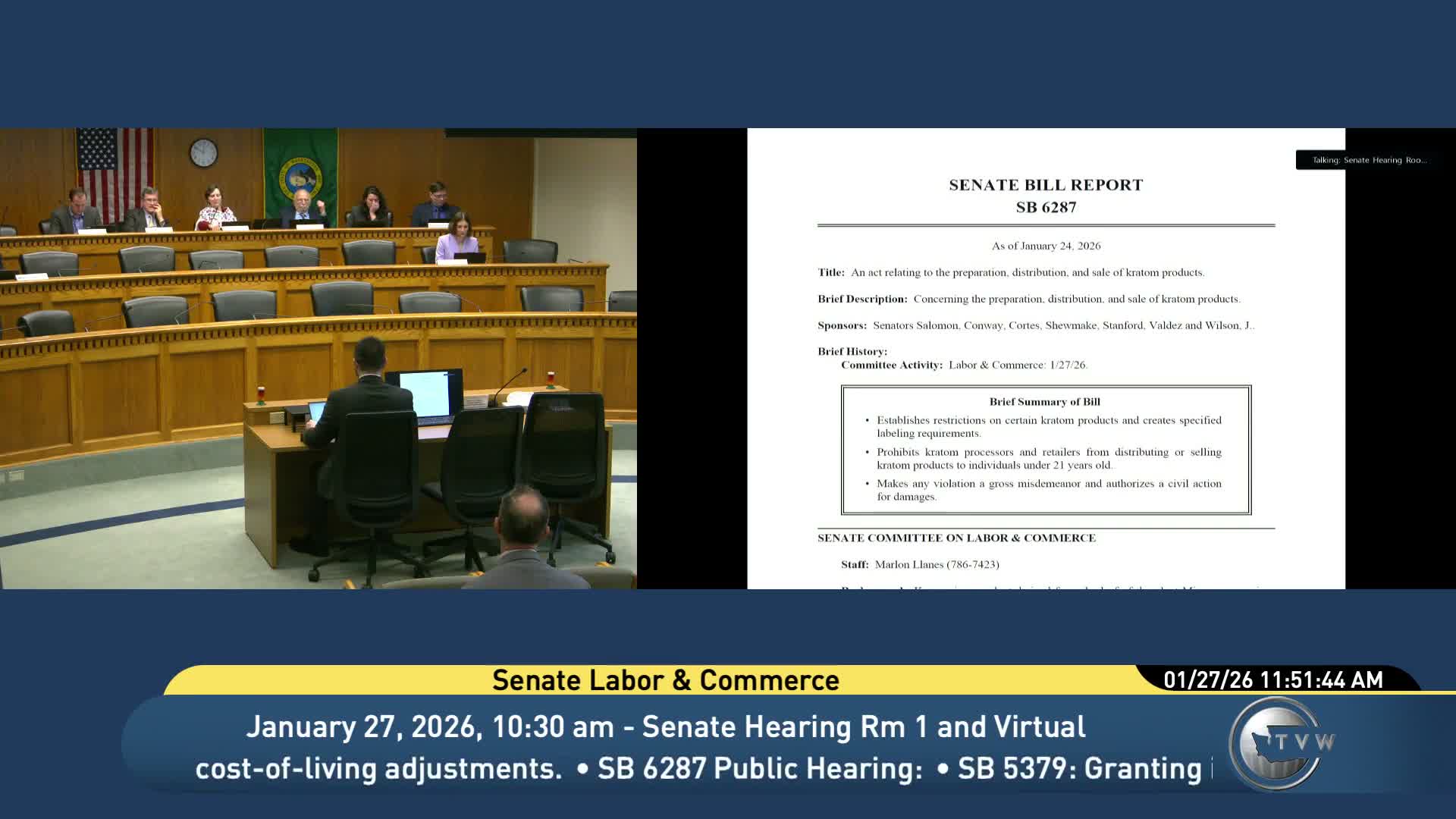
Summary
Senators heard testimony on SB 6,287, which would restrict kratom products: require labeling and ingredient disclosure, cap alkaloid concentrations, ban sale of products to anyone under 21 and prohibit harmful adulterants; public health witnesses supported stricter controls while industry groups favored a lighter regulatory approach.
Senate Bill 6,287 would regulate kratom products by banning certain concentrated or synthetic derivatives, requiring ingredient and alkaloid‑percentage labeling, setting a 21‑and‑older purchase age, and making violations a gross misdemeanor with a private civil right of action and local authority to adopt stricter ordinances.
Sponsor Sen. Solomon described seeing people develop opioid‑like dependence from concentrated kratom derivatives and said the bill aims to curb harmful, highly potent products sold at convenience stores and gas stations. Molly Poffenroth (Washington Food Industry Association, testifying in place of a colleague) said member stores already age‑gate kratom and supported labeling and bans on 7‑hydroxymitragynine, but warned that a private right of action and immediate enforcement could be unworkable for small retailers; she suggested the Liquor and Cannabis Board might be a better regulator.
Medical witnesses and public‑health groups supported stricter regulation. Dr. Shimell Leonard (Washington Poison Center) described two near‑fatal pediatric exposures to concentrated 7‑hydroxymitragynine this year and noted potency concerns and possible evasive synthetic derivatives that could evade narrowly written bans. Scott Waller (Washington Association for Substance Misuse and Violence Prevention) urged combining age gating, labeling, and licensing and suggested a tax to deter youth use. Industry witnesses and the Kratom Association supported age restrictions and a ban on concentrated synthetics but urged removing a private right of action and warned against making natural kratom effectively a scheduled drug at the local level.
The committee heard questions about enforcement practicality and about which derivatives and synthetic processes the bill would cover. Testimony closed with no committee vote recorded at the hearing.