Business groups back cap on workers’ compensation COLAs; labor calls it a cut
Loading...
Summary
Supporters, including self‑insurers and business groups, endorsed SB 5,927 to cap future workers' compensation COLAs at 3% to stabilize rates; labor and injured‑worker advocates said the cap would undermine long‑term wage replacement and urged alternative reforms.
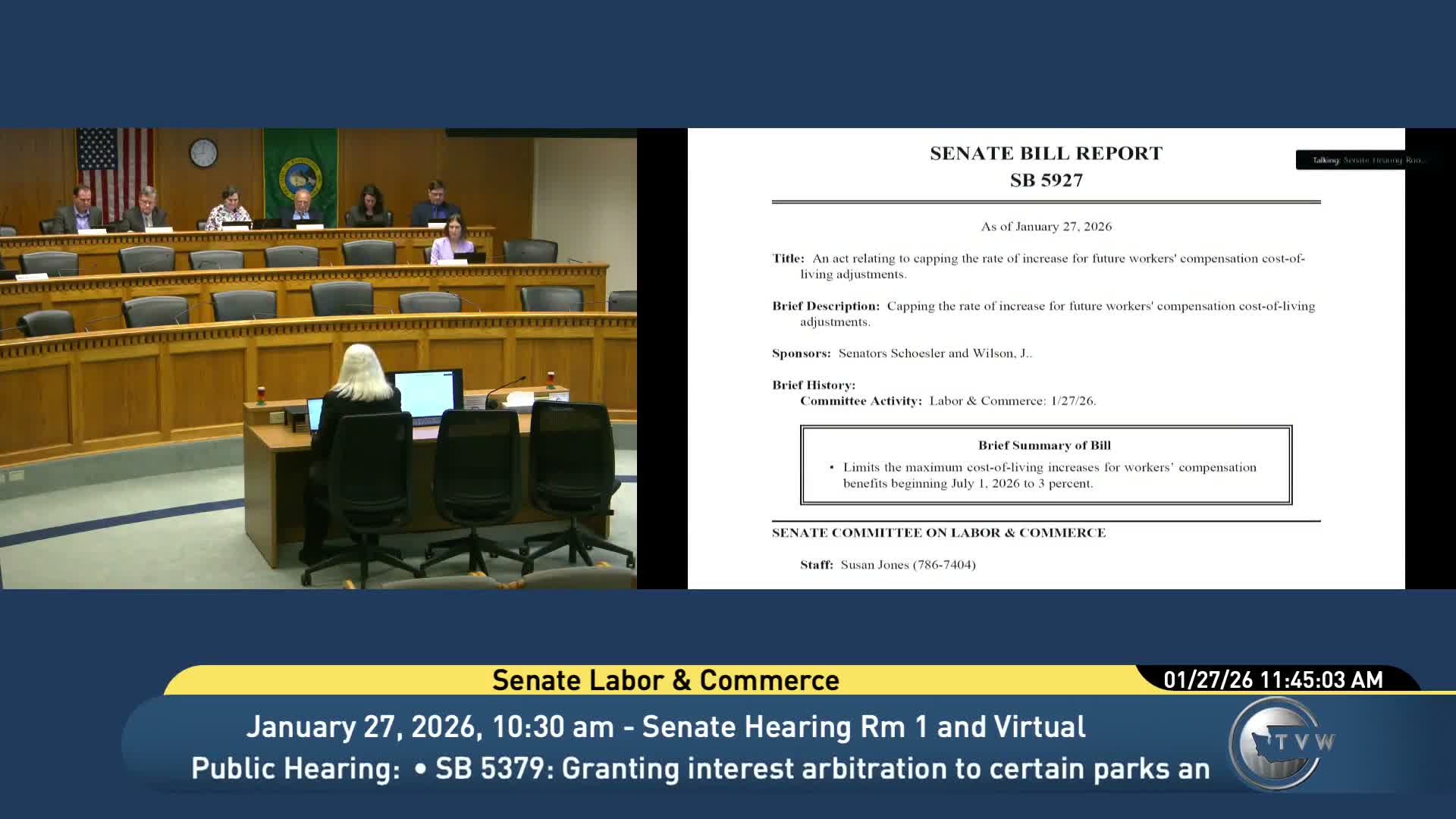
Senate Bill 5,927 would cap future cost‑of‑living adjustments for workers' compensation time‑loss and pension benefits at 3% beginning July 1, 2026. Committee staff reported recent COLAs (2023: 7.5%; 2024: 5.9%; 2025: 6.8%) and an IT fiscal cost of roughly $232,000; staff also summarized an estimate that a 3% cap could reduce supplemental pension fund outlays by hundreds of millions under certain assumptions.
Proponents including the Washington Self Insurers Association and the Association of Washington Business argued the cap would reduce volatility and long‑term pressure on premiums. Chris Tefft cited a large unfunded liability in the supplemental pension fund and described the proposal as a "financial prudence measure." James Crandall (AWB) noted past volatility in COLAs — from 2% to double digits — and said the bill preserves annual adjustments while providing predictable guardrails.
Labor representatives, injured‑worker advocates and construction trade unions strongly opposed the bill. Carissa Larson (AFL‑CIO) and Elizabeth LaPlay (injured‑worker advocate) said COLAs are necessary wage replacement tied to average monthly wage and that a 3% cap would let benefits erode over time, pushing vulnerable workers and surviving spouses toward financial hardship. Ray Dumas (plasterers and cement masons) said the policy would shift burdens onto injured workers.
Department of Labor & Industries officials described the system's pay‑as‑you‑go treatment of COLAs, the size of the unfunded liability and prior discussions about alternative formulas (including a 10‑year rolling average) and noted the department had considered but withdrawn its own reserving proposal. The hearing record closed without a committee vote.