Get Full Government Meeting Transcripts, Videos, & Alerts Forever!
Get email alerts on the Regulatory Fees Shellfish topic
No spam. Unsubscribe anytime.
Shellfish growers warn DOH fee increases could force small farms to close; committee presses agency for alternatives
Summary
At a work session on commercial shellfish fee changes, Department of Health officials said phased fee increases are necessary to reach cost recovery; shellfish growers and tribal and small-farm representatives warned the proposed 2026–2027 increases (examples ranged from several-hundred percent to mid-thousands of dollars for small operators) would be catastrophic for many small producers and urged alternatives, pauses, or general‑fund coverage for biotoxin testing.
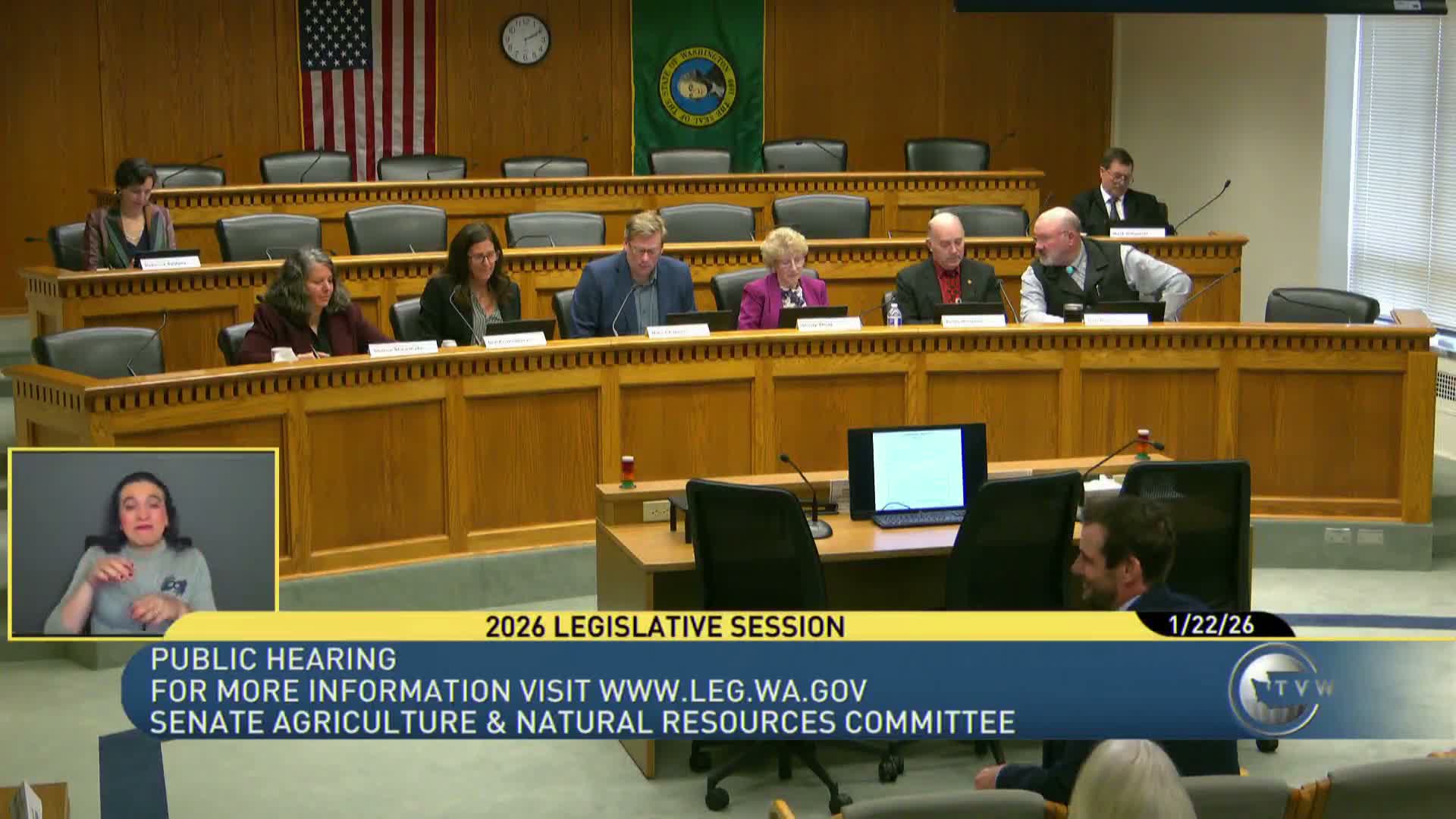
Department of Health officials defended a phased set of fee increases for the state's commercial shellfish licensing and certification program at a Senate Agriculture & Natural Resources Committee work session, while shellfish growers and tribal representatives warned the changes threaten small farms and new entrants.
DOH said program costs formerly supplemented by general funds have become unsustainable and that federal sanitary requirements, public-health lab testing and inspection obligations create real operating costs for the licensing and certification program. Lauren Jenks, assistant secretary for environmental public health, said the agency is required to recover fee‑eligible costs and that reductions in general-fund support have limited the department's ability to subsidize the program.
Kristin Betridge, DOH agency budget manager, and Danny Topel, manager of the Shellfish Licensing and Certification Section, walked the committee through the rulemaking timeline: DOH began fee rulemaking in 2023, paused in 2024 at the legislature's direction while an independent Green Economics review was completed, then resumed work because current budgets left the program exposed. DOH proposed a phased approach — roughly half of the remaining cost-recovery the first year and the remainder the next — which the agency said results in first-year increases for some license categories in the 200%–800% range depending on starting fees and license type.
Industry witnesses said the fee calculations and data presented by DOH have been inconsistent and that the Green Economics review recommended improvements and that biotoxin testing is treated as a public good in other states. Small operators gave concrete impact examples: one grower said a small farm's combined license and biotoxin fees would rise from about $690 to roughly $2,400 in the first phase and to about $4,400 in the second; another small-processor example showed a proposed jump from about $1,294 to $9,764 under the department's rule. Several witnesses urged the committee to cap increases while alternative structures are considered (for example, fees based on pounds/production, risk‑based monitoring, or continued partial general‑fund support for biotoxin testing).
Lawmakers pressed DOH for data transparency, asked the agency to show what efficiency recommendations from the Green Economics report have been implemented, and requested detailed fee schedules by license type and acreage/harvest-site bands. Several senators expressed concern about driving small family farms out of business and asked DOH to model the economic impacts, including potential consolidation and workforce loss.
What happens next: DOH said it will provide detailed fee schedules and supporting calculations to the committee. Industry asked for pause or legislative fixes while alternatives are developed. The committee adjourned with the issue unresolved and likely to return to budget writers and relevant committees for follow-up.