Get Full Government Meeting Transcripts, Videos, & Alerts Forever!
Get email alerts on the Food Access topic
No spam. Unsubscribe anytime.
Lawmakers consider six‑month notice for grocery closures in food‑desert neighborhoods
Summary
Senate Bill 6,147 would require at least six months' notice before grocery stores in USDA‑defined food deserts close and compel good‑faith meetings with local officials; proponents cited a recent Fred Meyer closure in South Tacoma, while industry groups warned the rule could burden independent grocers and add litigation risk.
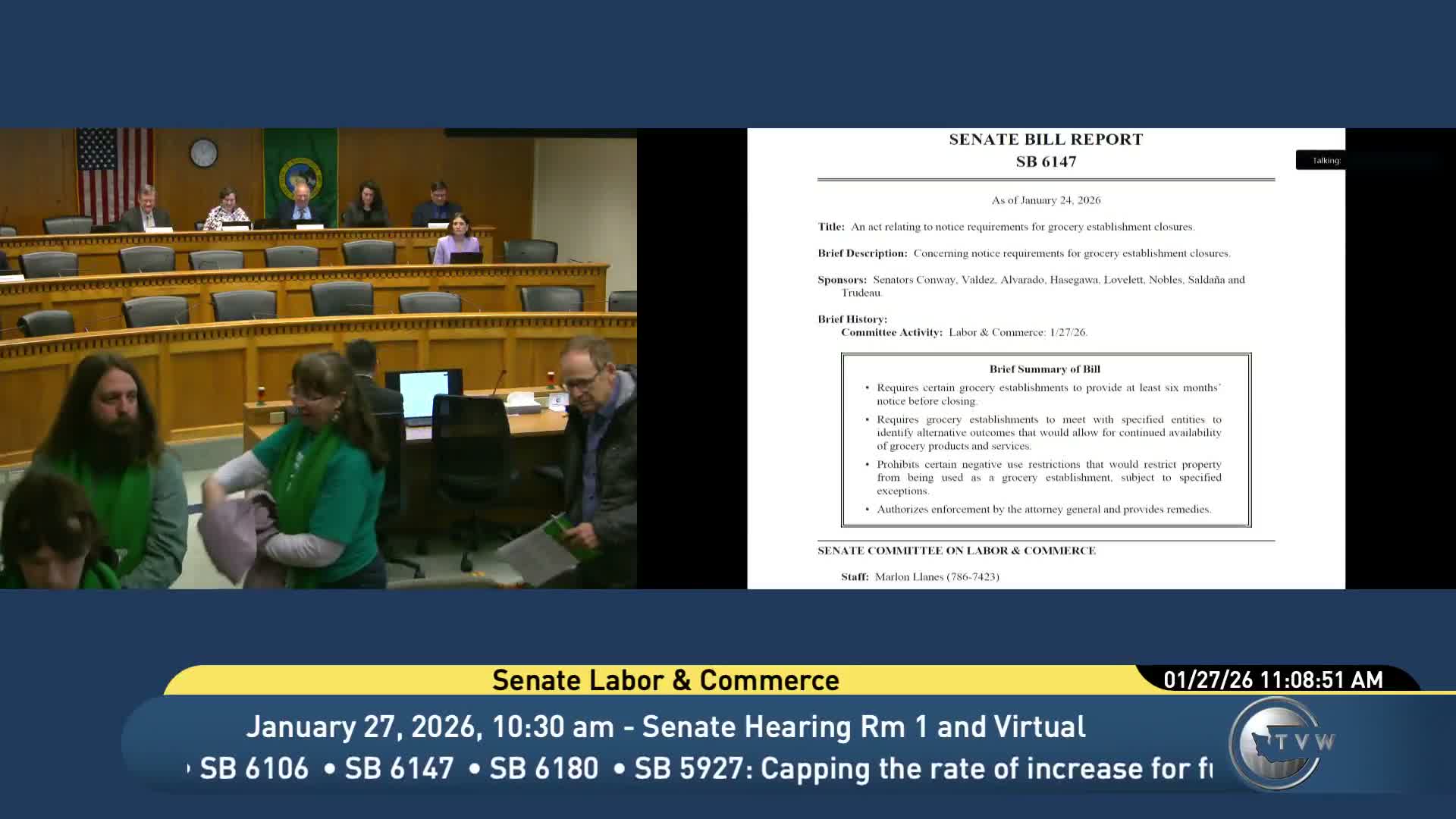
The Senate Labor & Commerce Committee heard Senate Bill 6,147, which would require certain grocery establishments located in areas the U.S. Department of Agriculture designates as food deserts to provide at least six months' advance written notice of a permanent closure, and to meet in good faith with local officials and other stakeholders if requested during the notice period.
Staff described the bill’s core provisions: six‑month notice to city and county councils, local health departments and the attorney general; a good‑faith meeting requirement on reasonable request to explore alternatives that preserve grocery access; exemptions for natural disasters; and a private right of action plus AG enforcement authority. A partial fiscal note lists AG costs of about $238,000 (2025–27) and $376,000 per biennium thereafter.
Sponsor Sen. Conway said she brought the bill after a Fred Meyer in South Tacoma gave a two‑month WARN notice before closing and said a six‑month requirement would give community leaders, unions and neighborhood groups time to seek ways to keep a store open. Deputy Mayor Joe Bushnell and local residents described community impacts: increased food and pharmacy access problems, harm to seniors and residents with disabilities, and knock‑on effects on small businesses.
Supporters included Michael Hines of UFCW Local 367, who cited 70th and Pacific Fred Meyer closures that displaced over 200 workers and created 'a domino effect' in the neighborhood; Stephen Bach and other residents described a primary neighborhood food source disappearing and increased pressure on remaining stores.
Opponents — including the Washington Food Industry Association and the Northwest Grocery Retail Association — argued a rigid six‑month rule would be onerous, particularly for independent owners who already face high costs and retail crime; they warned the statutory good‑faith meeting and potential injunctive remedies would add legal risk and could complicate rapid business decisions.
Committee members queried whether statutory notice would change closures driven by unprofitability or crime and discussed carve‑outs by store size or ownership type. The testimony closed without a committee vote at this meeting.