Get Full Government Meeting Transcripts, Videos, & Alerts Forever!
Get email alerts on the Urban Renewal topic
No spam. Unsubscribe anytime.
Idaho Falls council adopts Riverwalk urban renewal plan to spur roughly $40M in private investment
Summary
The City Council approved a 20-year Riverwalk Urban Renewal District to support infrastructure and site remediation for three development sites, including a proposed 112-room hotel; the council adopted the ordinance after staff and consultants presented an economic feasibility study and received limited public comment.
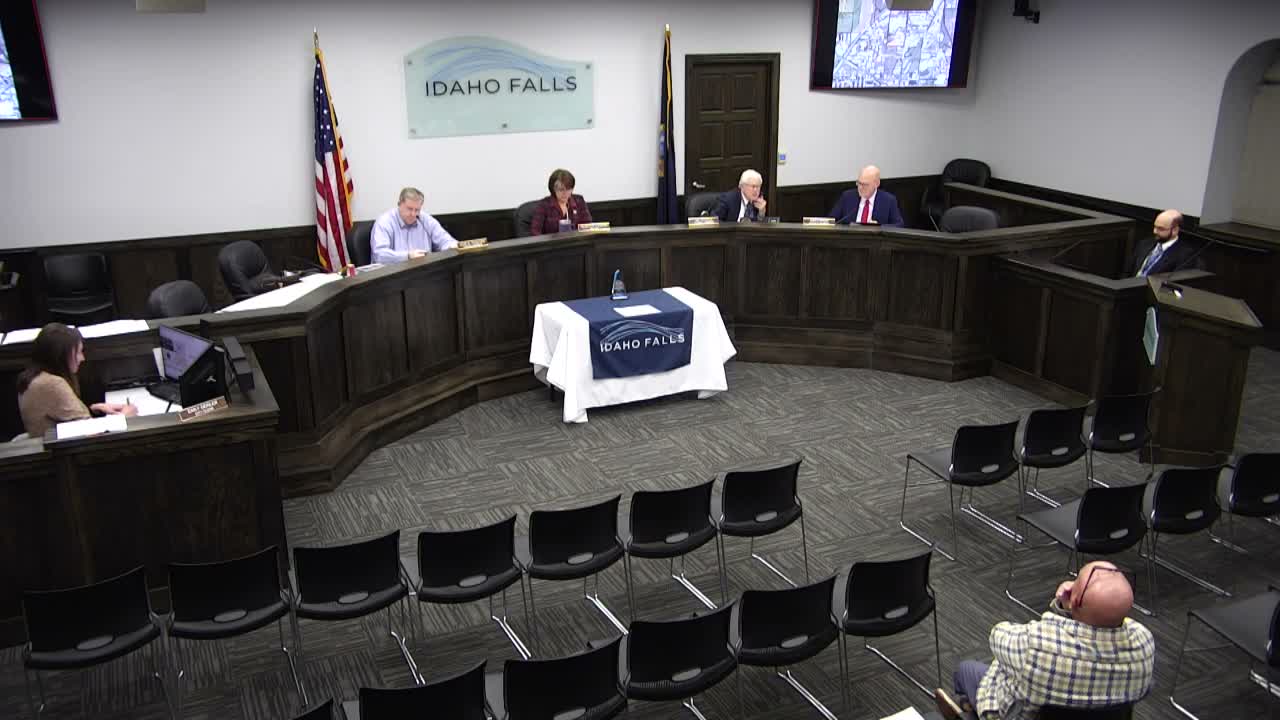
The Idaho Falls City Council on Nov. 20 approved an ordinance establishing the Riverwalk Urban Renewal District, a roughly 10-acre redevelopment area west of the Snake River intended to remove barriers to riverfront redevelopment and to fund public infrastructure through tax increment financing.
City staff and consultants walked the council through the plan and the required economic feasibility study. Megan Conrad, representing the Idaho Falls Redevelopment Agency, said the plan identifies eligible public improvements, financing methods and the district’s 20‑year horizon, with an anticipated termination date of Dec. 31, 2045. Conrad said the district’s purpose is to defer the receipt of increased property tax revenues during the life of the district to reimburse certain public costs associated with private development.
Brad Kramer, consultant for the economic feasibility study, said the analysis used conservative and moderate revenue models and identified three primary development sites that together could generate about $40 million in private investment. Kramer said Site 1 is proposed for a 112‑room hotel (TownPlace Suites) that had already been submitted for review, Site 2 for a multi‑story office building, and Site 3 for mixed‑use buildings adjacent to a Culver’s restaurant. The study estimates roughly $4.1 million in eligible public projects for the district, dominated by rock blasting, fill and other site preparation costs in the parcels’ shallow basalt.
Kramer said the agency’s standard owner participation agreement (OPA) would return 75% of annual tax-increment revenues to developers and retain 25% for agency administration and potential public projects; under a conservative revenue model, repayment of the OPA would extend to the final allowable collection year but remained feasible. Kramer emphasized that timely developer activity is critical: “There is not a lot of room to have years without tax‑increment growth,” he said, noting the hotel already had early permitting activity.
The hearing drew one public comment from John Cunningham, who asked for clarity about parcel maps affecting private property interests; staff committed to follow up with detailed materials. After deliberation the council voted to approve the ordinance by summary publication and authorized transmittal of required notices to county and state taxing entities.
The city clerk read the ordinance by title as required; the council vote recorded council members voting in favor with no recorded abstentions. The ordinance authorizes revenue allocation financing provisions and directs the clerk to share the plan with overlapping taxing districts and the state tax commission.
Next steps include publication of the ordinance summary, recording of the ordinance, and additional transmittals required to establish the plan’s base year and financing mechanics.