Get Full Government Meeting Transcripts, Videos, & Alerts Forever!
Get email alerts on the House Rules Minutes And Party Definition topic
No spam. Unsubscribe anytime.
House Rules Committee backs HR 1 to limit minutes for sifting sessions, clarify minority‑party definition
Summary
The House Rules Standing Committee voted unanimously to adopt the first substitute to HR 1, which removes a requirement to keep minutes for 'sifting' committee meetings and clarifies the definition of 'minority party' and 'minority leader' amid a legislature with more than two parties.
The House Rules Standing Committee on Thursday unanimously voted to adopt the first substitute to House Resolution 1, a rules package that removes the requirement to keep minutes for so‑called "sifting" committee meetings and clarifies how the chamber will identify a "minority party" and its leader when more than two parties exist.
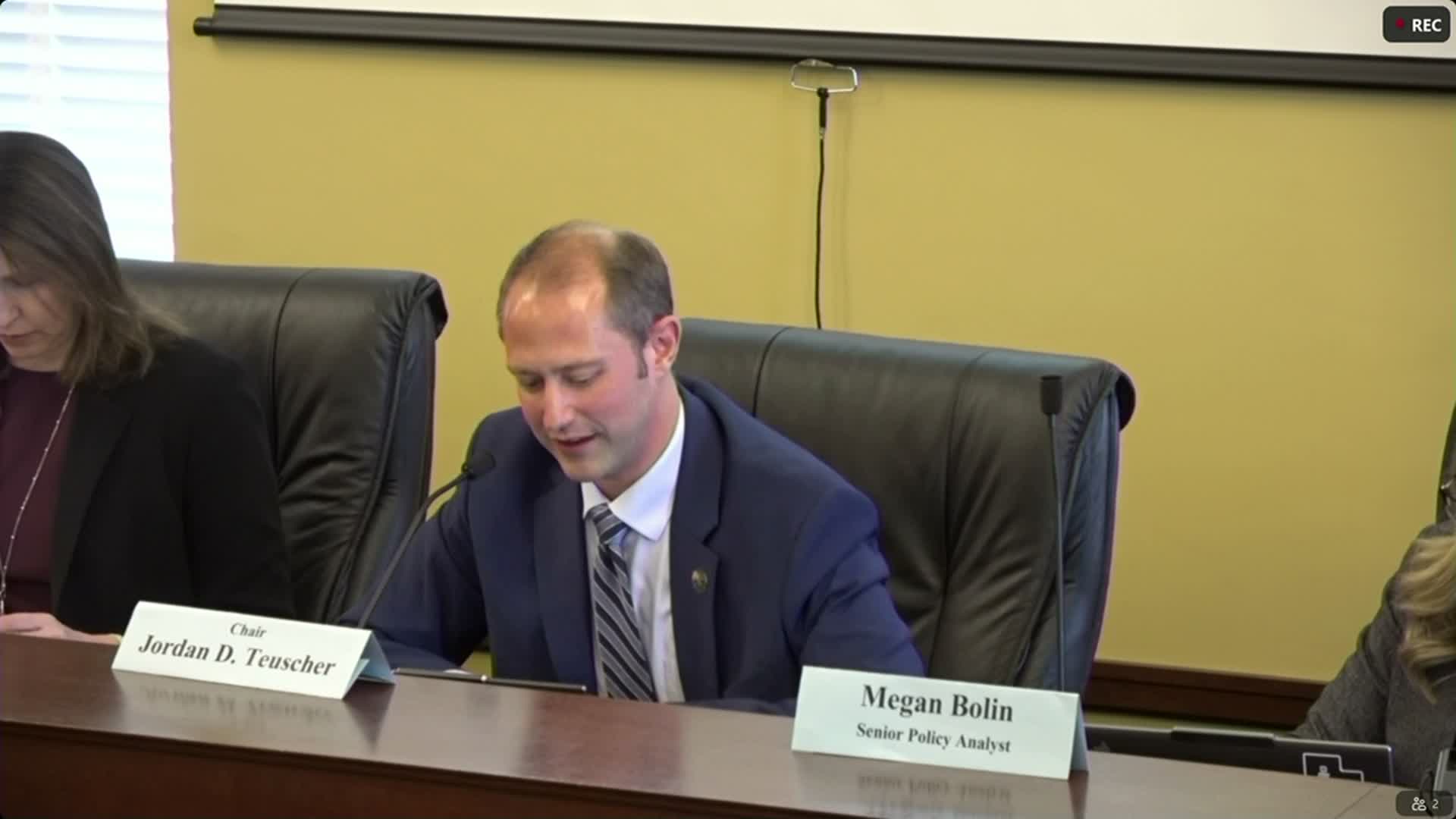
Representative Jordan Tuscher, chair of the House Rules Standing Committee, presided over the session. Representative Dunnegan, the sponsor, told members the change to minutes is narrow: "So what this does on line 56... it just said or 96, it says that you don't have to keep minutes," and that the meetings would remain subject to the Open Public Meetings Act notice and observation requirements.
Why it matters: The change aims to reduce administrative work for sifting committee meetings, where a secretary previously took minutes that were rarely used. The resolution also updates joint‑rule language to define "minority party" as the political party with the second‑most members and identifies the minority leader accordingly, reflecting the legislature's shift beyond a two‑party environment.
Committee members asked how sponsors could respond to public comment under the new flow. Representative Karen Peterson said she would support the motion but urged better chair training so sponsors "have an opportunity to respond" if committee members want clarification before summation. Sponsor Dunnegan and staff said chairs retain discretion to allow a presenter to answer questions during or after public comment.
Public comment: Seth Stewart, speaking for himself, urged the committee to withdraw the resolution on constitutional grounds, arguing that "the constitution of the state of Utah does not grant political parties any role in the law making process." He asked members to consider whether codifying party roles could disadvantage unaffiliated legislators.
Outcome and next steps: The committee adopted the first substitute and then favorably recommended HR 1 to the House third‑reading calendar by unanimous voice votes. The sponsor waived summation and the motion carried.