Get Full Government Meeting Transcripts, Videos, & Alerts Forever!
Get email alerts on the Kratom Tax And Enforcement topic
No spam. Unsubscribe anytime.
Committee backs bill to tax kratom and other "specialized products" to fund inspections
Summary
S.B. 101 renames the existing cannabinoid tax account to a "specialized product" account and would apply a tax to kratom (if legal) and similar products so revenues fund inspections and program administration; the committee adopted a sponsor amendment and recommended the bill favorably.
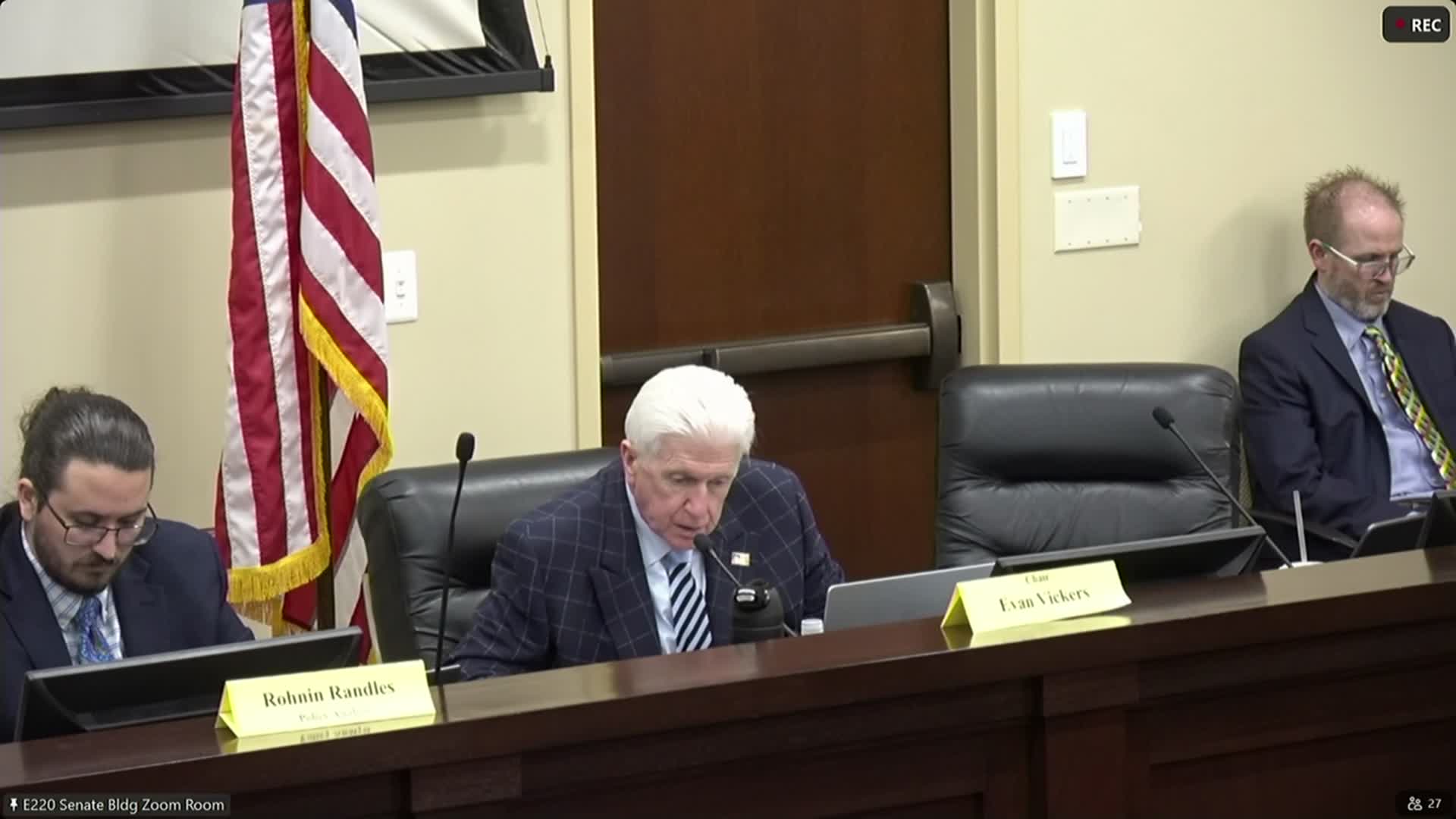
Sen. Vickers told the Senate Business and Labor Committee that S.B. 101 would rename the current cannabinoid tax and expand it to include kratom and other specialized products so proceeds fund inspections and enforcement by the Department of Agriculture and Food. Dr. Brandon Forsyth, director of the Specialized Products Division, said the division’s program costs have exceeded current registration revenues, noting the tax was estimated to yield $1.4 million annually but the program so far has collected far less; "this fiscal year so far, it's only brought in $214,000," he said, while annual program costs have been about $1.6–1.7 million.
Committee members asked how the tax would apply to online sales and interstate purchases; staff said the bill targets in‑state shelf sales and that online enforcement presents additional challenges for future work. Public commenters urged different remedies — some called for an outright ban while industry representatives called for targeted regulation. The sponsor moved amendment number 1 (reported to come from the State Tax Commission); the committee adopted the amendment and then voted to recommend S.B. 101 as amended.
Senators noted this is a complementary approach to other bills in the agenda: scheduling and banning efforts (S.B. 48 and separate bans) would change the market if enacted, and the tax would apply only if kratom remains legal to sell. With the amendment adopted, the committee voted unanimously to advance the bill to the full Senate.