Get Full Government Meeting Transcripts, Videos, & Alerts Forever!
Get email alerts on the Kratom 7oh Scheduling topic
No spam. Unsubscribe anytime.
Senate committee advances bill to ban concentrated 7‑hydroxymitragynine while keeping narrow trace allowances in kratom products
Summary
The Senate Business and Labor Committee voted to recommend S.B. 48, which would schedule 7‑hydroxymitragynine as a Schedule I substance with a narrowly defined trace‑amount exception intended to exempt naturally occurring small amounts in kratom leaf while targeting synthesized concentrates linked to overdoses.
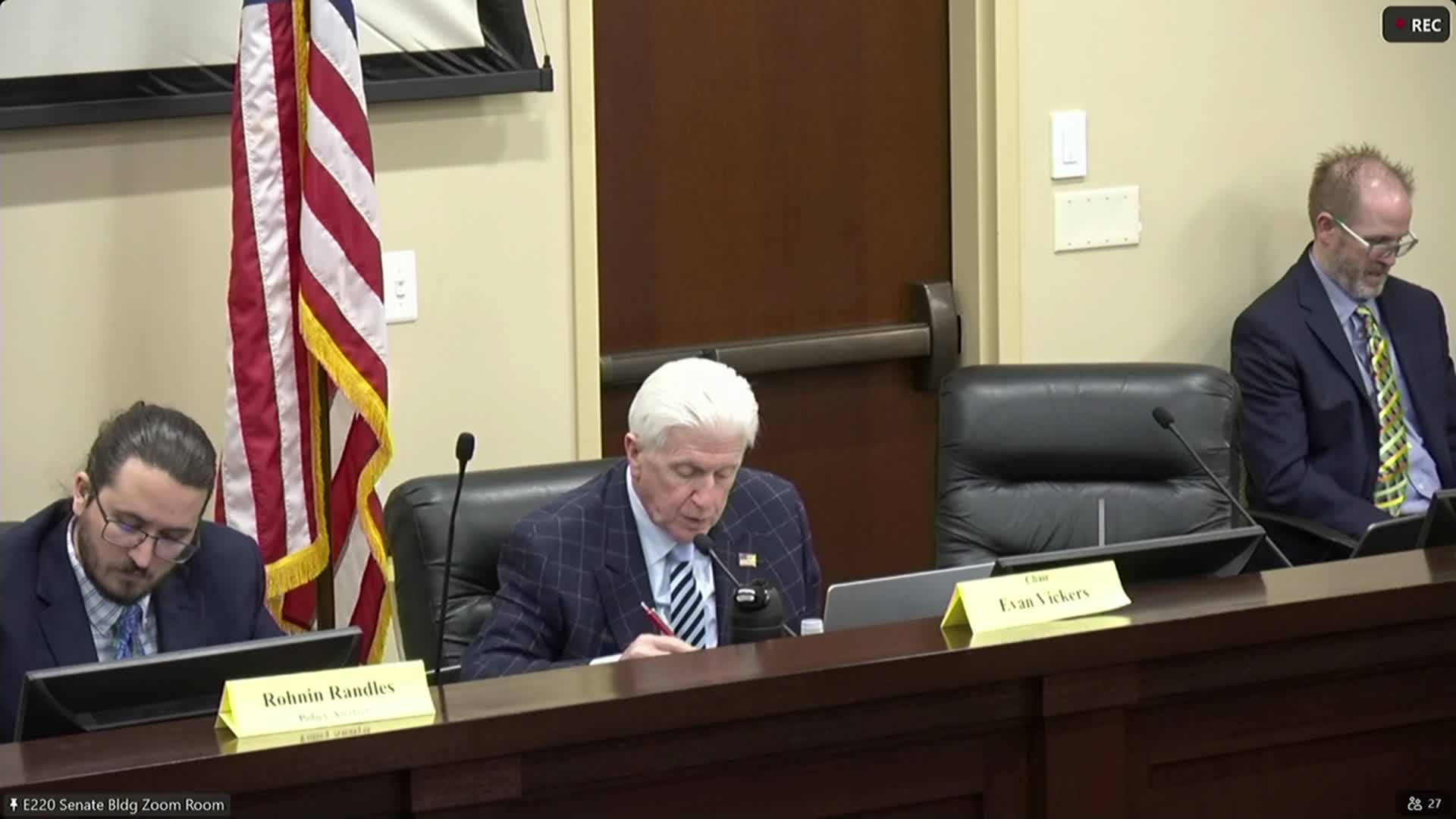
Sen. Vickers, sponsor of S.B. 48, told the Senate Business and Labor Committee on Jan. 21 that the bill would reschedule 7‑hydroxymitragynine (7‑OH) "as a schedule 1" while carving out a narrow exception for trace natural amounts in kratom products. The sponsor said the proposal sets the trace threshold at 0.4% of the total kratom alkaloid composition to distinguish naturally occurring levels from concentrated, semi‑synthetic products. "If you have someone that has overdosed on it, you can give naloxone and they respond," Sen. Vickers said, citing the opioid‑like effects of concentrated 7‑OH.
The proposal responds to federal and state concern about synthesized 7‑OH added to commercial products. Vickers said the U.S. Department of Health and Human Services and examples from other states informed the approach and noted the bill targets synthetically concentrated forms that have been associated with severe respiratory depression. He acknowledged the bill could have fiscal and criminal‑justice implications and said he would coordinate further with corrections to clarify the fiscal note.
Public testimony was extensive and split. Families and advocacy groups described personal harms and urged a full ban on kratom and related alkaloids; Amy Cooper recounted a relative’s addiction from a kratom product and urged the committee to "ban the kratom extract from all gas stations." Industry representatives and consumer advocates, including Ryan Neidell of Diversified Botanics and Mac Haddow of the American Kratom Association, backed a targeted approach that would outlaw concentrated or synthesized 7‑OH while preserving regulated access to natural kratom leaf and consumer protections. Neidell said the bill draws a "scientifically based evidential line" between naturally occurring trace 7‑OH and dangerous synthetic concentrates.
Senators discussed the interplay between S.B. 48 and other pending proposals (including separate kratom bans or taxation bills). Vickers and supporters said scheduling 7‑OH removes the most dangerous synthetic component from the market even if a broader kratom bill is later enacted. After public comment and debate, the committee voted to favorably recommend S.B. 48 for passage.
The committee next steps include sponsor follow‑up with corrections on the fiscal note and potential drafting refinements to the trace‑amount definition. The bill will move to the full Senate with the committee’s favorable recommendation.