Get Full Government Meeting Transcripts, Videos, & Alerts Forever!
Get email alerts on the School Device Policy topic
No spam. Unsubscribe anytime.
Committee backs default limiting cell-phone use in schools while preserving district flexibility
Summary
A bill setting a state default that cell phones should not be used bell-to-bell in schools advanced after hours of public comment; the measure preserves district flexibility and includes exceptions for SafeUT, IEP/504 plans and medical devices.
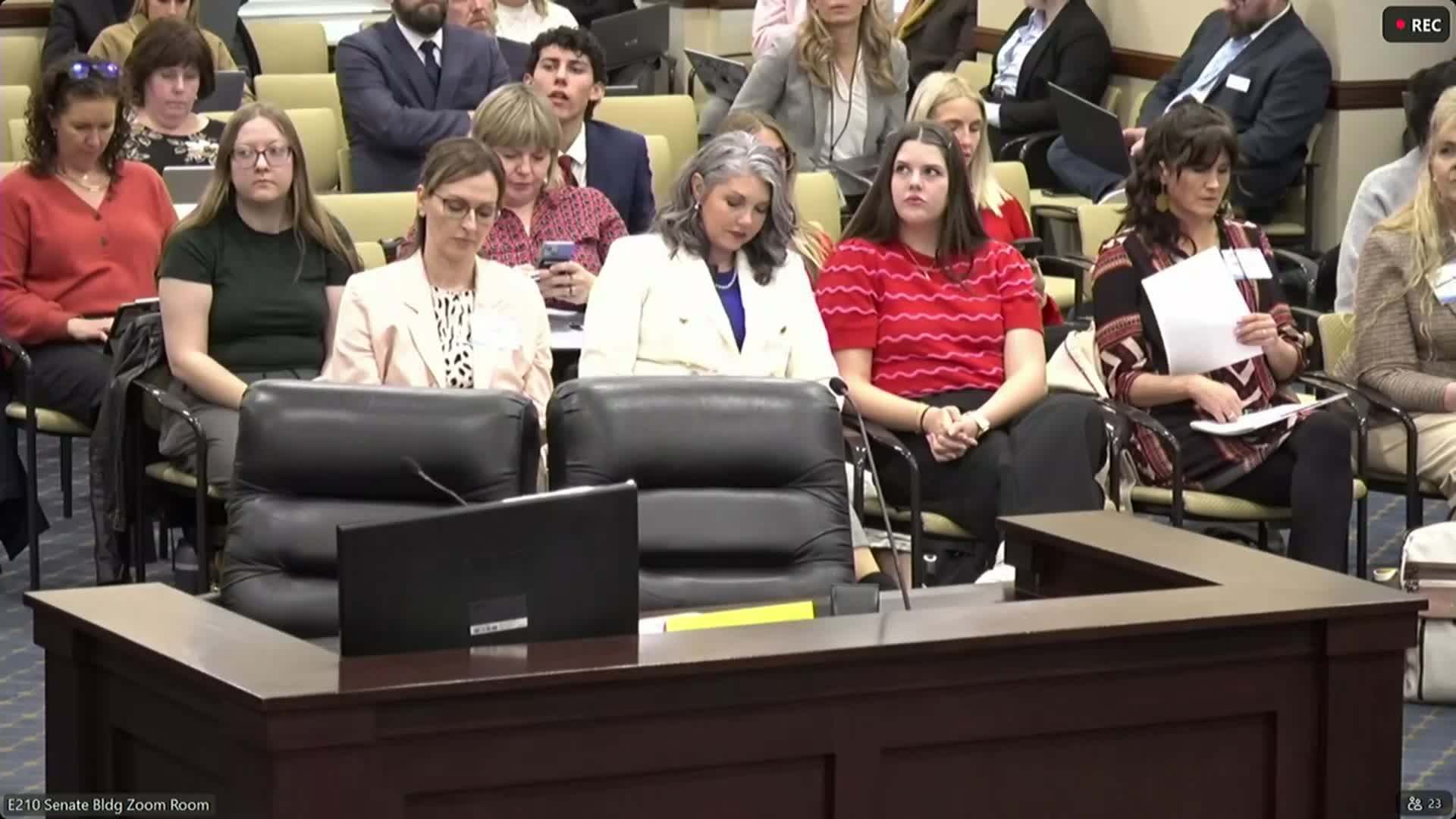
The Senate education committee voted to recommend a bill that sets a statewide default that cell phones should not be used during the school day, while preserving local control for districts to craft exceptions.
Senator Fillmore, sponsor of the measure, said the bill is not a ban but a way to reset the default and ask districts how to integrate devices into learning. He said the rule would apply from the morning bell to dismissal and that districts retain authority to allow use where appropriate. He emphasized the bill’s exceptions include SafeUT (the student safety reporting app), individual education programs (IEPs) and 504 plans, and medical-device needs.
Public testimony was extensive and divided. Several students and parents testified in favor, saying classrooms were more focused without phones and reporting improvements in behavior and engagement at schools that adopted similar policies. Liddy Johnson, a high-school senior, said she learned better without a smartphone in class. Emily Bell McCormick of the Policy Project and representatives of charter and parent groups supported the bill, citing data from other schools showing reduced disciplinary incidents and improved socialization.
Opponents and some committee members urged caution, arguing low-income students, English-language learners and students who rely on phones for safety or translations could be harmed without strong waivers or explicit parental-choice provisions. Senator Eby said concerns about waivers remain, and other members pointed to lines in the bill that provide specific exceptions.
The committee adopted a first substitute that changed the effective date to July 1 and voted to send the bill to the Senate with a favorable recommendation (committee tally reported as 6–1 with one recorded opposition). Sponsors and supporters said district-level implementation and the bill’s built-in exceptions address many of the concerns raised during testimony.
The bill now moves to the full Senate where further debate and amendment are expected.