Get Full Government Meeting Transcripts, Videos, & Alerts Forever!
Get email alerts on the State Fees topic
No spam. Unsubscribe anytime.
Committee presses for real cost data before fee cuts; Christofferson to file fee‑cost reporting bill
Summary
Staff unveiled a new fee dashboard and said agencies will be flagged as "do not approve" for fee changes until better data are provided. Representative Christofferson described legislation to require agencies to report actual annual costs for fees so legislators can judge whether fees are rightly set.
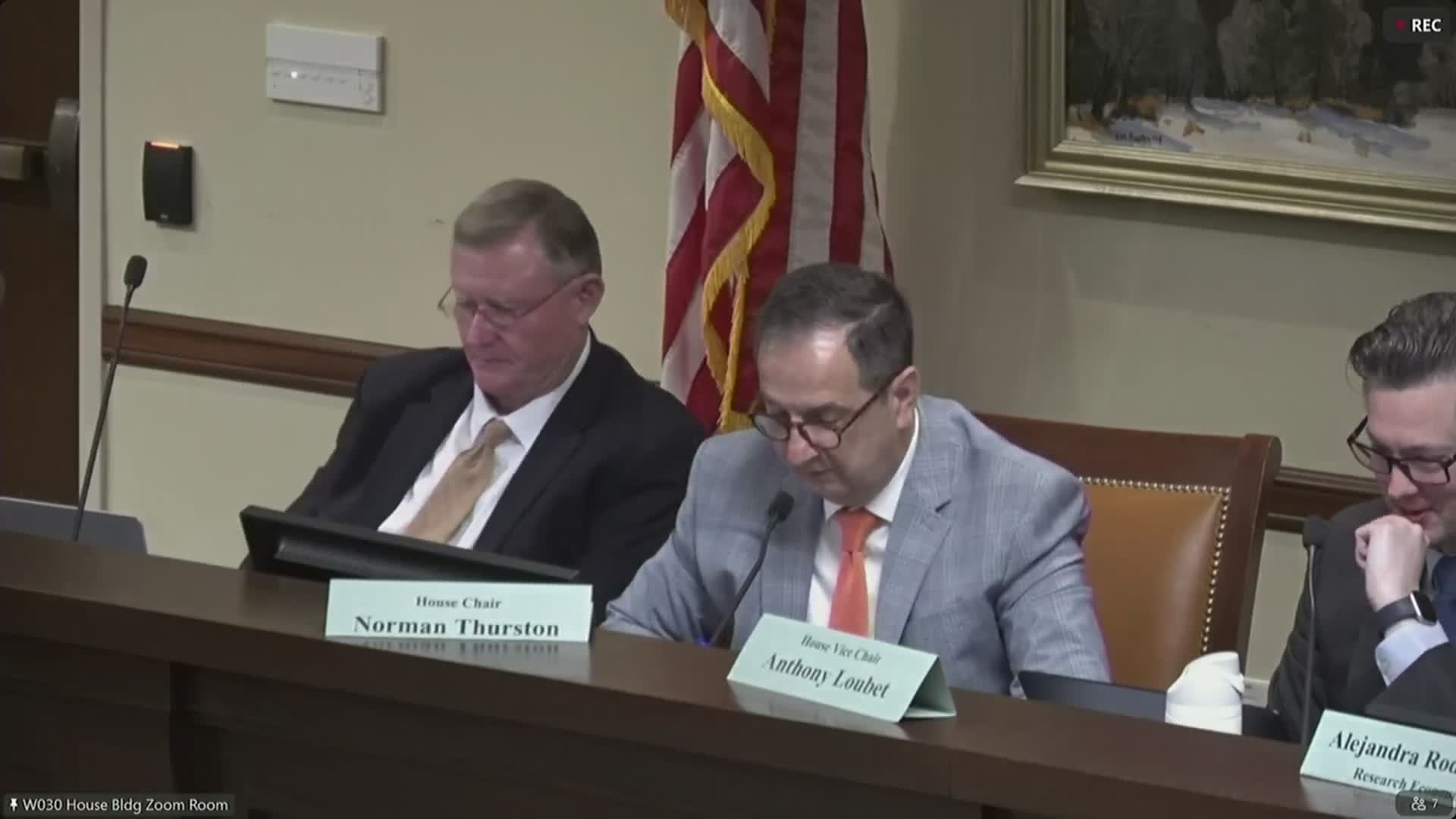
Representative Thurston's General Government Appropriations Subcommittee spent the morning pressing agencies for better data on state fees and hearing from a sponsor who says he will require actual cost reporting before lawmakers change rates.
Alejandra Rodriguez, a staff economist with the Legislative Fiscal Analyst Office, demonstrated a new fee dashboard the subcommittee will use to compare fee amounts, estimated quantities and program costs. Rodriguez said the current fee bill in the packet shows last year's approved amounts and that staff will present fee changes on substitute versions so members can see additions and deletions. She told members staff will flag fee changes on a "do not approve" list until agencies provide additional information.
"We didn't feel like [estimates] was enough information to help you really evaluate the impact of a fee change," Rodriguez said, arguing members need historical and program‑level context before setting rates.
Representative Christofferson, who said he will formally file an "agency fee amendments" bill this session, told the committee the proposed legislation will expand an existing requirement so every fee has an annual, itemized cost breakdown: materials, equipment, labor, subcontracted costs, building and overhead, travel and training. "If you know the cost, you can make those decisions," Christofferson said. He added the bill is not intended to force fee increases but to provide the data that would allow legislators to decide whether to subsidize, reduce or leave fees unchanged.
Members pressed staff and executive‑branch presenters about several apparent outliers. The Lieutenant Governor's Office is among those flagged for review after committee members noted apostille/authentication fees have produced revenues well above the office's estimated costs. Lila, the lieutenant governor's office administrator, said staff process roughly 200 regular‑service documents a day and face a substantial backlog partly driven by Utah County's online marriage submissions. "It doesn't necessarily cost more to do it faster, but rather the process that we do to complete the documents. We have to stop everything we're doing," she said, describing expedited processing as a convenience that interrupts normal workloads.
Committee members asked whether a modest, immediate fee adjustment could hire enough staff to chip away at the backlog. GOPB staff and the lieutenant governor's office cautioned that the accounting structure has, over time, spread shared overhead across fee revenue and that cleaning up indirect cost allocations is a prerequisite to confident rate changes. GOPB staff asked for another budget cycle to finish reconciling direct and indirect costs and to produce verified actual revenue and expense data for FY 2026 closeout.
The committee also discussed the policy tradeoffs of lowering expedited fees. Staff warned that cutting express rates without a staffing plan could increase demand for expedited service beyond current capacity and therefore create additional operational strain.
The subcommittee did not take formal votes on fee changes during the meeting. Staff said the fee dashboard and the Christofferson bill are intended to give legislators the evidence they need to make more precise fee decisions during the coming weeks and next budget cycle.
Next steps: staff will continue feeding reconciled revenue and cost data into the fee dashboard, and Representative Christofferson expects his bill to be assigned a number and posted publicly "today or tomorrow," after which members will see how its reporting requirements align with the dashboard.