Get Full Government Meeting Transcripts, Videos, & Alerts Forever!
Get email alerts on the Biotech Security topic
No spam. Unsubscribe anytime.
Committee adopts substitute restricting certain foreign-linked genetic sequencers; bill cited as national-security and research-protection measure
Summary
Committee adopted and favorably recommended a second substitute of HB 182 on March 4, 2025, which would limit use of genetic sequencers and sequencing services tied to foreign adversaries and carry enforcement provisions; witnesses cited national-security risks and academic carve-outs.
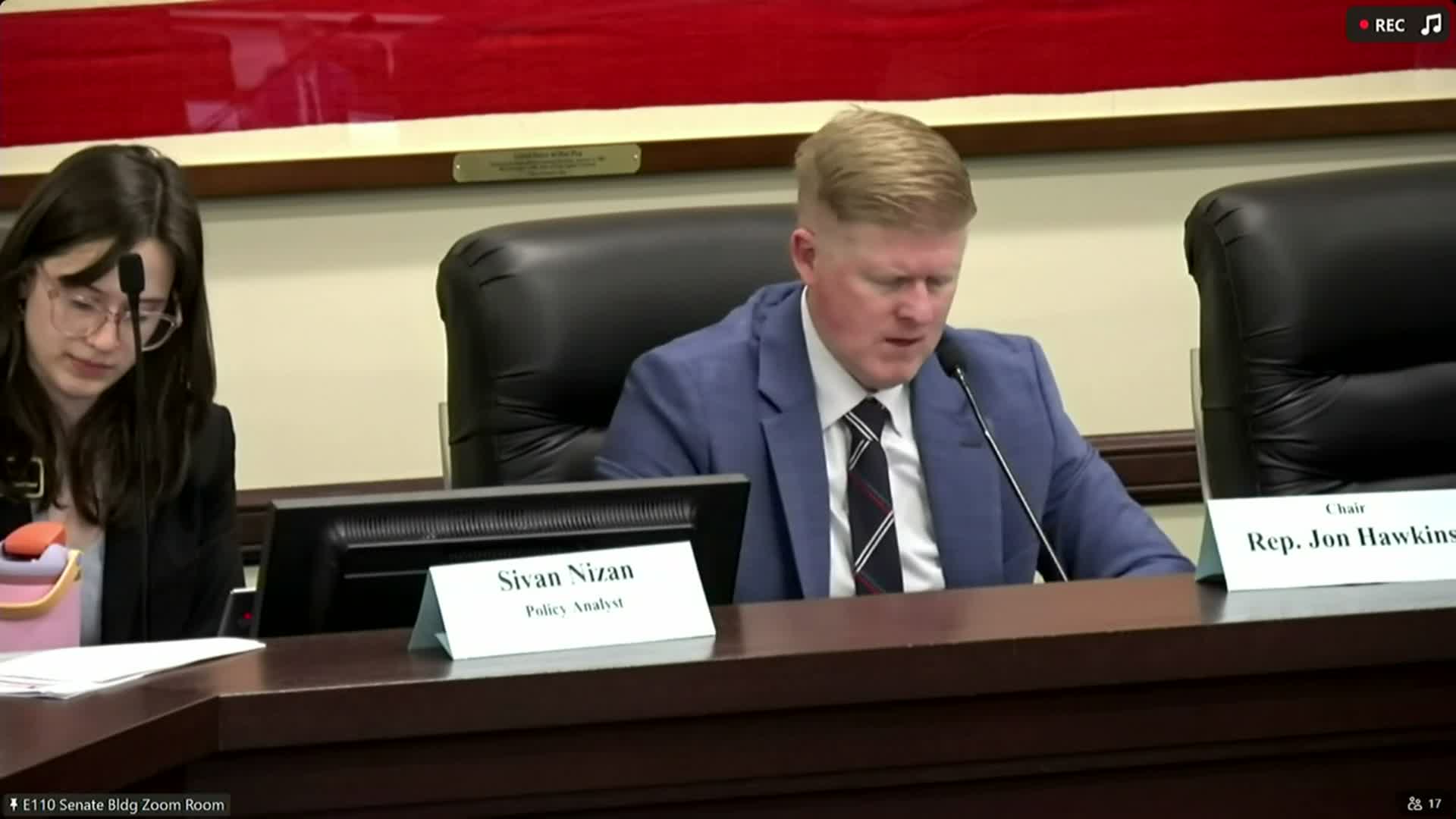
A House committee on March 4 adopted the second substitute to HB 182, a measure that would restrict the use of genetic-sequencing equipment and services associated with specified foreign-adversary entities and align the state's approach with recent federal steps.
Representative Brooks, the sponsor, framed the bill as protecting personal genetic data and preserving eligibility for federal research funds. Adam Gardner of State Armor and Jackie Deal (testifying from Washington, D.C.) described concerns about Beijing Genomics Institute (BGI) and other foreign-linked suppliers and said federal action (the BioSecure provisions in the 2024 National Defense Authorization Act) had already restricted certain federal spending.
"There is reason to believe that the Chinese Communist Party... is collecting the genetic information of Americans," Jackie Deal said, arguing states have an opportunity to act to protect residents and federal grant eligibility.
Committee members pressed the sponsor on academic and research impacts. Sponsor testimony and supporting witnesses said the bill includes timing and exclusions intended to preserve university research and that the effective dates (phased in to 2027) and consultation were designed to avoid disrupting federally funded work. Representative Miller asked whether the attorney general's office has capacity to enforce civil penalties; the sponsor noted the fiscal note showed no new appropriation because enforcement would be part of existing duties.
Public comment included supporters emphasizing national-security and privacy rationales and critics warning about vague definitions and broad fines. Testimony from industry critics said supply-chain effects and broad definitions could unintentionally limit useful tools if they are defined too expansively.
The committee adopted the second substitute by voice vote and then favorably recommended second substitute HB 182 to the House. Sponsors and supporters said the bill follows federal definitions for "foreign adversary" and is designed to preserve research capability while preventing the storage of genetic data on systems linked to identified foreign adversaries.
The bill now advances to the full House for consideration.