Get Full Government Meeting Transcripts, Videos, & Alerts Forever!
Get email alerts on the Water Resources topic
No spam. Unsubscribe anytime.
House committee backs bill requiring data centers to report water use; reporting window shortened
Summary
A House committee favorably recommended a substitute to HB 76 on March 4, 2025, requiring preconstruction and annual water-use reporting from large data centers; the committee amended the bill to shorten the preconstruction reporting window from 180 to 90 days and adopted facility-level public reporting and other transparency measures.
A Utah House committee on March 4 favorably recommended first substitute HB 76, a bill that would require large data centers to submit preconstruction water-use reports and annual disclosures to the Division of Water Rights.
Sponsor testimony described rapid data center growth in Utah and gaps in state knowledge about diversions, use and discharge. The substitute redefines a "large data center" as a facility with at least 10,000 square feet and required preconstruction reporting; the committee amended a 180-day preconstruction notice to 90 days for projects beginning Jan. 1, 2027.
The bill directs operators to submit a preconstruction water-use estimate and ongoing annual reports comparing projected and actual use, identifying conservation measures and providing future projections. The state engineer would compile the data into a public-facing report. "This is just one way that we can actually, I think, set the standard for the nation in reporting and transparency," said an unidentified sponsor at the desk during presentation of the bill.
Teresa Wilhelmsen, Utah state engineer and director of the Division of Water Rights, told the committee the bill would not change who holds water rights. "This bill won't affect water rights," she said. "They still would need to go through the same process if they need to acquire a water right." Wilhelmsen also provided examples of monthly water volumes used at some facilities, saying the NSA Bluffdale facility uses about 23,000,000 gallons in a month while another facility in West Jordan reported roughly 85,000 gallons per month.
Public comment included supportive remarks from the Division of Water Quality and local advocacy groups praising increased coordination and transparency. Evan Barrett, director of legislative affairs for Eagle Mountain, told the committee the city's projects already undergo close review and that some facilities reuse and discharge water to benefit municipal systems. Community advocates urged the committee to close loopholes in confidentiality agreements between cities and operators that can shield facility-level water-use details.
Opponents and local technologists raised concerns that the substitute's 10,000-square-foot threshold could sweep in smaller facilities and that the bill's proposed fines for incomplete reports (as drafted) were not precisely defined and could impose burdens on smaller market entrants. "The bill imposes very steep fines up to $10,000 per day for an incomplete report, but it never defines what a complete report means," said Seth Stewart, who said he works in AI and data-center planning.
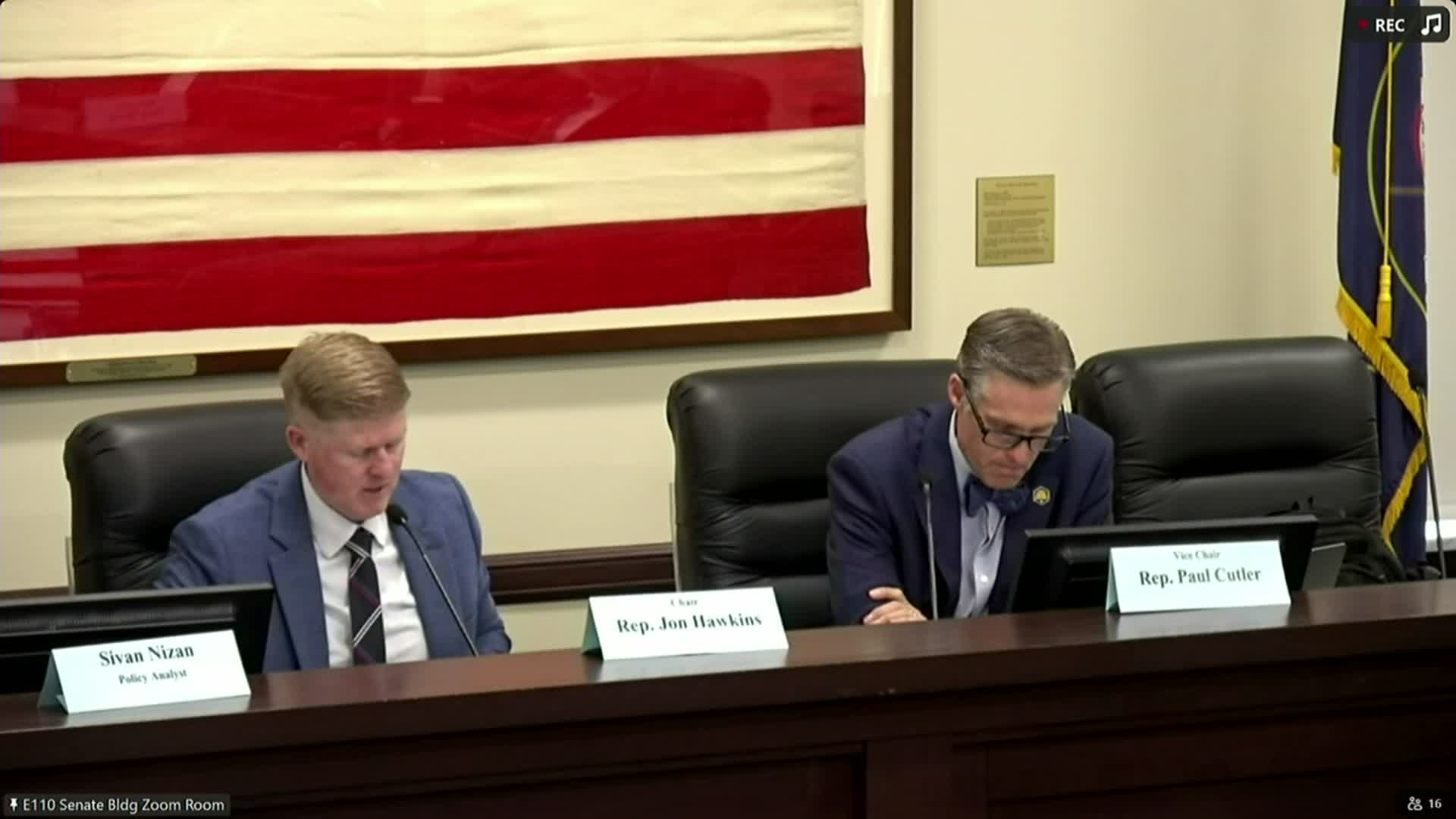
After debate, Representative Cutler moved to adopt the first substitute and later proposed the amendment shortening the preconstruction reporting window; the sponsor accepted the amendment as friendly and the committee adopted the changes. The committee then voted by voice to favorably recommend first substitute HB 76 as amended to the full House.
If enacted, the bill would expand the data the state collects on industrial water use and require the Division of Water Rights to publish aggregated facility-level reporting and summaries. The committee sent the measure forward with the amended reporting window; the bill will be considered next by the full House.