Get Full Government Meeting Transcripts, Videos, & Alerts Forever!
Get email alerts on the Higher Education System topic
No spam. Unsubscribe anytime.
Board and commissioner pitch consensus budget, highlight Admit Utah pilot and concurrent enrollment expansion
Summary
The Board of Higher Education presented a unified, prioritized system budget request that emphasizes strategic reinvestment, shared services, and student access initiatives. The Admit Utah pilot admitted 270 students in real time at Provo School District and staff proposed statewide concurrent enrollment for technical colleges.
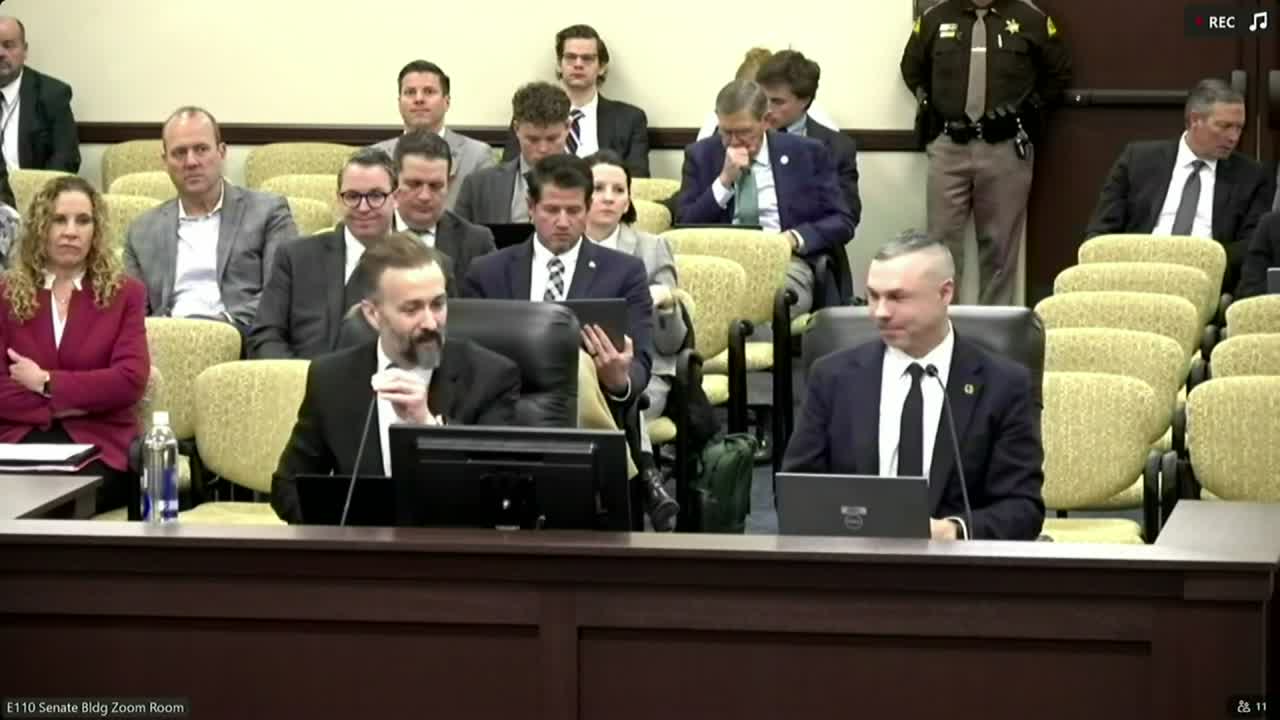
Jeff Lambert, commissioner of higher education, and senior staff presented the Board's unified budget request and system priorities to the Higher Education Appropriations Subcommittee, emphasizing a consensus-budgeting approach, strategic reinvestments, and efforts to preserve affordability.
Lambert highlighted the strategic reinvestment program (established after last session's legislation) as producing a net increase of about $22.2 million in instructional and research spending. "This process resulted in a $22,200,000 net increase in instructional and research expenditures across the system," Lambert said, and described ongoing three-year implementation and reporting.
Deputy Angie Stallings reviewed Admit Utah: phase 1 eliminated application fees for all 16 public colleges, phase 2 opened the site to high school seniors statewide, and a phase 3 pilot in the Provo School District produced 1,554 applications and 270 real-time admissions. "Students can apply and be admitted in a matter of up to 10 minutes," Stallings said, noting a bill this session (SB 152) to simplify data-sharing with the Utah State Board of Education and school districts.
The Board also proposed expanding concurrent enrollment to formally include technical colleges (120 technical-college courses aligned to USBE CTE courses), and described capacity-focused funding requests for technical colleges totaling about $10.6 million to reduce wait lists and meet employer demand. Senior staff said many degree-granting institution requests align with workforce needs such as water infrastructure and programs for incarcerated youth.
On tuition guidance, the Board emphasized disciplined review of tuition-and-fee requests and cited affordability gains (a weighted-average 2.2% increase versus a roughly 3% CPI forecast). The presentation made clear some new requests are conditional on new state revenue; institutions will present specific items in upcoming meetings.
Committee members asked for Western-state comparisons and additional data on enrollment and capacity models; the Board and staff agreed to provide more detail in follow-up presentations.