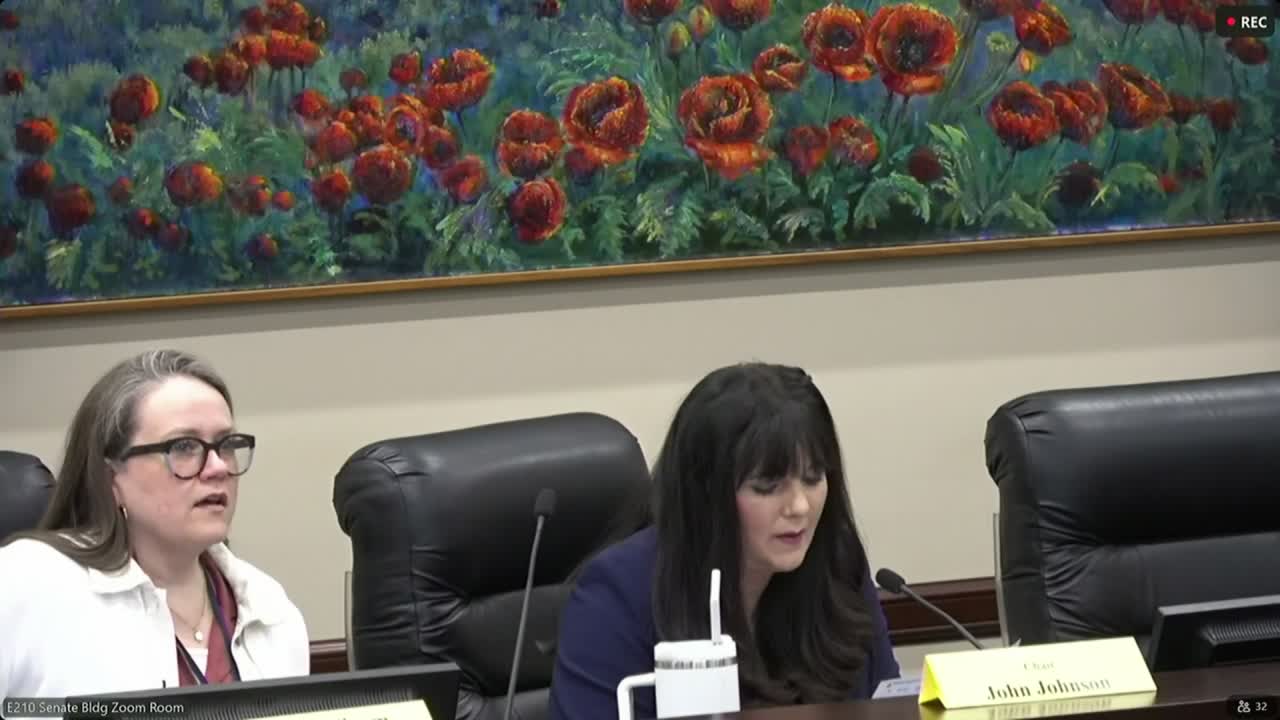
Panel backs sweeping school-construction bill that would move oversight to DFCM despite stakeholder concerns
Loading...
Summary
SB164 proposes transferring primary K–12 construction oversight from USBE to the Division of Facilities, Construction, and Management (DFCM), centralizing permitting and inspections, standardizing costs, and imposing oversight fees; the committee recommended the bill 5–2 amid extensive testimony for and against.
Senate Bill 164, sponsored by Senator Wilson, responds to a legislative audit that identified weaknesses in K–12 construction oversight. The bill seeks to centralize many functions under the Division of Facilities, Construction, and Management (DFCM): exclusive permitting authority for public‑school construction, mandatory plan review and inspection rosters, standardized cost reporting and cost matrices, preapproved design templates, a qualified contractor registry, and an appeals and enforcement structure. The draft also creates a restricted oversight account funded primarily by construction oversight fees (a 1.25% ceiling was discussed) and DFCM managed‑construction administrative charges.
DFCM and former DFCM director Jim Russell argued the bill would provide needed technical oversight, help smaller districts lacking construction expertise, and reduce long‑term costs via standardized design and procurement. Multiple local LEA witnesses including Granite School District staff and architects detailed existing in‑district capabilities and warned centralized oversight could slow projects, raise costs, limit local control, and disadvantage rural districts that lack local supply chains. Several contractors and associations acknowledged the audit concerns but cautioned that rigid centralization could raise costs and reduce competition. Rural senators expressed strong reservations about one‑size‑fits‑all standards and the impact on local discretion.
The sponsor said the bill is intended to follow audit recommendations, to be implemented in phases (rulemaking and a management system before January 2027), and to include a stakeholder process. After lengthy public comment and committee discussion, the committee voted 5–2 to recommend SB164 with the sponsor committing to continue stakeholder negotiation on fee structure, rural flexibility, and implementation timelines.
What’s next: The bill proceeds to the full Senate; stakeholders asked for a clearer fiscal note, finer fee design and opt‑in/opt‑out pathways for LEAs, and alignment with an ongoing DFCM audit.