Get Full Government Meeting Transcripts, Videos, & Alerts Forever!
Get email alerts on the Kratom Regulation topic
No spam. Unsubscribe anytime.
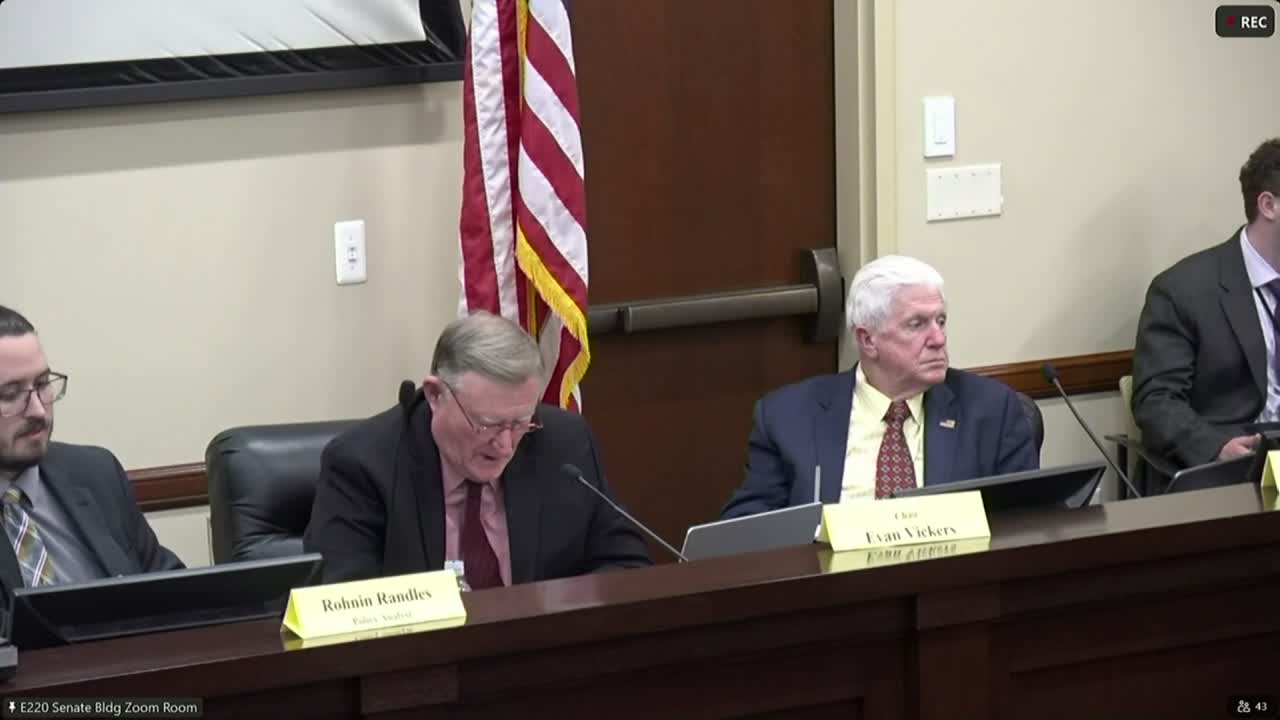
Utah committee backs bill to tighten controls on kratom after hours of testimony
Summary
A Senate committee voted to favorably recommend Senate Bill 45 after extensive expert and public testimony about kratom’s risks and uses; medical examiners reported 158 kratom-involved deaths in Utah from 7/1/2020–6/30/2025 and poison-center cases have risen sharply.
Senator McKell, the bill’s sponsor, told the committee he had purchased kratom from multiple stores and found products that were “incredibly potent and incredibly harmful,” and urged lawmakers to act after what he called mounting evidence of harm.
Medical witnesses described rising reports of harm. Dr. Ryan Stoworthy, an emergency physician, said emergency departments increasingly treat kratom overdoses and withdrawal and that his hospital cared for a patient in the prior four months whose death was believed to involve kratom. Dr. Michael Moss, medical director of the Utah Poison Control Center, said kratom-related reports to the center have “doubled” in the last year or two and that the purified alkaloid 7‑hydroxymitragynine (7‑OH) is “very potent” and can cause overdoses with one or two tablets.
Utah’s Office of the Medical Examiner provided the committee’s most detailed numbers. Megan Brockmire said that from 07/01/2020 through 06/30/2025 there were 158 fatal overdoses in Utah that involved kratom; 91 percent were classified accidental, 94 percent involved at least one other substance and the average kratom-involved death included four substances. Brockmire said kratom-involved deaths are concentrated in Salt Lake County and Utah County.
Brandon Forsyth, director of the Utah State Lab, testified that mitragynine (a kratom alkaloid) can be metabolized by liver enzyme CYP3A4 into the more powerful 7‑OH, a pathway that raises concerns about potency and extraction. He also noted limits in routine testing and that many registered products do not contain the synthetic alkaloids but that extraction methods can change risk.
Public testimony was split. Dozens of speakers described widely divergent experiences: recovery and chronic‑pain patients who said natural kratom leaf helped them avoid opioids and rebuild their lives urged regulation and medical pathways rather than prohibition; parents, youth advocates and prosecutors warned about easy retail access and marketing that appealed to young people and described kratom’s role in poly‑substance deaths.
Industry witnesses pressed for regulated solutions. Matt Salmon, speaking for the American Kratom Association, urged lawmakers to “follow the science,” citing an FDA human dosing study he said found natural kratom leaf well tolerated at tested doses, and arguing for consumer-protection approaches rather than a broad ban.
After more than two hours of testimony and public comment, Senator Musselman moved to favorably recommend SB45. The committee performed a roll-call vote and the chair announced the motion passed (reported 7–1). The committee’s recommendation sends the bill to the full Senate for further consideration.
The committee’s record contains contrasting factual claims and clear next steps: the medical examiner’s office supplied specific fatality counts and a five‑year date range; poison‑control data indicate rising exposures; and witnesses described both harms and therapeutic claims. The bill’s future will turn on how the full Senate weighs those competing claims and whether it narrows or changes the proposal on the floor.