Get Full Government Meeting Transcripts, Videos, & Alerts Forever!
Get email alerts on the Nuclear Regulation topic
No spam. Unsubscribe anytime.
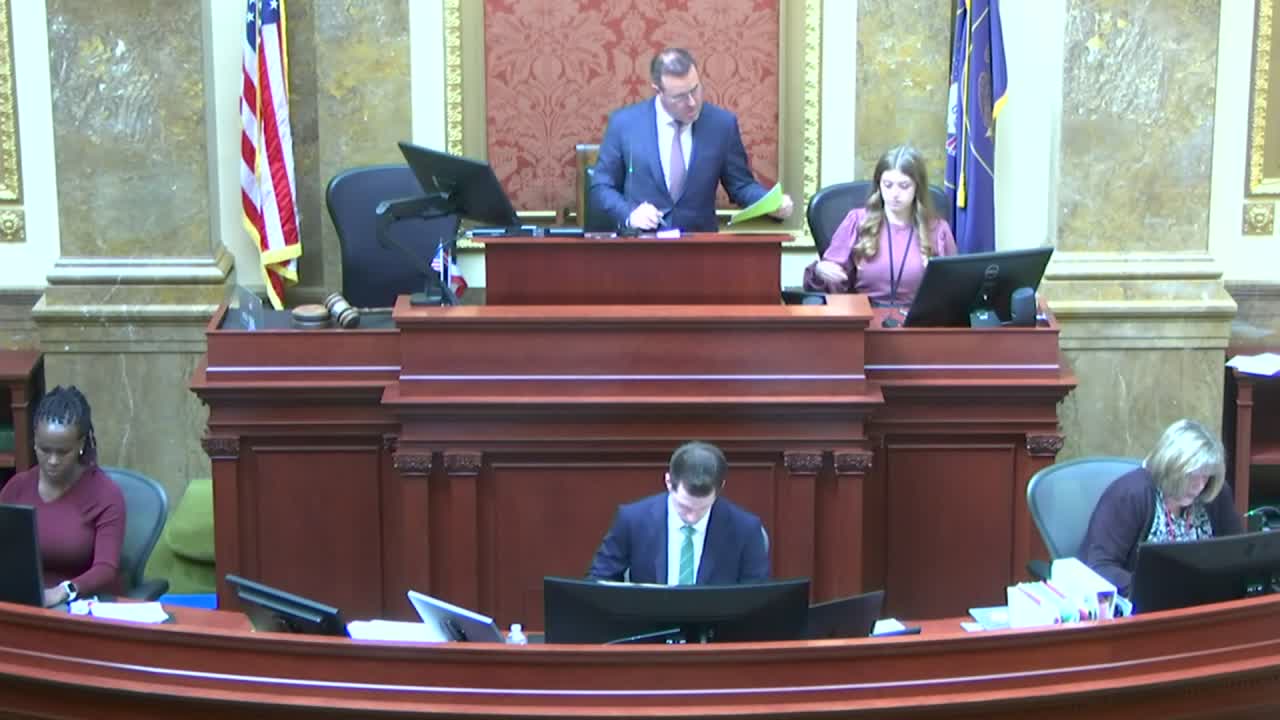
Utah House approves bill to create state nuclear regulatory office, sends measure to Senate
Summary
The House passed HB 78 to authorize a nuclear energy regulatory office within the Division of Environmental Quality, allow fee collection and enter agreements with the U.S. Nuclear Regulatory Commission; sponsors said fees and existing "operation gigawatt" funding will cover start-up costs.
The Utah House on Jan. 23 approved House Bill 78, which would establish a state-level nuclear energy regulatory office within the Division of Environmental Quality and authorize the collection of licensing fees and agreements with the U.S. Nuclear Regulatory Commission.
Representative Carl Albrecht, sponsor of the measure, told colleagues the bill supplements last year's HB 249 and would add rule-making authority and staff capacity at DEQ to oversee licensing, fee collection and intergovernmental arrangements. "The fiscal note is 380,000 for fiscal year '27 and 380,000 for fiscal year '28," Albrecht said when asked about costs, adding that much of the near-term funding comes from the "operation gigawatt" appropriation enacted last year.
Supporters argued the state has existing technical expertise in DEQ and that fee authority will enable the office to recoup administrative costs. Representative Cutler said fees charged to new nuclear businesses "could cover some of the regulatory costs," and Representative Shelley characterized the proposal as "a great step forward" toward energy independence.
Opponents did not press a recorded roll-call opposition during floor debate; discussion focused on clarifying budget impacts and whether a new office was necessary versus using existing state structures. Albrecht said the bill "is an addendum really to our HB 249 from last year" and framed nuclear as a long-term transition from carbon-based fuels to a low-carbon energy source, calling nuclear "the cleanest and most efficient form of energy production there is."
The House voted to pass HB 78; the clerk announced the bill passed with 75 yes votes and 0 no votes. The bill will be transmitted to the Utah Senate for consideration.
Next steps: HB 78 goes to the Senate; sponsors and staff will need to finalize any fiscal-year budget entries beyond the two-year fiscal-note window described on the floor.