
Senate committee backs notice-and-repair safe harbor, seeks guardrails against abusive ADA website litigation
Get AI-powered insights, summaries, and transcripts
Subscribe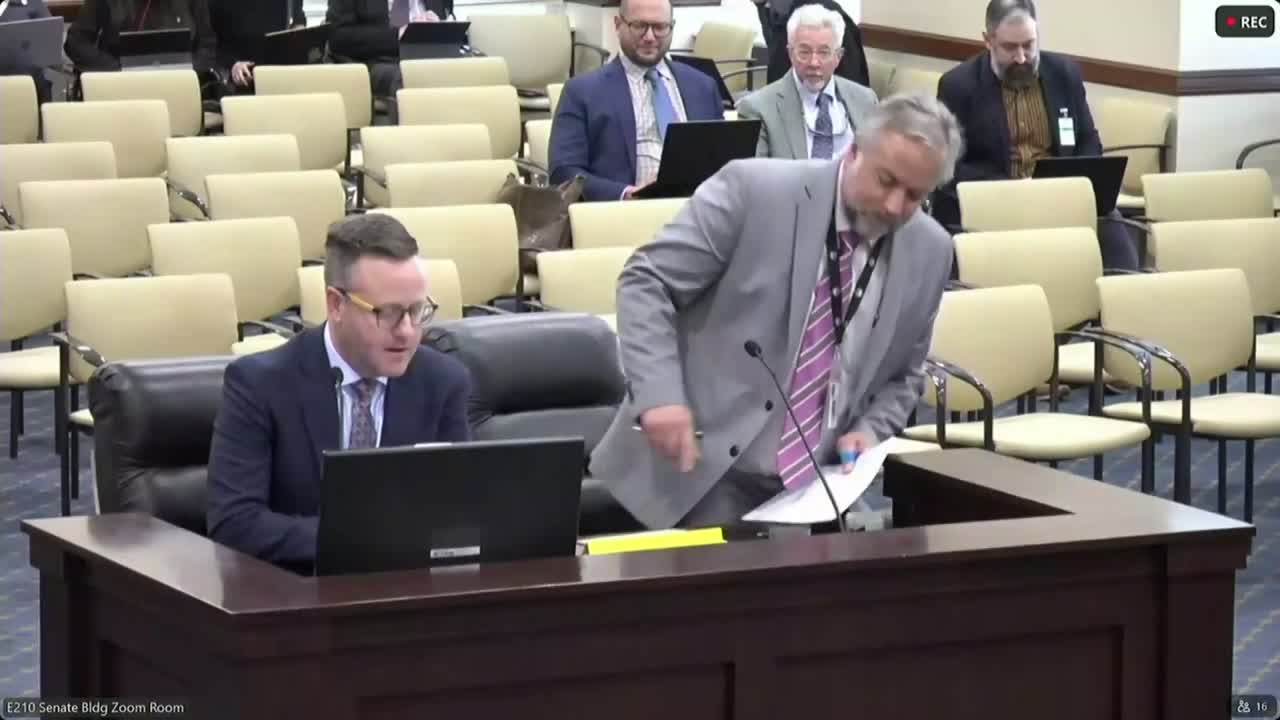
Summary
S.B.68 would give businesses a short cure period after notice that websites are non‑compliant with the Americans with Disabilities Act and create remedies for abusive litigation; disability advocates urged care to avoid chilling legitimate claims. Committee adopted the sponsor’s substitute and recommended it to the Senate.
The committee considered S.B.68, a sponsor‑led bill to create a notice‑and‑repair safe harbor for website and mobile‑app accessibility and to add penalties for abusive ADA litigation tactics. Sponsor framed the measure as aimed at mass litigation driven by automated discovery of accessibility issues and aggressive plaintiff practices that can impose high legal costs on small businesses.
Samuel McHenry, Assistant Utah Attorney General, described a past wave of litigation—hundreds of suits in federal court—that targeted minor, easily remedied violations and harmed businesses that could not afford defense costs. He told the committee a safe harbor allowing a 30‑ to 90‑day cure period would give businesses time to fix problems and reduce coercive settlements.
Disability advocates offered mixed feedback. Nate Krippas of the Disability Law Center and Everett Bacon of the National Federation of the Blind warned the committee against measures that could chill meritorious claims, urging care to preserve legitimate private enforcement. Audrey Baron raised legal questions about federal preemption and how a state law would operate alongside federal ADA private rights of action; the sponsor and AAG said the substitute targets truly abusive suits and includes an intent/abuse standard while preserving remedies for genuine access failures.
After public comment, the sponsor moved to favorably recommend a substitute; the committee adopted the changes (including a warning/notice element) and voted to recommend the substitute favorably to the Senate.
S.B.68 now moves to the full Senate with the committee’s favorable recommendation.