Utah committee backs bill to make moratorium on most transgender treatments for minors permanent
Loading...
Summary
The House Health and Human Services Committee voted 10‑3 to recommend HB 174, which would make the 2023 moratorium on most transgender medical treatments for minors permanent and set a deadline for ongoing treatments; testimony divided sharply between detransitioners and clinicians who said care is life‑saving.
The Utah House Health and Human Services Committee on Wednesday voted 10‑3 to favorably recommend HB 174, a bill from Representative Shipp that would make permanent the moratorium enacted by 2023’s SB 16 and require that certain ongoing treatments stop by the sponsor’s statutory cutoff.
Supporters told the committee the measure is a medical‑caution step to protect minors from irreversible harms. Retired pediatrician David Betker, one of several medical witnesses, framed the debate around standards of evidence and asserted systematic reviews show very low certainty for long‑term benefits of puberty blockers and cross‑sex hormones. "The systematic review does this for medical research," Betker said, arguing the evidence base did not justify routine use of those interventions in children.
Opponents — including transgender people, families and clinicians — said removing access to care will harm youth already in treatment and violate the doctor‑patient relationship. ACLU of Utah representative Sofia Hostigy told the committee she opposed HB 174 and related bills and said the legislature had commissioned extensive analyses that should inform policy. "When lawmakers ignore their own evidence and override medical expertise, people get hurt," Hostigy said.
Detransitioner Chloe Cole gave personal testimony about starting puberty blockers and testosterone at 13, having a double mastectomy at 15 and later detransitioning. "I was 13 years old," Cole told the committee in response to a legislator’s question about when she began treatment; she described chronic health issues and urged lawmakers to make the moratorium permanent.
Supporters and many witnesses criticized the Utah Department of Health and Human Services’ report prepared by the University of Utah Drug Regimen Review Center (DRRC), arguing it did not perform a formal evidence synthesis as required by SB 16 and omitted priority outcomes including persistence, desistance and regret. Kurt Miceli of Do No Harm Action told lawmakers the DRRC work "effectively handed us a bunch of random puzzle pieces without any clear picture." The sponsors and some witnesses cited the United Kingdom’s Cass review and an umbrella review by the U.S. Department of Health and Human Services as more methodologically sound reviews.
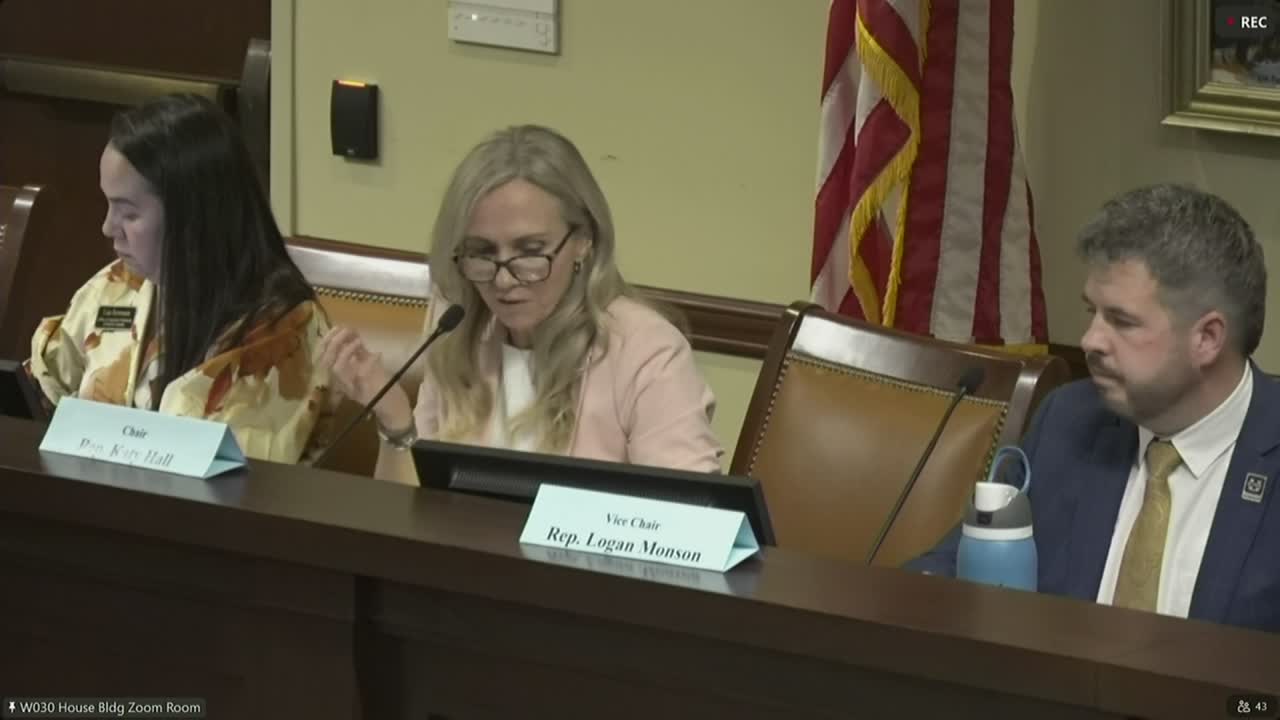
During committee action, Representative Ward moved a sponsor‑described friendly amendment to allow those continuing treatment for the next year to remain on it; the committee adopted that amendment. An attempt to extend the grandfathering cutoff from 2027 to 2030 failed on a roll call. The committee then voted to recommend HB 174 as substituted and amended, 10 in favor and 3 opposed (Representatives Daley‑Provost, Fitzsmanu and Hollins).
The committee record shows the vote advancing the bill; next steps for HB 174 will be consideration by the full House under the legislative calendar. The committee’s discussion made clear the division: backers stressed perceived methodological flaws in the state report and the risk of irreversible harms, while opponents emphasized patient safety, civil‑rights concerns and clinical judgment.
Outcome and next step: HB 174 was favorably recommended out of committee and will proceed in the legislative process.