Committee advances a slate of bills on elections, procurement and employee protections
Loading...
Summary
The Senate Government Operations Committee favorably recommended several bills — including HB85 (state sovereignty amendments), SB163 (municipal prosecutor authorization), SB176 (landscaping procurement substitute), HB26 (voting-equipment rules), HB33 (political sign rules), HB53 (community rehabilitation) and HB73 (whistleblower protections) — most by unanimous or strong committee votes.
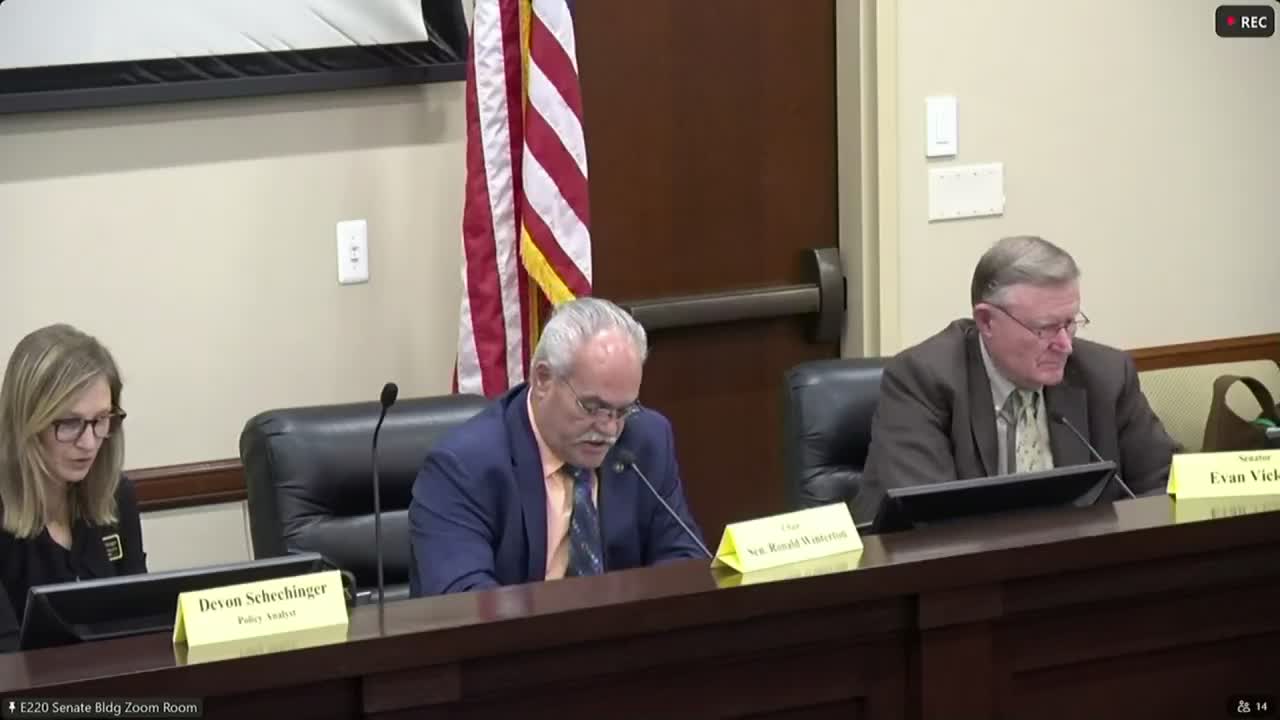
The Senate Government Operations Committee moved multiple bills to the Senate floor after presentations, questions and public comment.
House Bill 85 (state sovereignty amendments) — Representative Shepherd said the bill extends earlier state-sovereignty work to require state leaders to include Utah experts when considering international government recommendations. The committee favorably recommended HB85 unanimously after brief discussion and limited public comment.
Senate Bill 163 (municipal prosecutor amendment) — Senator Pitcher said the bill clarifies that cities may contract with and deputize private attorneys to perform prosecutorial duties, mirroring county authority. Municipal officials testifying described this as an established contracting practice used by small cities to keep justice courts operating. The committee favorably recommended SB163 unanimously.
Senate Bill 176 (landscaping procurement amendments) — Sponsor presented a first substitute to require replacement of gas-powered landscaping equipment on state properties with electric equipment at end-of-life where practical. Michelle Brown (Department of Government Operations) summarized a 2020 pilot funded by a DEQ incentive grant (about $46,000) showing fuel-cost savings and CO2 reductions. The committee adopted the substitute and favorably recommended it; the transcript records a committee announcement indicating six in favor, four opposed and one other recorded on the chamber floor.
House Bill 26 (voting-equipment amendments) — Representative Cutler explained the substitute clarifies that equipment used to cast or count votes cannot have wireless capabilities, and county clerks testified counties are already in compliance. The committee favorably recommended the substitute unanimously.
House Bill 33 (political sign amendments) — Representative Tuscher laid out changes including paid-by disclosures for signs above a new size threshold, prohibitions on affixing materials that alter a sign's message, a ban on certain utility-pole signs, and a 14-day post-election removal rule. County clerks and members of the public generally supported codifying consistent statewide rules. The committee favorably recommended HB33 unanimously.
House Bill 53 (Community Rehabilitation Program amendments) — Representative Miller sought a 10-year sunset extension and added reporting requirements for contracts and outcomes relating to hiring adults with qualifying disabilities; public commenters urged continued oversight and data collection. The committee favorably recommended the bill and placed it on the consent calendar.
House Bill 73 (public-employee retaliatory-action amendments) — Representative Walters said the bill would protect state employees who make whistleblower complaints from retaliatory reporting to licensing bodies; committee members asked about applicability to mental-health clinicians and the sponsor clarified protections cover retaliatory licensing complaints. The committee favorably recommended HB73 unanimously.
The committee adjourned after completing its agenda; most measures will appear on the Senate floor for further action.