Get Full Government Meeting Transcripts, Videos, & Alerts Forever!
Get email alerts on the Property Tax Reform topic
No spam. Unsubscribe anytime.
Committee advances property‑tax reforms and a senior relief redesign amid sharp public comment
Summary
Lawmakers favorably recommended multiple property‑tax measures — a senior relief deferral (SB78), caps and new‑growth changes (SB97), and amendments changing school funding flows (SB65) — after extensive testimony from auditors, county treasurers, housing advocates and municipal representatives.
The Revenue and Taxation Committee on Jan. 28 advanced several bills that would reshape property‑tax policy and relief programs.
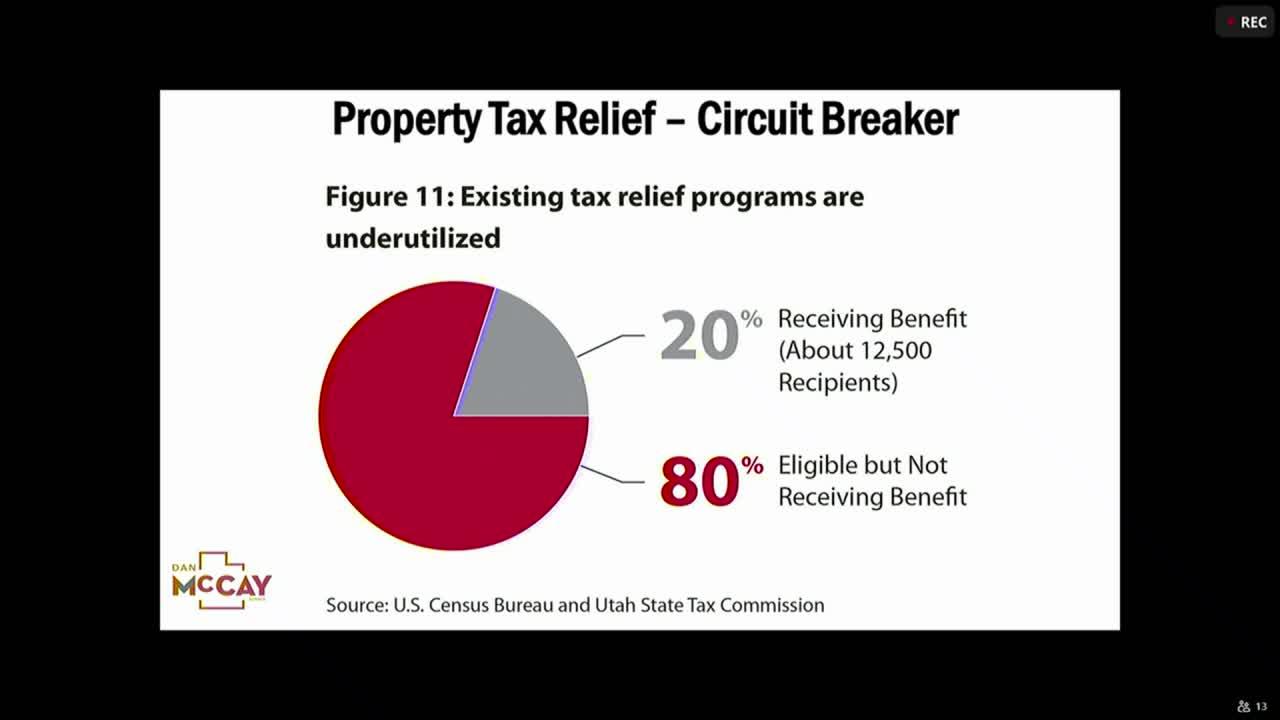
SB78, presented by Senator Dan McKay, would redesign relief for low‑income seniors by expanding eligibility and shifting from a circuit‑breaker abatement to a deferral model that preserves the tax base while allowing homeowners to defer some growth in property taxes. The substitute raises nondiscretionary household income eligibility to $75,000, sets preferred interest rates on deferrals (e.g., 3% nondiscretionary, 2% discretionary for the most indigent), and extends the delinquency/tax‑sale window (to 10 years for owners over a certain age) to reduce foreclosure risk.
The sponsor said the deferral model avoids shrinking the tax base — which would otherwise raise rates for other taxpayers — and argued the change broadens access while preventing immediate foreclosures. Opponents, including housing advocates, county treasurers and Crossroads Urban Center, warned the shift would increase regressivity, complicate administration and could harm vulnerable seniors; Grand County Treasurer Chris Kaufman told the committee the policy would place difficult choices on seniors and estimated small per‑taxpayer savings compared with harms to individuals.
SB97 (first substitute) includes a package of changes: a cap on local tax‑rate increases (illustrative 5% in the draft), a 25% limit on local fund balances, a limit of one primary‑residence exemption per household, tightened new‑growth definitions (counting growth only when prior value increases by 200%), and rules deferring assessment of physical improvements until completion. Municipal representatives cautioned that caps could affect bond ratings and local finance flexibility; the League of Cities and Towns sought continued negotiations.
SB65 amendments would redirect certain property‑tax remittances through the state to the Uniform School Fund, aiming to equalize cash flows among districts. The Utah State Auditor said the current draft raised GASB accounting concerns unless structured carefully (e.g., as a state‑level property tax), and school board representatives warned of interest income losses and impacts on district budgets.
After extended discussion and promises of continued stakeholder work (auditor's office, counties, cities), the committee favorably recommended SB78 and SB97 (each 4–1) and SB65 (4–1) with the sponsors committing further changes before floor action.