Get Full Government Meeting Transcripts, Videos, & Alerts Forever!
Get email alerts on the E Bikes topic
No spam. Unsubscribe anytime.
Panel adopts first substitute for e-bike bill, then holds it to work out insurance and implementation issues
Summary
The committee adopted a first substitute to HB381 to update e-bike classifications, require a short safety course for independent use, and treat high-speed devices like motorcycles in some respects. After testimony raising insurance coverage and local-control questions, the committee adopted the substitute and then voted to hold the bill for further work.
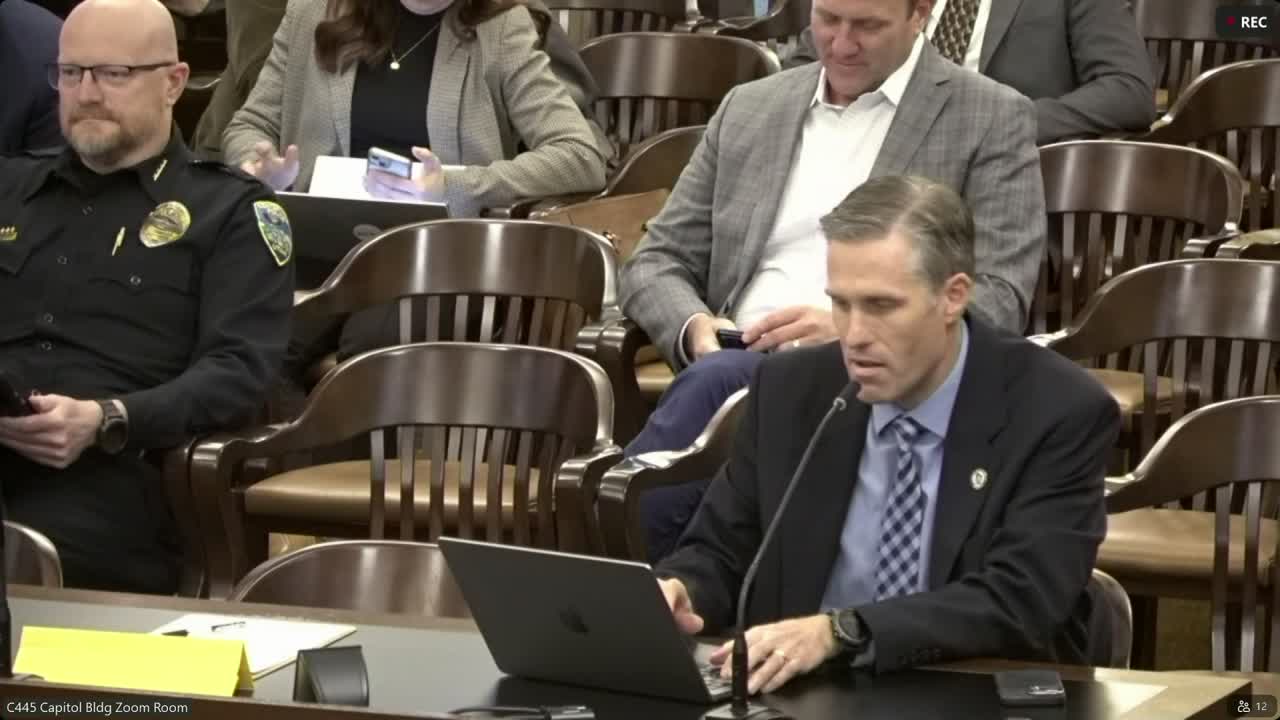
Representative Cutler presented the first substitute to HB381, a broad package of electric-bicycle and micro-mobility amendments that creates a new “high-powered electric device” category, clarifies class 1–3 distinctions, adds labeling requirements, proposes a short safety course for independent street use, and tightens helmet and training requirements for faster devices. “Our goal is to get more kids riding bikes and more kids riding bikes safely and independently,” the sponsor said while outlining device classes and training proposals.
Key provisions in the proposed substitute include: - Device classification: Class 1 (pedal-assist, up to 20 mph), Class 2 (throttle, up to 20 mph), Class 3 (pedal-assist, up to 28 mph) and a new high-powered category for devices capable of exceeding 20 mph, which the bill would treat like a motorcycle in several respects. - Safety training: A short, low-cost safety certificate—intended to be offered online for about $10 or less and to be portable to a phone—would let riders aged 8–15 ride independently after completing training; a certificate could also be issued via school or community programs. - Helmets and enforcement: The substitute proposes consistent helmet guidance for higher-speed devices and makes the safety certificate a secondary enforcement tool (similar to seat-belt enforcement). - Labeling and point-of-sale information to help officers and consumers identify device classes.
Law enforcement and emergency medicine witnesses supported clearer rules. Chief Allen Ackerson of the Centerville Police Department said classifications are “very confusing” for officers and welcomed streamlining and educational flowcharts for enforcement. Catherine Stokes, a nurse who treats pediatric trauma, said her facility had seen a 66% increase in e-bike accidents and supported standardized safety education and helmet requirements.
Industry and advocacy witnesses urged targeted changes. Brian Child, founder of Baku e-bikes, warned against changing nationally recognized definitions and described on-demand programming that lets a bike be configured to meet local rules. Dave Eltis (Cycling Utah) recommended integrating e-bike safety into driver licensing curricula. Keegan Martineau (Utah Association for Justice) raised a new concern: classifying some high-powered devices as motorcycles could exclude them from common auto and homeowner insurance uninsured/underinsured motorist protections. The sponsor acknowledged he was not aware of that insurance gap and said he planned to meet industry and insurance representatives to resolve the issue.
After discussion, the committee adopted the first substitute by voice vote and, at the sponsor's request, voted to hold the bill so staff and stakeholders can address implementation issues including insurance, labeling and rental-company exemptions. The committee invited members to view a demonstration of devices on the Capitol's south steps.
Next steps: sponsor to meet with insurance and industry stakeholders and return a revised substitute addressing the identified coverage and implementation concerns.