Get Full Government Meeting Transcripts, Videos, & Alerts Forever!
Get email alerts on the Judiciary Reform topic
No spam. Unsubscribe anytime.
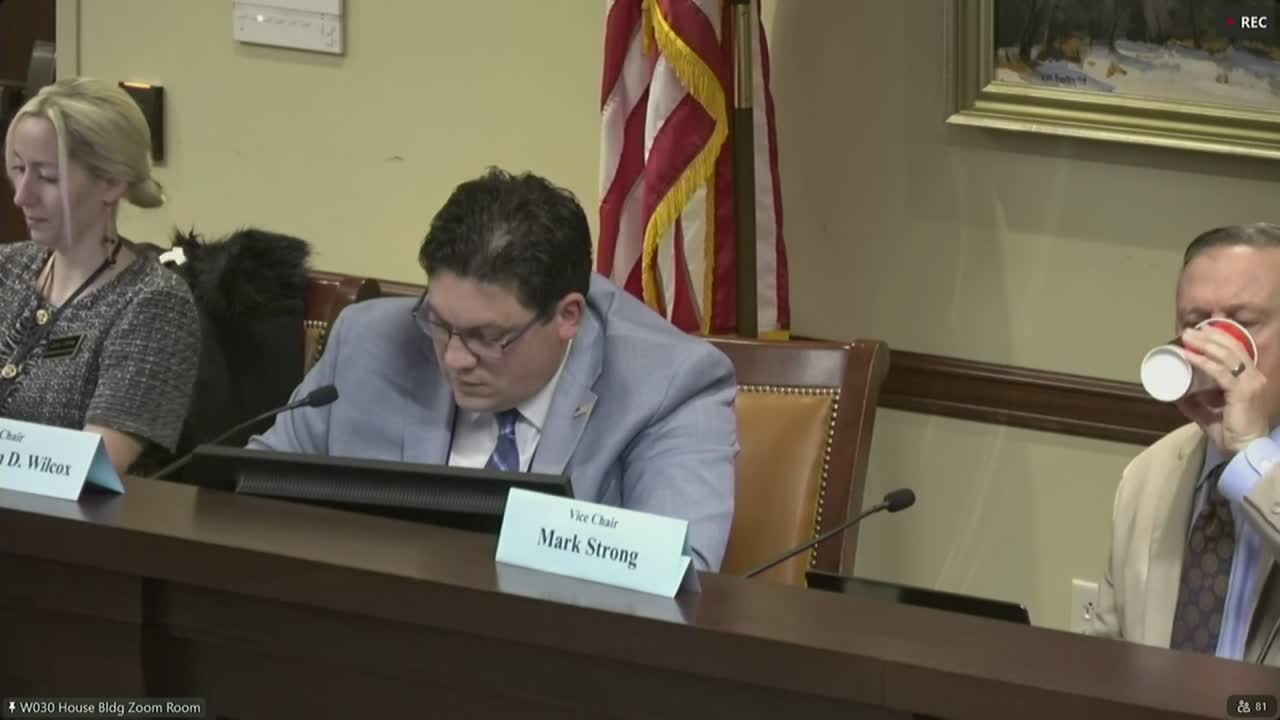
Bill to create a statewide three‑judge 'constitutional court' triggers broad opposition at committee hearing
Summary
Representative McPherson’s HB392 would create a three-judge statewide trial court to hear facial constitutional challenges; it drew extended testimony from judges, bar groups, practicing attorneys and citizens who warned it risks politicizing judicial review and enables forum shopping. The committee sent the bill to the floor after debate (vote 7–2).
Representative McPherson introduced House Bill 392 as a proposal to establish a statewide three-judge constitutional court with exclusive jurisdiction over facial challenges to state laws. The sponsor said the panel would be selected through the existing nominating process, appointed by the governor and confirmed by the Senate, and argued that specialization would speed resolution of high-profile constitutional questions and relieve district courts with heavy workloads.
Opponents from the Administrative Office of the Courts, the Utah State Bar and many trial- and appellate-practice attorneys urged caution or rejection. Michael Drexel, assistant state court administrator, said the bill’s structure ‘‘pre‑selects’’ the decision makers in advance of filings and risks perceptions of unfairness. Multiple attorneys, law professors and former judges warned the measure could undermine separation of powers and public trust by concentrating control over which cases go to which judges. Professor Linda Smith recommended a task force and more study, and the Utah State Bar urged funding staff and lower-court judges instead of expanding a supreme or constitutional court bench.
Supporters — including some conservative civic groups and individual citizens — said existing case backlogs and long injunction timelines justify creating a specialized panel. The sponsor acknowledged the bill was introduced quickly and said he would seek to work on clarifying language and produce substitutes.
After extended public comment and committee discussion, a substitute motion to hold the bill failed and the underlying motion to pass HB392 out of committee with a favorable recommendation carried; the transcript records the final committee decision to move HB392 to the House floor (committee vote recorded as 7–2).