Get Full Government Meeting Transcripts, Videos, & Alerts Forever!
Get email alerts on the Wildfire Response topic
No spam. Unsubscribe anytime.
State forestry and fire officials outline heavy fire season costs and implementation steps for WUI fee
Summary
Forestry, Fire and State Lands reported 1,100 fires that burned roughly 164,000 acres this year, preliminary suppression costs of about $191 million (non‑federal state spend ~ $31 million), and described implementation details and outstanding questions on HB 48's Wildland‑Urban Interface fee and county collection arrangements.
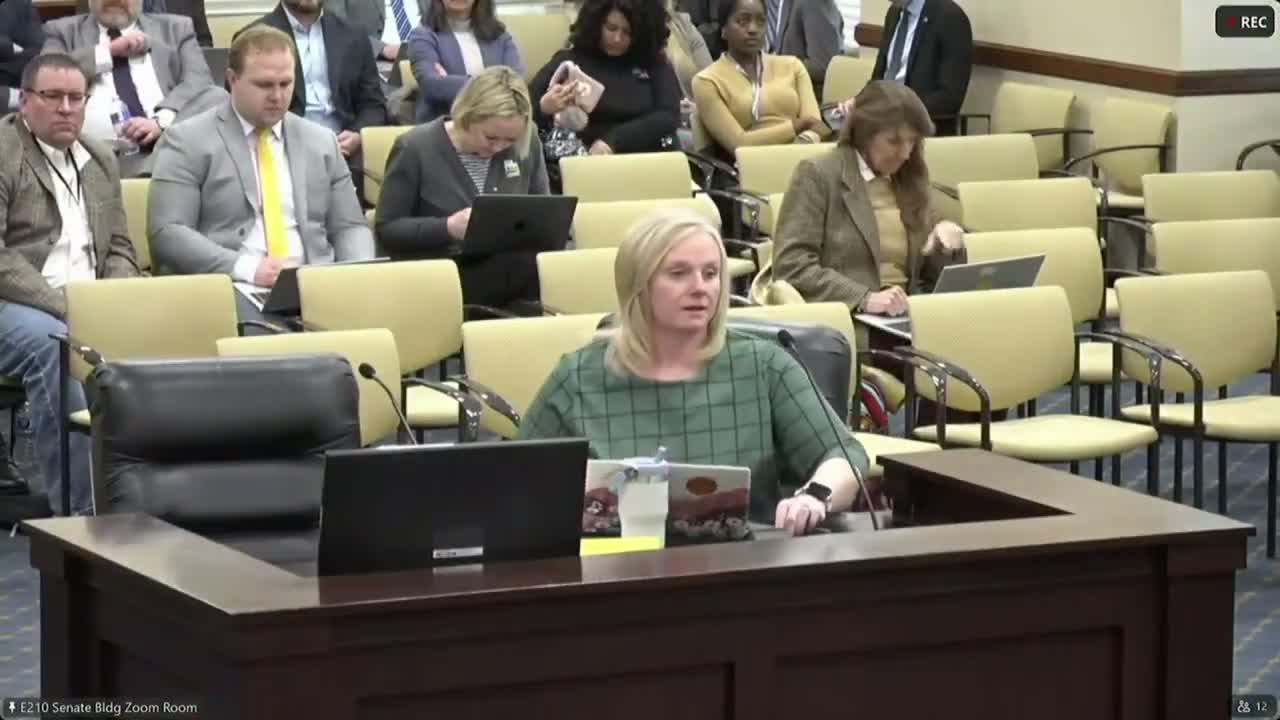
Jamie Barnes, with Forestry, Fire and State Lands (FFSL), briefed the appropriations subcommittee on fire season activity, mitigation work and ongoing rule and program implementation related to the Wildland‑Urban Interface (HB 48).
Barnes said the state experienced an extreme fire season driven by drought, wind and dry fuels: roughly 1,100 fires burned about 164,000 acres in the most recent year, with about 702 human‑caused fires accounting for some portion of the acreage. Initial suppression cost estimates total about $191 million (not including federal dollars); Barnes said non‑federal state expenditures alone were about $31 million (including county and city responses) and that federal FMAG reimbursements are arriving (he cited roughly $8.5 million reimbursed on six fires, with more partial payments in process).
On HB 48, Barnes said the law designates annual fees assessed to taxable structures in high‑risk WUI areas (he cited about 59,000 taxable structures), that the fee as drafted is based on structure square footage rather than value, and that agreements with counties will set collection arrangements (the bill language does not yet set a fixed split). For fee implementation the division is working on pending county MOUs and the operational details of assessment and collection.
Barnes highlighted investments in fire prevention such as FireSense (which the division says returns approximately $15 saved for every state dollar invested), hazardous fuels reduction (targeting thousands of acres annually) and aviation resources (contracted helicopters and type 1 helicopters for response). He also summarized FFSL—s role in sovereign‑lands water acquisitions and shoreline restoration on the Great Salt Lake and described mineral‑program reforms following a legislative audit.
Why it matters: Committee members pressed for clarity on fee mechanics, cost recovery and how proposed WUI assessments will be implemented and shared with counties. The division asked for time to finalize county MOUs and for continued appropriation authority to meet response and prevention needs.