Get Full Government Meeting Transcripts, Videos, & Alerts Forever!
Get email alerts on the Transparency Video topic
No spam. Unsubscribe anytime.
Coral Gables mayor, staff defend edited meeting video and travel budget after public outcry
Summary
Public speakers accused the city of editing a previous commission meeting video and questioned a proposed increase in the mayor’s travel allotment. Mayor Lago and staff explained the city’s practice of trimming recesses from posted meeting footage, defended official travel as tied to Tallahassee advocacy, and pushed code enforcement and transparency steps for other concerns.
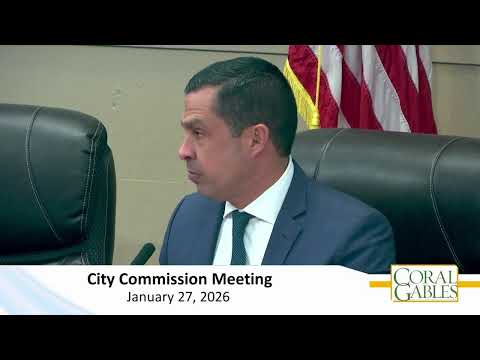
Mayor Marlin Lago faced sustained public criticism at the Jan. 27 Coral Gables City Commission meeting after speakers accused staff of altering a prior meeting’s publicly posted video and questioned a proposed increase to the mayor’s travel allotment. The mayor denied impropriety, said he has ‘‘never taken a trip on the city dime,’’ and asked staff to publish an explanatory newsletter for residents.
The exchange began during public comment when residents said the Miami New Times published an unedited meeting video that showed discussion the city’s posted clip omitted. Maria Cruz and other commenters urged the commission to investigate whether the city’s YouTube posting had been altered and questioned why the mayor’s travel budget was proposed to rise from $1,800 to $4,500. Cruz said the change looked like a 150% increase and linked it to broader concerns about transparency.
City Clerk Kirk and the city manager explained the city’s standard practice: the archived video on coralgables.com is edited to remove long recesses and periods when microphones are intentionally turned off; the separate YouTube feed sometimes retains different camera angles or audio. Kirk said he has overseen video editing since 2011 and that the city turned off microphones during breaks to avoid recording private conversations. The manager said the travel amounts represent a multiplication of the prior per-commissioner allowance to permit multiple trips to Tallahassee, not discretionary overseas travel.
Mayor Lago told the commission he had traveled to Tallahassee to secure state appropriations on the city’s behalf and said he paid personally for at least one dinner charged at $1,000 rather than putting it on the city tab. He also accused certain media outlets of bias and said ongoing code enforcement has been used to address longstanding problems, including poor maintenance of newspaper vending stands.
Commissioners and staff emphasized the technical and procedural distinctions between edited archive footage and raw feeds made available through public-records requests. City Attorney clarified that edits historically remove recess material and that staff have been responding to records requests for different camera angles and full recordings. The commission did not open a formal new inquiry at the meeting but directed staff to continue applying existing public-records practices and to provide clearer explanations of video retention and posting practices to the public.
The mayor called for the city to publish an explanatory newsletter item about the edits and the travel allotment change. The clerk said cable-TV procedures and archival policies can be modified if the commission directs it; no immediate change in policy was adopted at the meeting.
A staff follow-up anticipated: a staff memo or newsletter item clarifying the city’s video-posting practices and a reminder that public-records requests can produce additional raw camera angles and audio.