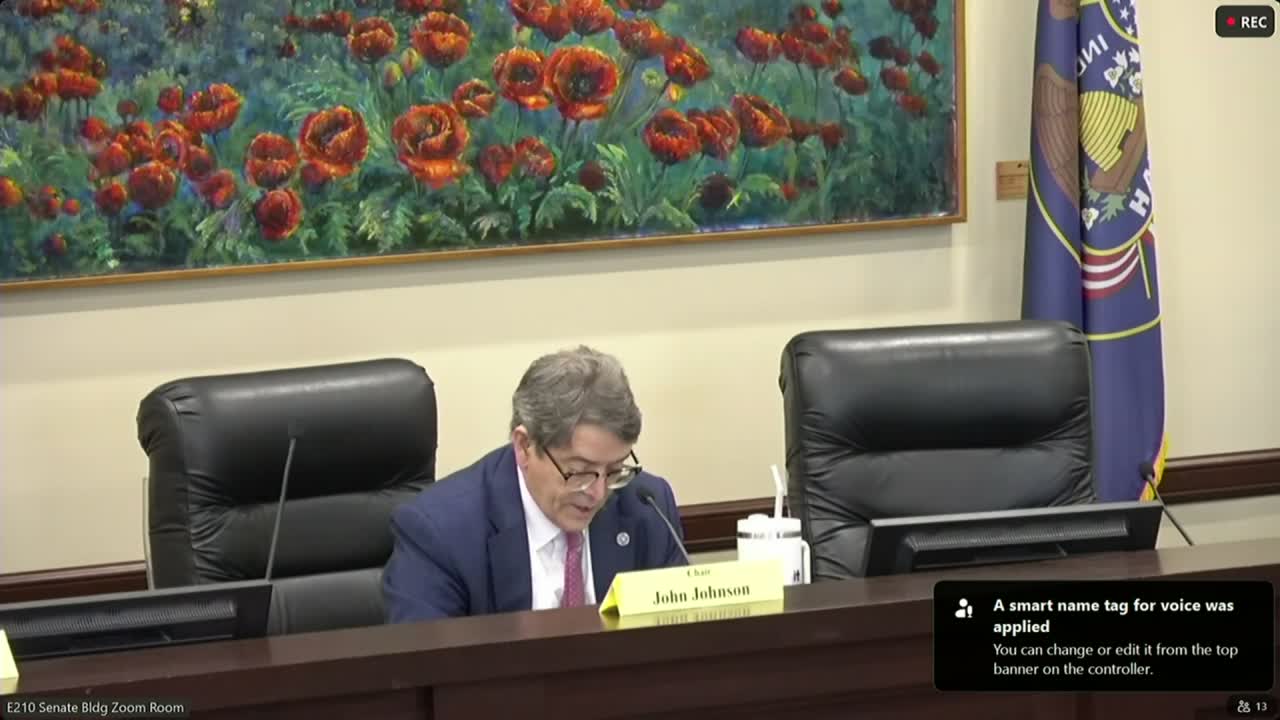
Senate committee recommends state fund, strategic plan to replace expiring federal cybersecurity grants
Loading...
Summary
A Utah Senate committee recommended First Substitute S.B. 123 to create a restricted state account and a statewide cybersecurity strategic plan to replace expiring federal grants and broaden participation in the state cyber center. Testimony from water utilities, schools and the state cyber center endorsed the measure.
Sen. Harper told the committee the state needs to replace expiring federal cybersecurity grants and create a restricted account that can receive appropriations from the general and education funds to support cybersecurity for K–12 schools and political subdivisions. He said the bill also directs development of a statewide cybersecurity strategic plan and expands membership of the state cyber center to include additional agencies.
The sponsor described the bill as narrowly focused on coordination and resources: “It creates a fund that if we appropriate funds… that it can go into to support cyber security, both K through 12 and all political subdivisions,” he said, and noted the bill makes the account nonlapsing and includes technical definition fixes.
Representatives of state and local infrastructure and education sectors urged passage. Nathan Lundstead, director of the Division of Drinking Water (Department of Environmental Quality), told the committee the agency is listed as a collaborator and “this just supports the work we're doing to protect our critical infrastructure with our drinking water systems.” David Bowman, Jordan School District’s system and security manager, said K–12 systems face escalating threats: “In the last 18 months more than 50% of the students in the state of Utah have been impacted by cybercrime,” and described districts’ limited capacity to respond without coordinated state support. Phil Bates, the state chief information security officer and director of the cyber center, also voiced support for expanding the center’s membership and making its resources more widely available. Spencer Jenkins of the Utah Education and Telehealth Network emphasized that threats to one entity quickly affect others and welcomed a collective approach.
A committee member noted the fiscal note shows only administrative costs (the sponsor said the fiscal note reflects administration only), and the sponsor said an RFA is being pursued to request federal funds while the restricted account would hold state appropriations should the legislature provide them. The committee voted to recommend First Substitute S.B. 123 with a favorable recommendation; the chair ruled the vote unanimous.
The measure now goes to the full Senate, where any appropriation to the new restricted account would be considered during the budget process.