Get Full Government Meeting Transcripts, Videos, & Alerts Forever!
Get email alerts on the Construction Trades Ce topic
No spam. Unsubscribe anytime.
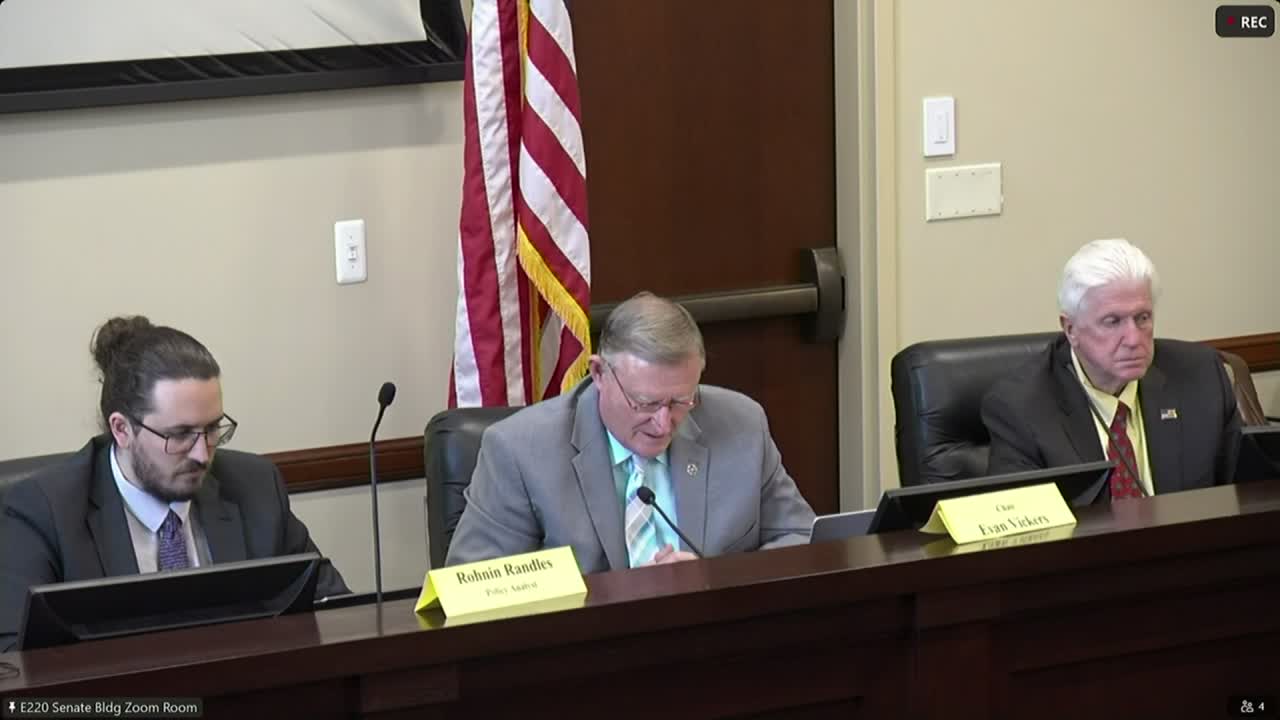
Committee hears SB 188 to let Utah Masonry Council provide member-only contractor continuing education
Summary
Senate Bill 188 would add the Utah Masonry Council to a statutory list of approved providers so the council can offer continuing-education credits to its contractor members only; the Home Builders Association opposed the change on quality-control grounds. The committee voted to move the bill forward so sponsors can work with stakeholders.
Senate Bill 188, introduced Jan. 29 to the Senate Business and Labor Standing Committee, would add the Utah Masonry Council to the statutory list of organizations eligible to provide continuing-education (CE) credits for contractor licenses — but only for the council’s members.
Sponsor Senator Escamilla told the committee the measure is narrow and industry-driven, and that adding the Masonry Council would let that trade offer “trade-specific training” to its membership. Adam Hickin of the Utah Masonry Council testified that members have asked for more targeted instruction: “So what we are wanting to do by being on this bill is making it possible so that we can give our members, trade specific training, not just your simple training that a lot of subcontractors go through,” he said.
The Masonry Council and the sponsor said the change would not prevent contractors from taking CE courses from other approved providers; it would only allow the Masonry Council to be listed in code as an approved provider for its members. Committee members asked whether the statutory language applies to general contractors or specialty licenses; witnesses and the sponsor said the referenced code section applies to general contractor CE requirements and that DOPL (the Division of Professional Licensing) accredits and registers CE courses and credits.
Taz Biesinger of the Utah Home Builders Association urged the committee to oppose the bill, saying weakening central controls could recreate past problems with inconsistent course quality. “The classes were a mess. We had people coming in from out of state that weren't even teaching Utah law,” Biesinger said, arguing that the Home Builders Association has long worked with DOPL to ensure courses meet state requirements and that repeatedly adding small providers risks returning to a “wild west” approach to CE.
After discussion, Senator Ibsen moved to advance the item so the sponsor could work the details with the Home Builders Association; the motion passed on a voice vote recorded as 4–0. The sponsor said he intends to seek consensus and refine statutory language with stakeholders before the bill returns to committee.
The committee did not take a final vote on the bill’s merits; the next step is for the sponsor and interested parties to continue negotiations and return with agreed language or amendments.