
Committee backs HB 215 to protect homeowners’ right to create defensible space in WUI areas
Get AI-powered insights, summaries, and transcripts
Sign Up Free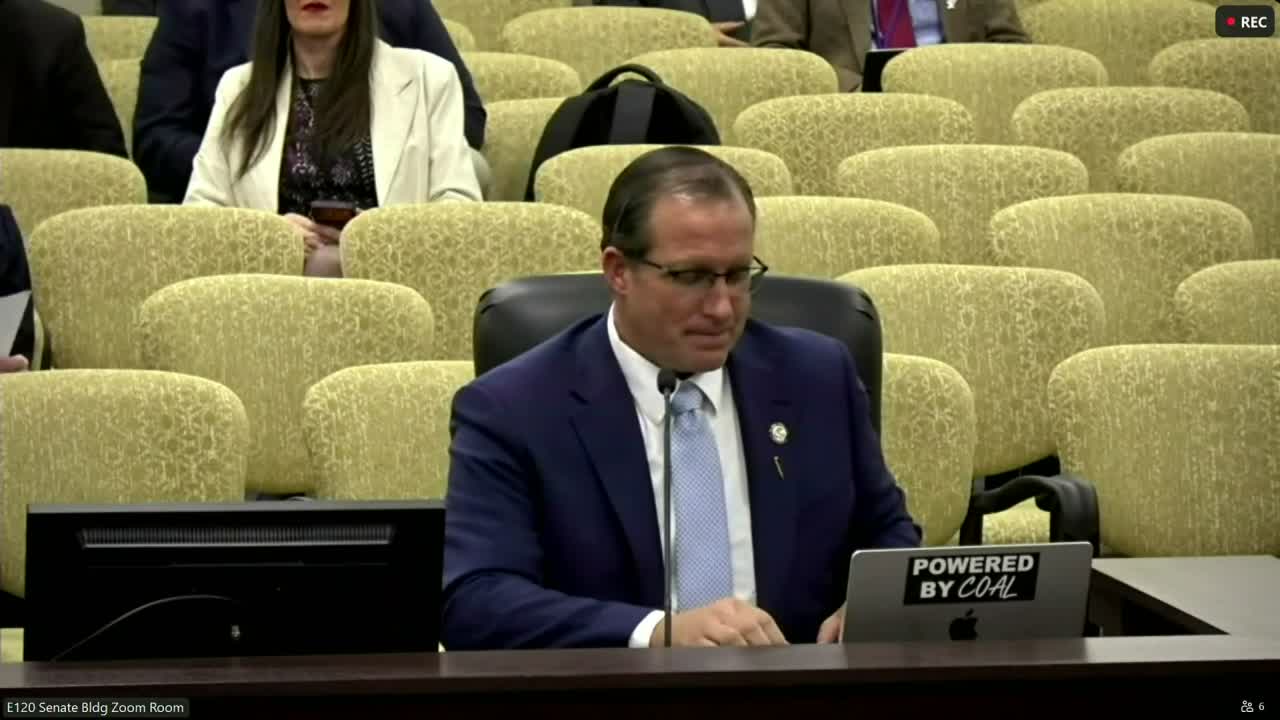
Summary
The committee unanimously adopted and recommended HB 215 (as amended), which prevents local ordinances and HOAs from barring property owners in Wildland‑Urban Interface areas from creating defensible space consistent with the International Wildland‑Urban Interface Code; hazard categories define 30, 50 or 100‑foot buffers.
The House Political Subdivisions Standing Committee unanimously adopted and favorably recommended House Bill 215, which clarifies that property owners in designated wildland‑urban interface (WUI) areas may create defensible space consistent with the International Wildland‑Urban Interface Code.
Rep. Michael J. Petersen, sponsor of HB 215, said the bill ensures a property owner who wants to create defensible space to protect a home from wildfire is not blocked by a local ordinance or homeowners association restriction. ‘‘This makes it so that if a property owner wants to defend their house from a wildfire, they aren’t prohibited from creating defensible space,’’ he said.
Committee members asked for technical detail about the definition of defensible space. Petersen said the required clearing depends on the hazard classification: medium hazard ~30 feet, high hazard ~50 feet, and extreme hazard ~100 feet. Fire officials testifying in support urged caution to balance fuels reduction and slope stability.
Clint Smith, fire chief of Draper City and representative of the Utah State Fire Chiefs Association, said wildfire risk is increasing in the West and that the bill provides guidance for residents conducting fuels mitigation while noting vegetation can help maintain slope stability. Jared Tingey of the League of Cities and Towns also testified in support, thanking the sponsor for working with local governments on language.
The committee adopted the first substitute, then passed amendment #1 and voted to recommend HB 215 as amended; votes were unanimous on committee actions recorded during the hearing. The bill now advances to the full House.