Get Full Government Meeting Transcripts, Videos, & Alerts Forever!
Get email alerts on the Electronic Signature Collection topic
No spam. Unsubscribe anytime.
Committee advances bill to phase out paper petition signatures, require offline e-petition features
Summary
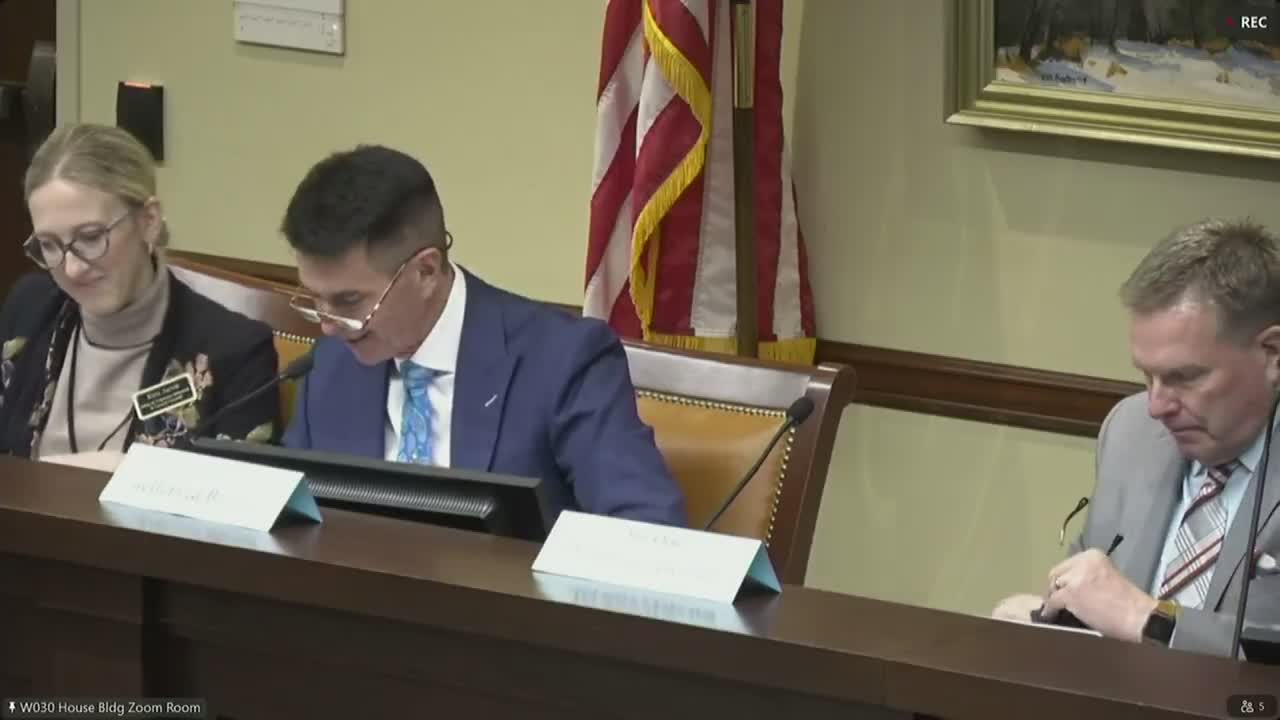
The Government Operations Committee voted to favorably recommend HB223, which sunsets paper petition signature gathering in 2030 and requires e-petition software to scan a driver license (or other valid voter ID) and support offline signature collection by 2028. The measure passed out of committee after debate and public testimony, 7–2.
Representative Jordan Tuscher urged the committee to back House Bill 223, which he said would “sunset the paper signature gathering in 2030” and require the state’s electronic petition platform to scan a driver license (or other valid voter identification) and support offline collection.
Tuscher told the panel the measure is aimed at reducing costs and administrative burdens, improving verification, and broadening access. He cited a grassroots referendum effort that, he said, faced roughly $1,000,000 in printing costs under current law and argued that an electronic system with ID scanning would allow near-instant verification and reduce clerks’ workloads.
Committee members probed technical and privacy issues. Representative Welton asked how electronic signatures match a person’s handwritten signature; Tuscher replied that scanning the ID is the verification mechanism, not holographic signature comparison. Representative Malloy and others asked about the risk of data being stored on phones while offline; Tuscher and clerks compared that risk to existing paper processes and said the bill would mandate secure offline functionality so signatures can be captured without immediate internet access and uploaded later.
Public comment underscored the divide. Kristen Ritchie of Highland asked who would oversee the system and how the public could “see the data or count it” and urged physical proof and published signer lists for transparency. Marilyn Mominey and other citizens said they were willing to try the platform but emphasized the need for published records and transparency; Kenneth Stringham of the Lieutenant Governor’s office warned the platform remained largely untested in real-world signature gathering and cautioned that sunsetting the manual petition process might be premature. Ricky Hatch, representing county clerks, said clerks appreciate the upfront checking and efficiency but remain neutral on the bill because of data-privacy and access concerns.
Representative Stoddard moved to favorably recommend HB223; Representative Michael Peterson offered a substitute motion to hold so the sunset date could be reworked. The substitute motion to hold failed on a roll/voice tally reported as 8–2. The committee then voted to favorably recommend HB223 by a voice vote reported by the chair as 7–2.
Sponsor Tuscher and supporters said the bill sets a target date to encourage adoption while leaving room for the Legislature to adjust timing if systems are not ready. Opponents urged additional transparency, stronger cybersecurity language, and assurances for voters without ID or reliable device access.
The committee sent HB223 to the full House with a favorable recommendation; sponsors and opponents said the Legislature can revisit details in subsequent sessions if needed.