Get Full Government Meeting Transcripts, Videos, & Alerts Forever!
Get email alerts on the School Budget topic
No spam. Unsubscribe anytime.
Business manager warns Homestead Credit Act will squeeze operations fund by about $900,000
Summary
Paul Federle, the district business manager, told the Richland‑Bean Blossom school board the Homestead Credit Act will reduce operations‑fund revenue and that the district plans to use cash reserves in 2026, creating greater financial risk in 2027–28 and prompting calls to lobby state legislators.
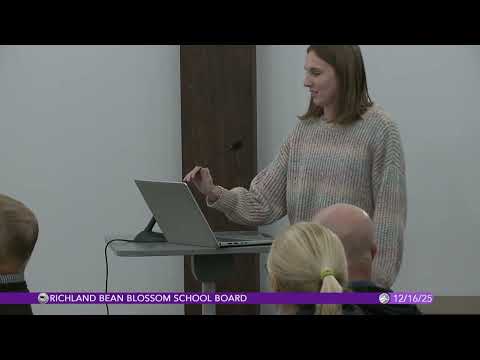
Paul Federle, the district’s business manager, told the Richland‑Bean Blossom Community School Corporation board on Dec. 16 that a change in state policy under the Homestead Credit Act will reduce the district’s operations‑fund revenue by roughly $900,000 next year and that the district is funding the shortfall from its cash balance.
“We’re going to lose $900,000 next year in that operations fund,” Federle said, adding that the budget approved for 2026 assumes using cash balances to cover the gap. He warned that while the district can manage the 2026 shortfall, a deeper cut in 2027 could create “a problem” and that by 2028 the corporation could be “simply out of money.”
Board members pressed Federle on transfer authority and long‑term impact. Federle said the district may increase transfers from the education fund — a measure allowed up to a 15% cap — but cautioned such transfers cannot fully replace lost operations revenue and will create pressure on other funds. “You can transfer up to 15% of your budget and you’re transferring at about 10 or 11%,” he said, noting many corporations statewide are near that ceiling.
Superintendent Dr. Sanders and several trustees described the situation as serious and urged public advocacy. An unidentified board speaker urged residents to contact state legislators, calling the changes “a direct stab at public schools.” Board members said they will examine expense reductions and other options but stressed no final decisions were made at the meeting.
Federle outlined additional budget context: the district’s education fund remains relatively healthy and is enrollment‑driven, but operations costs (utilities, insurance, custodial services) generally rise, limiting places to cut without affecting services. He also said the state has shifted certain local tax streams, which complicates long‑term cash balances for debt service and operations.
What’s next: The board signaled it will study options in early 2026 and urged community members to contact state representatives about the Homestead changes. No formal cuts or budget resolutions were approved at the Dec. 16 meeting.