
Utah committee advances trafficking overhaul that narrows scope, adds mens rea tiers
Get AI-powered insights, summaries, and transcripts
Subscribe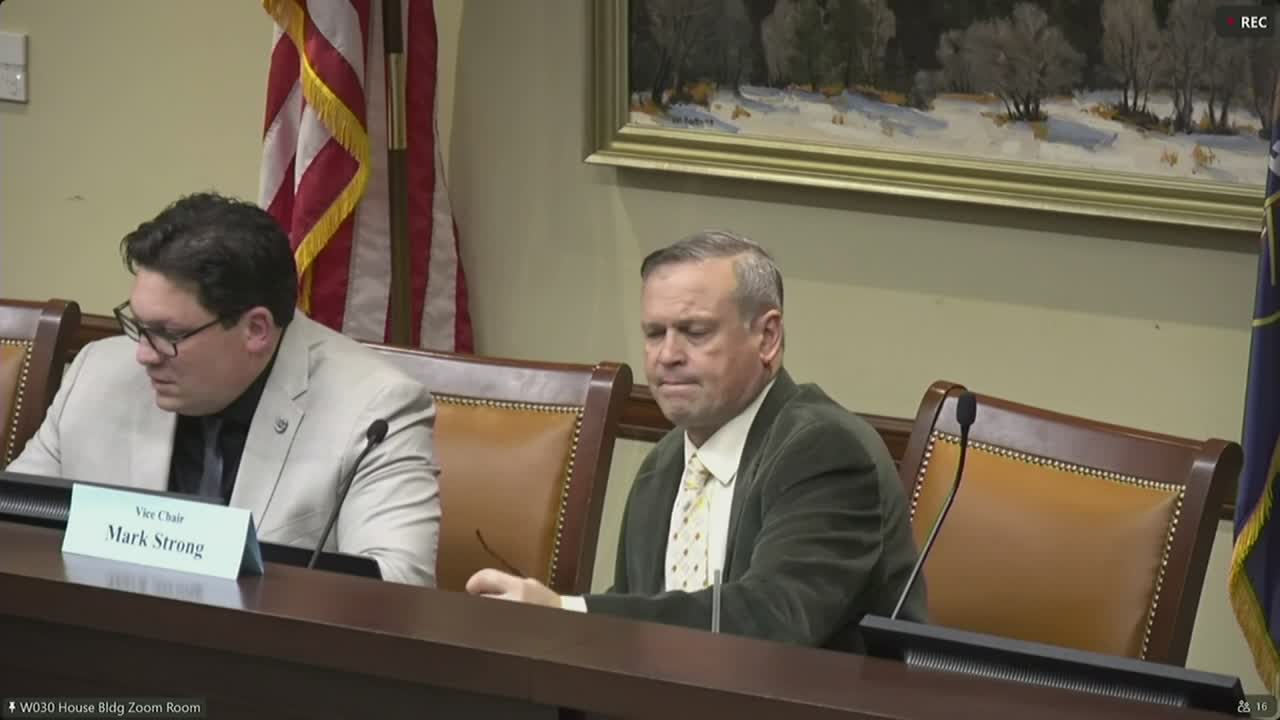
Summary
The House Law Enforcement and Criminal Justice Committee advanced a first substitute to Senate Bill 30 that refines Utah's human‑trafficking statutes by adding mens rea distinctions (knowing, reckless) and defining patronizing offenses; prosecutors and defense counsel said the changes will sharpen charging discretion while protecting good‑faith employers.
SALT LAKE CITY — The House Law Enforcement and Criminal Justice Committee voted to move a first substitute of Senate Bill 30 to the floor after hours of testimony and debate focused on how the state defines and prosecutes human trafficking.
Sen. Musselman, the bill’s sponsor, said the measure preserves the highest penalties for deliberate traffickers while creating narrower categories for cases involving lesser culpability. “That book, just so you know, is 10 years to life,” he told the committee, describing the state’s current maximum punishment. He added that the substitute clarifies separate pathways for labor trafficking and sex trafficking and introduces mens rea tiers so courts and prosecutors can distinguish knowing conduct from reckless or negligent conduct.
Supporters who helped draft the substitute told the committee the change was intended to make prosecutions more precise. Mark Moffett of the Utah Criminal Defense Lawyers Association said the original statute was broad enough to sweep in actors law‑abiding observers might not consider traffickers and praised the recklessness standard as a sensible limit. Brett Robinson of the Salt Lake County District Attorney’s Office said the revision will allow “much more precise” charging decisions and “more just outcomes.” Craig Peterson, director of the justice division at the attorney general’s office, said his office backed the bill and that it removes overbroad language that could lead to prosecutorial overreach.
The substitute also defines so‑called patronizing offenses (for adults, vulnerable adults and children) with distinct mens rea levels: knowing acts would carry more serious felonies, recklessness would be a lesser felony and criminal negligence could be a misdemeanor, a prosecutor explained to the committee.
Several committee members raised concerns about whether ordinary employers or householders could be swept into trafficking charges for hiring undocumented workers. Representative Strong asked whether a homeowner who hires a day laborer could face the same penalties as an “active human trafficker.” Defense counsel and the sponsor said that, under the substitute, liability would turn on proof of the required mental state — reckless or knowing — and on prosecutorial discretion. “I don’t think that that, Senator Musselman’s bill would really get to that,” Moffett said, describing the Home Depot hypothetical as unlikely to meet a recklessness standard in ordinary circumstances.
The committee adopted the substitute and voted to pass the bill to the floor by voice vote.
Next steps: The bill moves to the full House for further consideration; sponsors said technical clarifications will continue as it proceeds.