
Subcommittee advances Del. Watts' bill to require regular resident meetings at CCRCs
Get AI-powered insights, summaries, and transcripts
Subscribe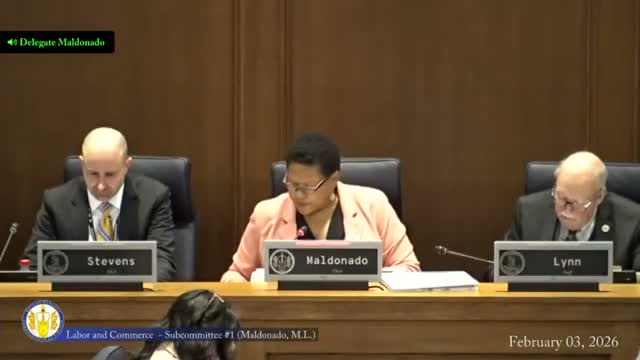
Summary
The House Labor and Commerce subcommittee reported a substitute to HB 476 requiring continuing‑care residential communities to hold regular resident representative meetings and annual CEO meetings; proponents called it a modest transparency measure, corporate witnesses urged further negotiation; committee reported the substitute 8–0.
Del. Delia Watts told the subcommittee that HB 476, as substituted, would require continuing‑care residential communities (CCRCs) to hold regular resident representative meetings at least quarterly and an annual meeting with the CEO to discuss finances and operations. “I represented a continuing care residential community, hereafter CCRC, for 20 years,” Watts said, explaining the proposal grew from residents’ concern that their housing equity and long‑term care commitments be protected.
The bill, Watts said, is deliberately narrow: it requires a resident representative who is not an employee or officer of the provider to participate in specified meetings and focuses on the financial soundness and transparency of CCRCs. “The legislation before you is the minimal,” she said, adding that the measure is intended to facilitate discussion and give residents an avenue to raise concerns.
Witnesses who supported the bill said it would improve communication. Dana Parsons, vice president and legislative counsel for LeadingAge Virginia, said the organization “strongly supports transparency, accountability, and open communication” but asked to continue working with the patron on language. Martha Cole Glenn of the Virginia Continuing Care Residents Association urged the committee to either adopt the unanimously passed Senate version or approve HB 476 as introduced; Glenn outlined a structure of four required resident meetings per year with CEO and board participation for at least two of them.
Herschel Kantor and other residents described surprise management decisions and a culture in some CCRCs that left residents without a reliable forum for financial questions and governance oversight.
Committee discussion focused on the bill’s limited scope and ongoing negotiations with stakeholders. After debate, the subcommittee moved to report the substitute. The motion to report as substituted was recorded and the bill was reported out by voice and roll call with a recorded result presented as 8–0 in favor.
The bill will move forward to the next stage of the process for further consideration and potential refinement with stakeholders.