
Subcommittee splits as hundreds testify on medical aid‑in‑dying bill
Get AI-powered insights, summaries, and transcripts
Sign Up Free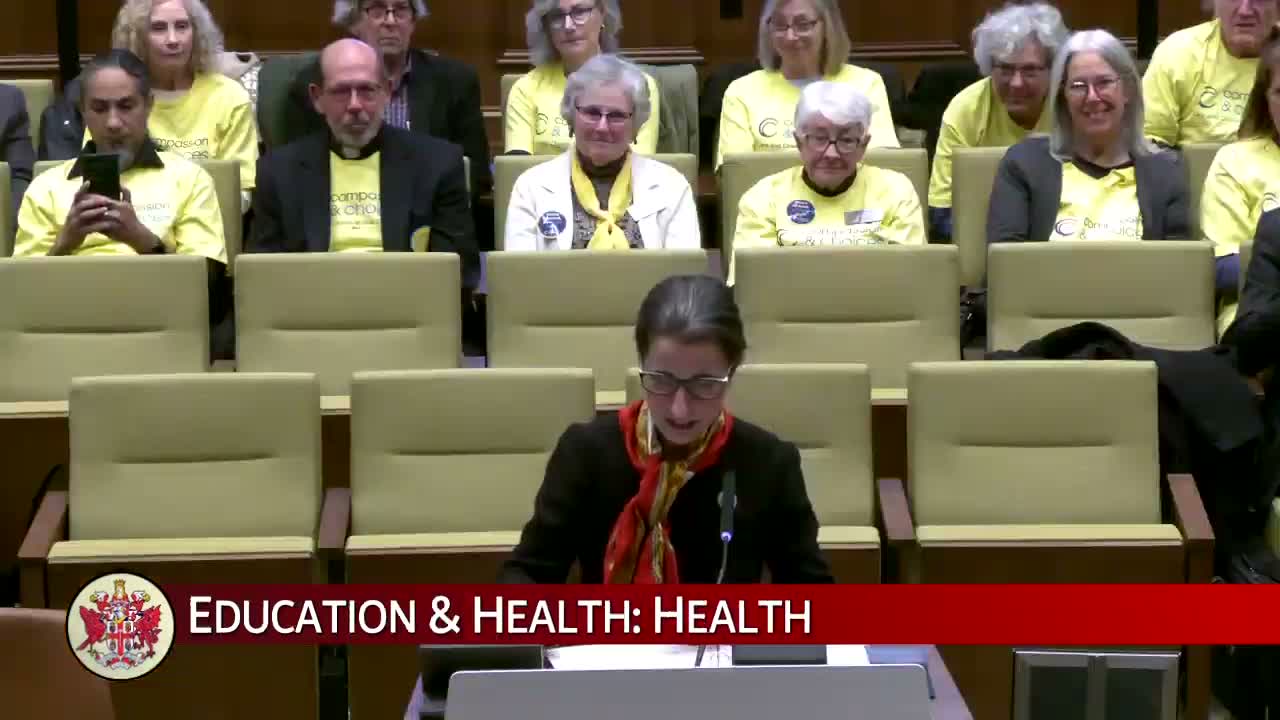
Summary
SB 359, which would create a medical aid‑in‑dying process for qualifying terminally ill adults with multiple safeguards, prompted extensive, emotional testimony from medical professionals, disability advocates, patients and faith groups; the subcommittee recorded motions both to pass by indefinitely (kill) and to report to the full committee for further work.
Senate Bill 359, a medical aid‑in‑dying (MAID) bill, generated the most prolonged and emotionally charged testimony of the hearing. Sponsor Senator Boisco described detailed statutory safeguards: eligibility limited to Virginia residents 18 or older with a prognosis of six months or less; two oral requests separated by at least 15 days and an initial written request signed by a non‑beneficiary witness; independent consulting provider review; mandatory mental‑health referral if concerns about capacity exist; and post‑request confirmation steps before any prescription is issued.
Witnesses and organizations lined up on both sides. Supporters included Compassion & Choices and individuals with terminal diagnoses who said the law would offer control and dignity at the end of life. Constance Musenti, a Nelson County resident facing terminal cancer, said she wants “the legal right to choose medically assisted dying for a humane, peaceful, compassionate end with my loved ones by my side.”
Opponents included the Medical Society of Virginia and disability‑rights groups, who warned the law could undermine the patient‑physician relationship and risk coercion of vulnerable people. Clark Berner of the Medical Society of Virginia said the society changed its position to oppose the bill, arguing it “directly affects and undermines the patient‑physician relationship.” Disability advocates urged that systemic gaps in care and supports can coerce people toward assisted death.
Committee members expressed a range of views: some said the bill included guardrails that could work in practice; others raised concerns about safeguards, monitoring and societal risks observed in other jurisdictions. The subcommittee recorded a motion to pass the bill by indefinitely (effectively kill) and also a motion to report the bill to the full committee; recorded votes and abstentions left the panel divided and the path forward contingent on further consideration at the full committee.