
Senate subcommittee backs creating Clean Water Pay-for-Outcomes fund to target Chesapeake Bay nutrient reductions
Get AI-powered insights, summaries, and transcripts
Subscribe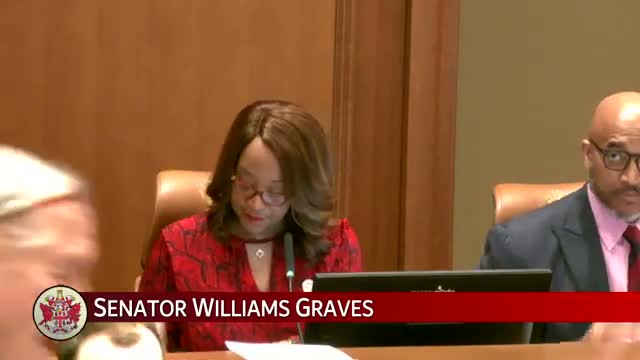
Summary
Senators advanced a substitute to create a Clean Water Pay for Outcomes Fund after testimony that a prior pilot yielded measurable nutrient reductions at a low cost per pound; the substitute will move to Finance for funding consideration.
Senate members advanced a substitute to create a Clean Water Pay for Outcomes Fund intended to fund projects that demonstrate measurable reductions in nitrogen and other nonpoint-source pollution to the Chesapeake Bay.
Sponsor remarks cited a pilot that awarded $19 million to nine projects and reported reductions totaling hundreds of thousands of pounds of nitrogen at an average cost quoted by the sponsor. Jay Ford of the Chesapeake Bay Foundation testified that the pilot achieved strong results and that codifying the fund would allow DEQ to plan for future funding and credit outcome-based projects in Bay restoration accounting.
Ford said the pay-for-outcomes model generates assurance and encourages innovation: project sponsors compete to demonstrate actual pounds reduced and receive payment tied to verified results. "The biggest one is driving assurance...when the state spends money, we know we are getting a return on investment in terms of actual pounds of nutrient reduced," Ford said.
Senators voted to move the substitute toward Finance, where any appropriation would be considered. The substitute itself creates the statutory fund but does not appropriate money; as sponsor remarks noted, creating the fund is the first step to enable future appropriations and program design.
The finance process and subsequent rulemaking or DEQ rule changes would determine how outcomes are quantified and credited within existing Bay-program accounting systems.