
Tennessee treasurer warns criminal-injuries fund could go negative by 2028, praises TCRS performance
Get AI-powered insights, summaries, and transcripts
Subscribe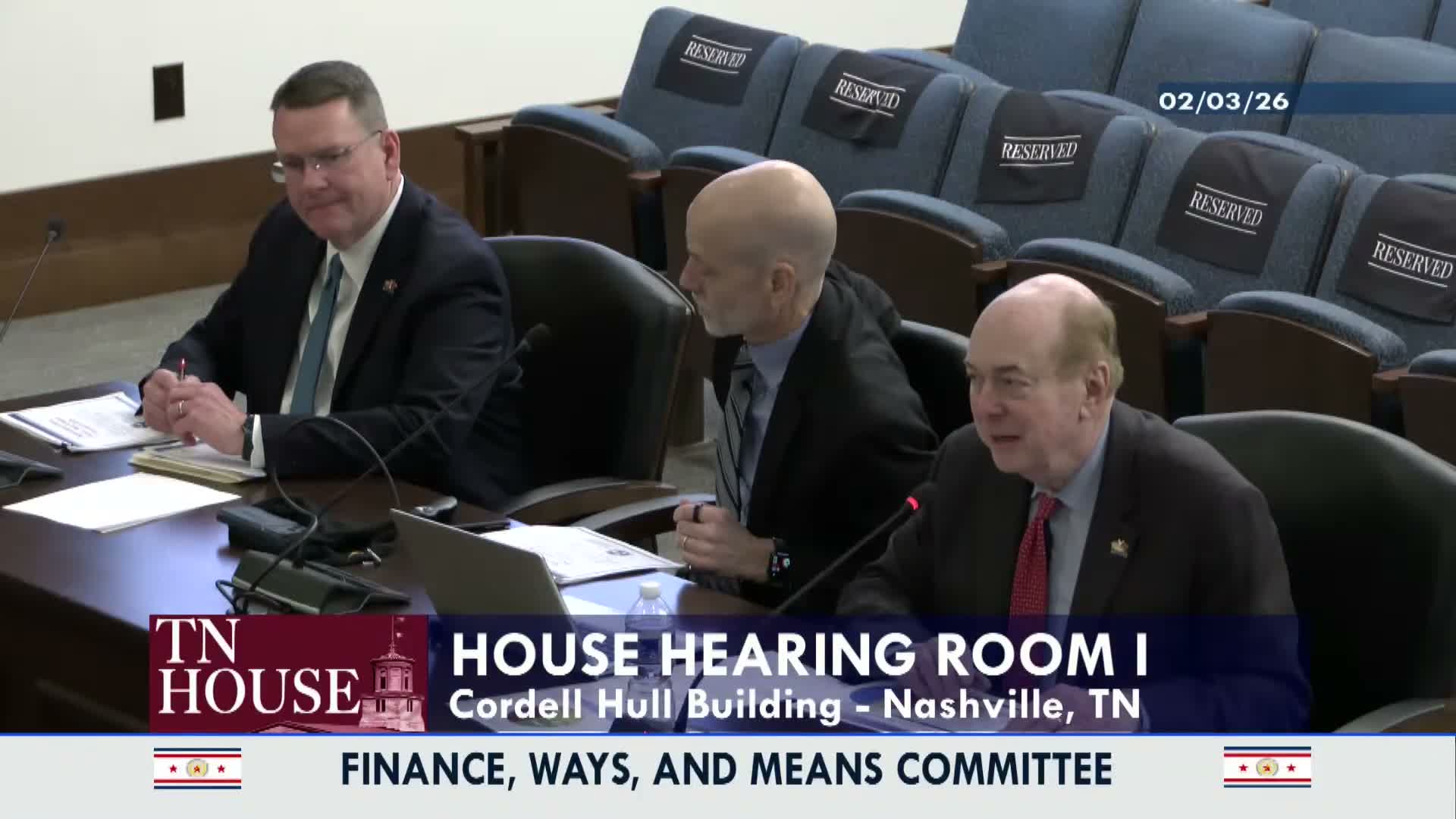
Summary
State Treasurer David Lillard told the House Finance committee that Tennessee's retirement system has strong investment returns but cautioned that smaller special funds, notably the Criminal Injuries Compensation Fund, face structural shortfalls with a projected negative balance by 2028 absent action.
Tennessee State Treasurer David Lillard briefed the House Finance, Ways and Means Committee on Feb. 3, 2026, reporting strong investment performance for the Tennessee Consolidated Retirement System (TCRS) but flagging fiscal stresses in smaller, fee-supported funds.
Lillard told the committee the treasury manages roughly $132.3 billion in pooled funds and reported the TCRS retiree trust at about $75.75 billion as of June 30, 2025, with an unaudited figure near $81.1 billion reported more recently. He said the system has recorded an approximately 8.5% fiscal-year-to-date return and that roughly two-thirds of retirement benefit payments are supported by investment earnings rather than direct taxpayer or employee contributions.
The treasurer emphasized the long-term obligations tied to pension funding and the importance of sustaining investment returns and prudent contributions. "If we can't do that in the treasury department for whatever reason, then we have a situation where that would have to be made up at some point, either by taxpayer dollars or by employee contributions," Lillard said.
Lillard also highlighted a more urgent shortfall: the Criminal Injuries Compensation Fund (CIC). He described declining local collections of the statutory privilege tax and the fund's lagging revenues versus rising claims payments. "We project out that it will be a situation where the, we will go to the point where it's negative in 2028," Lillard said, calling for improved collection transparency and potential legislative action to stabilize the fund.
On the EMIF program (electronic monitoring and DUI interlock fees), Lillard said conviction-driven revenue streams produce more stable collections but noted payment/conviction differences reduce receipts; he said the treasury's FY27 request includes roughly $1.2 million nonrecurring to cover a near-term shortfall in that fund.
Committee members asked about the hybrid vs. legacy pension plans, the effect of market downturns on benefits and the rationale for incremental budgetary TCRS contributions; Lillard reiterated that conservative budget practices avoid projecting volatile treasurer's earnings as recurring revenue and described an incremental $10 million TCRS contribution in the FY27 request as an actuarially recommended step to maintain current funded status.
What happens next: Lillard and treasury staff will supply detail and work with members on transparency steps for CIC collections; any fund plugs or statutory changes would require legislative action and appropriation.