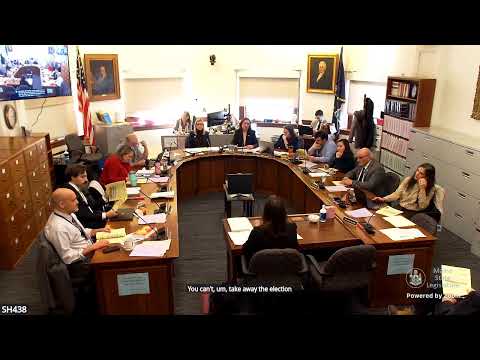
Maine judiciary committee hears mixed testimony on LD 2168 to add buyer assessments for trafficking survivors
Loading...
Summary
Supporters, including survivors and prosecutors, told the Joint Standing Committee on Judiciary LD 2168 would generate dedicated funds for victim services by adding a $500/$1,000 assessment on certain trafficking- and exploitation-related convictions; opponents warned the measure risks harming safety and conflating consensual adult sex work with trafficking.
Representative Holly Stover introduced LD 2168, an act to increase accountability for persons engaged in commercial sexual exploitation and human trafficking and to support victims, telling the Joint Standing Committee on Judiciary the bill would impose an additional assessment to benefit survivors and VCF programs.
The sponsor, Representative Holly Stover, said the proposal would add a $500 assessment for first-time offenders and $1,000 for repeat offenders, with proceeds directed into the state's Victims Compensation Fund to pay counseling, lost wages and medical costs for survivors. She described the measure as a targeted, survivor-centered way to increase funding for under-resourced services.
Supporters included Representative Laurie Gramlich, who joined as a cosponsor and urged an "ought to pass" recommendation, and witnesses who described demand‑reduction approaches that target buyers. Michael Shively, a researcher and evaluator, cited examples from other jurisdictions where fines, educational programs and enforcement produced revenue for survivor services and argued that focusing on buyers reduces market demand. Tricia Grant, executive director of Just Love Worldwide and a survivor, described her experience of trafficking beginning at age 15 and said diversion program participants generally can pay course fees and fines; she told the committee that buyers can afford the proposed assessments and urged passage.
Prosecutors also offered context about current classifications and assessments. Nate Walsh, an assistant district attorney with experience prosecuting trafficking cases, described "engaging a person for prostitution" as a Class E offense and said there are existing statutory assessments directed to the Victims Compensation Fund; he noted state service providers face funding shortfalls and urged options to support survivors statewide.
Opponents warned the bill could have unintended safety and policy consequences. Maggie Zell of SWIRL and Rebecca Cleary, an attorney and advocate for survivors and consensual sex workers, argued that penalizing buyers can push transactions into more dangerous, isolated circumstances, reduce reporting and identification of coercion, and risk conflating adult consensual sex work with trafficking. Zell urged caution pending a full evaluation of Maine's 2023 survivor-model framework (LD 1435) and said Criminal Law Advisory Commission concerns about creating crime‑specific financial penalties should be examined.
Committee members asked procedural and implementation questions. Representatives requested a list of other statutes that direct funds to the Victims Compensation Fund, asked whether current software can track funds earmarked for particular crimes, and asked staff to verify CLAC's findings about waivers and crime‑specific assessments. Representative Lee specifically requested a judicial branch response on how administering the VCF would be affected, to be provided for the work session.
The chair closed the public hearing on LD 2168 after the record of pro and con testimony. The committee did not act on the bill during the hearing; members asked for follow-up information from the judicial branch and analysts before any work session or recommendation.
Next steps: the committee requested written follow-up from staff and the judicial branch about tracking and administrability of designated VCF assessments and will resume consideration at a future work session.