Committee advances bill to extend disabled-veterans excise-tax exemption to leased vehicles
Loading...
Summary
The Joint Standing Committee on Transportation moved LD305 into work session and voted unanimously to report it out as amended to remove retroactivity and make the exemption effective July 1; sponsors said the bill corrects an unintended exclusion for veterans who lease vehicles, while municipal officials warned retroactive refunds would create administrative burdens.
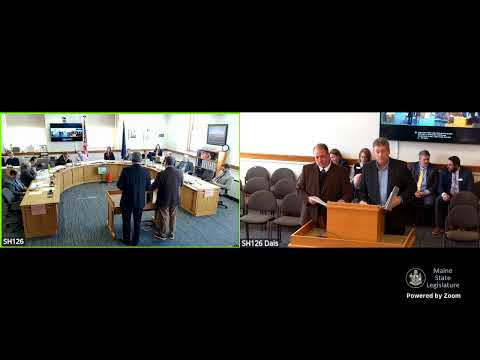
Representative Lydia Crafts introduced LD305 on Feb. 3 before the Joint Standing Committee on Transportation, asking the panel to clarify that certain disabled veterans who lease (rather than own) vehicles should qualify for the motor-vehicle excise-tax exemption.
The bill, sponsors said, would explicitly include lessees who are listed as the registrant (even though a lessee’s name typically does not appear on a vehicle title). Representative Bob Nutting, who sponsored related legislation last session, said the intent is to fix an ‘‘inequity’’ that left medically disabled veterans who lease vehicles without the exemption. "The proposed legislation simply clarifies legislative intent by explicitly including leased vehicles while maintaining appropriate safeguards," Nutting said.
Why it matters: Municipal clerks and municipal associations told the committee that applying the change retroactively to May 30, 2025, could create significant administrative work and potential auditing and cash-flow complications for towns. Anya Trundy, deputy commissioner for the Department of Administrative and Financial Services, said the amendment as drafted ‘‘is retroactive to 05/30/2025’’ and warned that retroactive refunds would be difficult to identify and distribute. "Retroactivity could create costly implementation problems," Emily Cook, deputy secretary of state senior policy director, told the committee.
Maine Municipal Association placeholder testimony from Tanya Emery echoed that concern, noting that expanding exemptions shifts costs to property taxpayers and that MMA would likely recommend removing retroactivity.
What the committee did: Committee members debated whether the bill would impose a state mandate requiring municipalities to reimburse previously collected excise taxes. At work session a member moved to amend the bill to remove the retroactive clause and make the bill effective July 1. The amendment and the motion to report the bill "ought to pass as amended" were approved unanimously by those present.
Next steps: The committee voted to send LD305 forward from work session as amended; the bill will be reported out of committee and proceed through the legislative process with the amended effective date. The committee did not adopt language obligating municipalities to make retroactive refunds.