Committee advances SB 43 to strengthen Land Trust Advocacy Office after 2024 audit
Loading...
Summary
SB 43, a bipartisan response to a 2024 OLAG audit, would strengthen the School and Institutional Trust Lands Advocacy Office with clearer beneficiary lists, spend‑plan/accounting requirements, distribution‑pause authority for large carry‑forwards and clarified director appointment/removal procedures; it passed out of committee with one recorded 'nay' on consent placement.
Senator Owens introduced SB 43 as a comprehensive response to a 2024 OLAG audit of the trust system that evaluated the advocacy office. Liz Mumford (Advocacy Office) and Kim Christie (director of the Land Trust Protection and Advocacy Office) said the study group met over roughly 18 months with beneficiary agencies, attorneys and stakeholders and concluded an independent advocacy office is essential to represent trust beneficiaries, including public education and other institutional beneficiaries.
Key bill elements described to the committee include enumerating beneficiaries and their modern agencies, requiring spend plans and accounting for institutional beneficiaries, creating an avenue for the state treasurer to approve a reduction or pause in distributions when a beneficiary has a large carry‑forward balance, clarifying director appointment/removal to address the office’s at‑will position, and assigning mediation and official‑notice functions to reduce litigation risk.
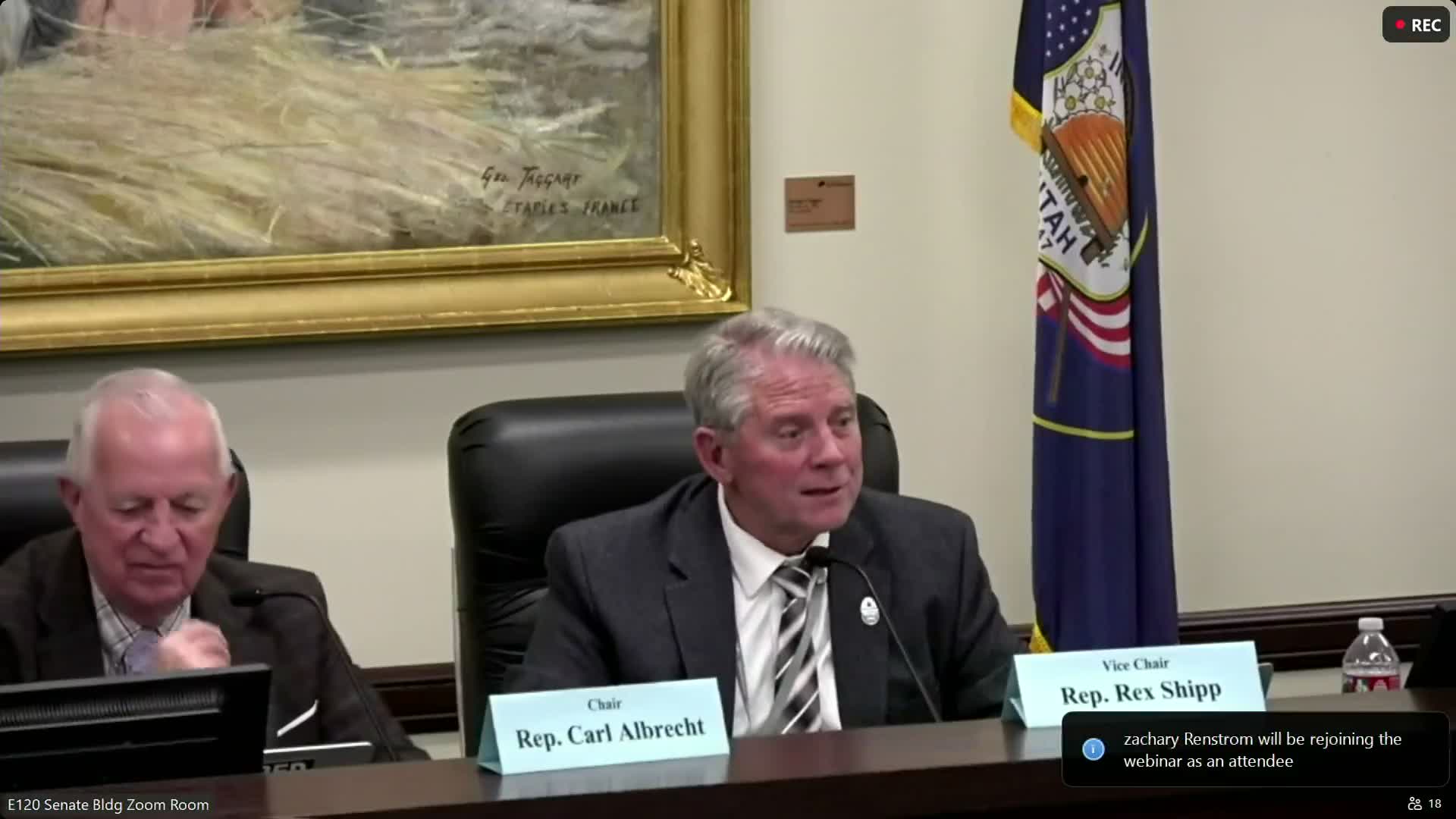
Supporters at the hearing included the Utah PTA, SITLA leadership and superintendents (including a virtual appearance by a school‑district superintendent). Michelle McConkie of SITLA called the final language a helpful clarification that supports trust‑land management and beneficiary communication. The committee voted to pass the bill favorably; one committee member opposed placing it on the consent calendar, indicating the measure should have floor discussion. The bill will proceed to the House floor with a favorable recommendation.