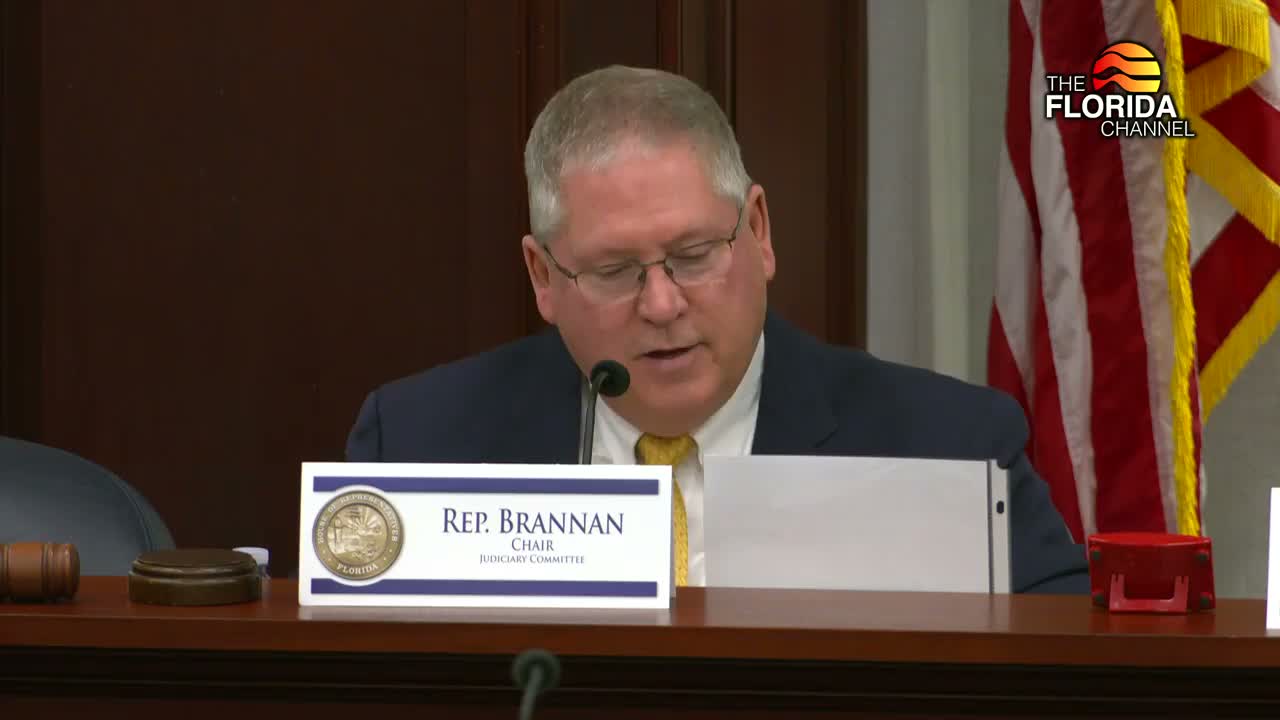
House panel backs bill letting parents seek a second medical opinion in child-protection removals
Loading...
Summary
After extensive public testimony, the Judiciary Committee advanced CS for HB47, a bill that gives parents the right to request a second medical opinion following a child’s removal and sets timelines and a process for resolving conflicting diagnoses.
The Florida House Judiciary Committee voted to report CS for HB47 favorably after a lengthy public-comment period that drew foster-care professionals, attorneys and parents who described cases they said involved misdiagnoses.
Sponsor Rep. Bartleman told the committee the bill “authorizes the parent or legal custodian of a child, after a child is removed from a home, to request a second medical opinion,” and establishes timelines and a process to resolve conflicting diagnoses without weakening protections for genuinely abused children.
Multiple witnesses urged passage. Christie Lee, who worked in foster care for 19 years, said the current process can be “hastily” treated as settled medical fact and stressed that a second opinion is a fairness safeguard. Kim Young, a longtime foster parent, recounted families who lacked time and resources to obtain specialized testing before termination-of-parental-rights proceedings.
Valentina Villalobos, a juvenile attorney, told the committee that child-protection team pediatricians ‘‘are not experts in every area of medicine that may explain the true cause of a child’s injuries’’ and that a second opinion could prevent unnecessary family separations. Anthony Ryan, director at the Office of Criminal Conflict and Civil Regional Counsel, described the measure as ‘‘best practices’’ that can reduce protracted, costly litigation when complex medical issues are involved.
Committee members from both parties praised the bill’s narrow scope and family-safety focus. The measure passed the committee on a roll-call announced by the clerk and was reported favorably as amended.
Next steps: Sponsors said the bill includes time limits and a structure to resolve differing medical opinions; implementation will require coordination between child welfare agencies, defense counsel and medical providers.