Get Full Government Meeting Transcripts, Videos, & Alerts Forever!
Get email alerts on the Traffic Calming topic
No spam. Unsubscribe anytime.
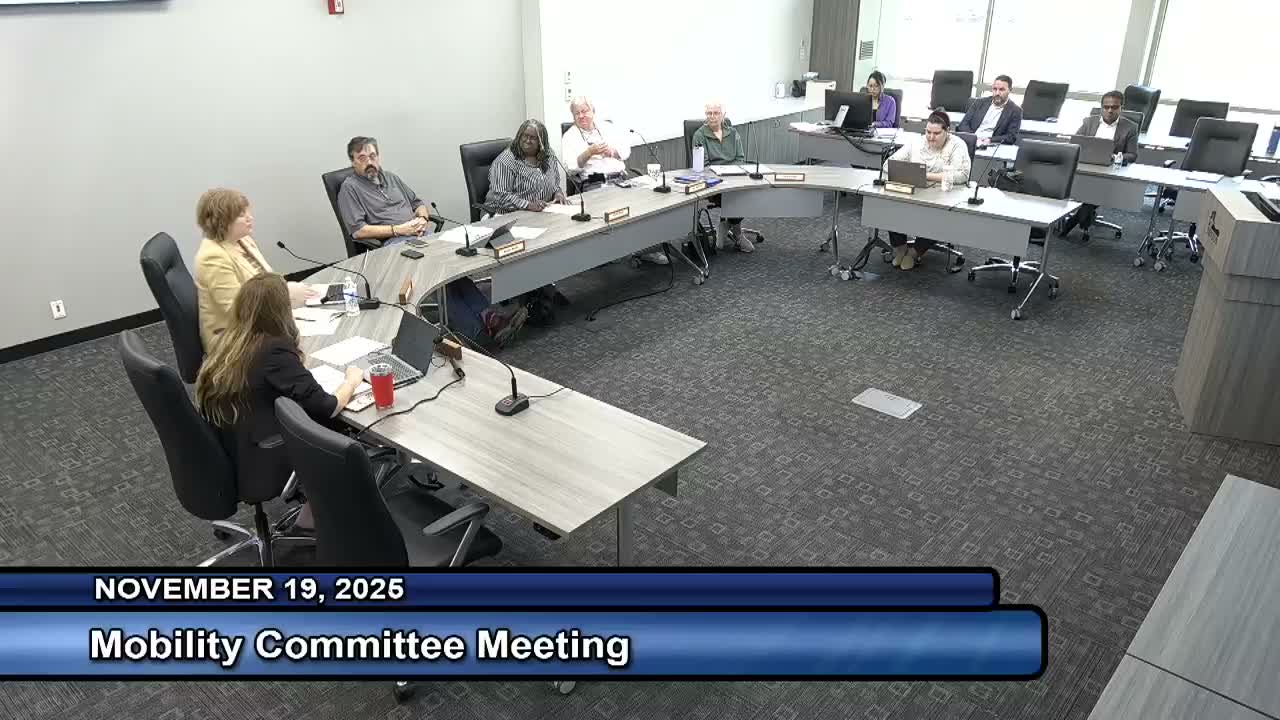
Committee discusses neighborhood traffic calming and community buy-in for quick-build ideas
Summary
Committee members pressed staff on neighborhood-scale traffic calming and a possible quick-build program; staff said previous meetings showed mixed neighborhood support and recommended a structured multi-step engagement process before deploying public funds.
Members asked whether the city can offer a quicker, lower-cost program for neighborhood traffic calming while larger reclassification and reconstruction projects remain years away. Member 2 proposed a neighborhood-driven two-step process in which staff quickly assesses what is possible on a street and then residents work locally to secure buy-in and present a mock-up before staff spends major resources. "Maybe it's like a 2 touch point thing where if a neighborhood even finds out before somebody goes, we wanna do all these things...then it's my responsibility to get the neighborhood buy in," Member 2 said.
Farhan Bhatt said staff has attended multiple community meetings on traffic calming but often found limited active support when broader neighborhood opinion was solicited. He urged leadership to develop a clear process so staff resources are spent only when community consensus exists, recommending several rounds of meetings involving council members and planning and zoning representatives before public dollars are committed.
Members also discussed the limitations of signage alone and the state rules that constrain posted residential speeds; Bhatt noted the state typically sets 30 mph as the residential posted speed and that exceptions (20 mph school zones or lower posted speeds at proven safety hotspots) require a formal application to the state with supporting evidence. The committee asked staff to consider ways to improve outreach and to craft materials that help residents visualize changes before large expenditures are made.