Get Full Government Meeting Transcripts, Videos, & Alerts Forever!
Get email alerts on the Design Criteria Manual topic
No spam. Unsubscribe anytime.
Denton staff outline Design Criteria Manual updates, propose polypropylene pipe and sediment controls
Summary
City staff presented proposed updates to the City of Denton Design Criteria Manual including allowing polypropylene pipe for stormwater, requiring larger developments (>1 acre) to remove most suspended sediment on-site, a new 'major collector' roadway classification, geotechnical and cathodic protection requirements, and a mid-January public hearing with an anticipated Feb. 1, 2026 effective date.
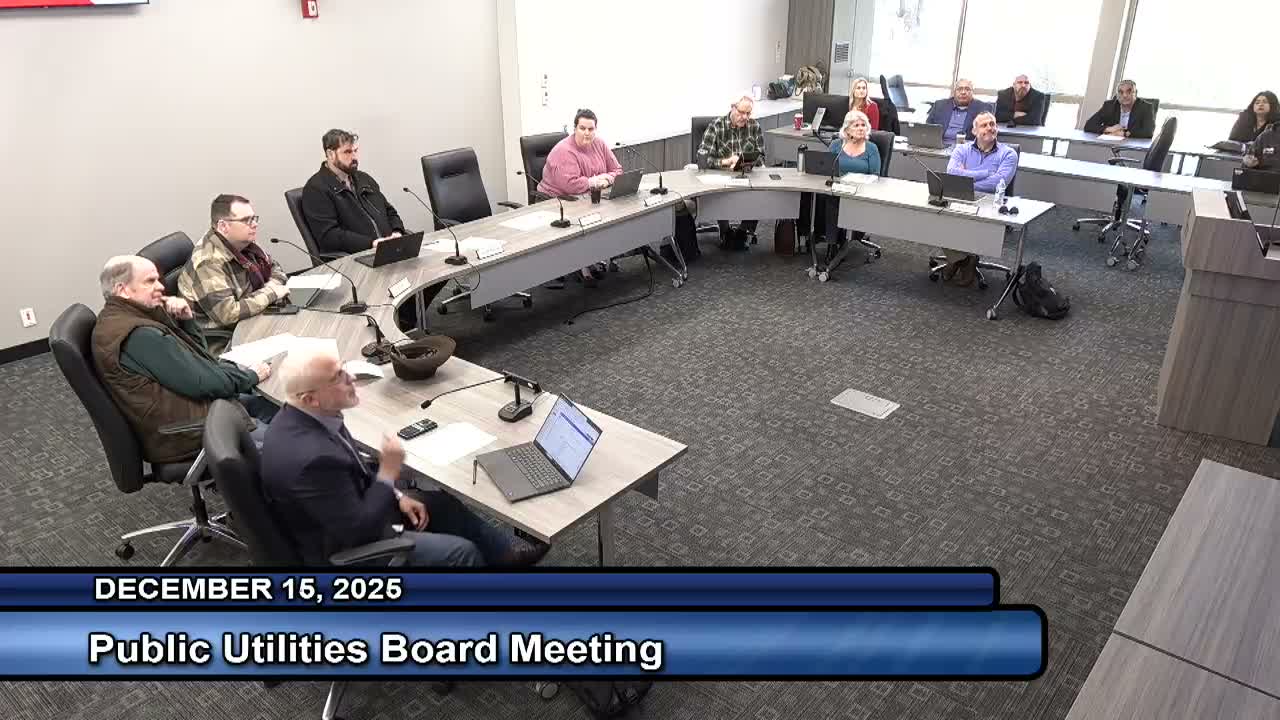
City staff presented a work-session update on proposed revisions to the City of Denton Design Criteria Manual, explaining the document's role in guiding engineering design for public infrastructure and outlining public outreach and next steps.
Mike Linder, the city's drainage engineer, said staff published a draft in October and plan a public hearing in mid-January with an anticipated effective date of Feb. 1, 2026. Among the substantive proposals, staff recommended allowing polypropylene as an approved stormwater pipe material after a yearlong review of vendor experience and peer-city practices and recommended making sediment-removal measures mandatory for larger developments. "We're proposing to require larger developments disturbing greater than an acre remove a majority of suspended sediment from the storm water before it leaves their site," Linder said, and staff asserted the change could reduce public maintenance costs and align the city with likely future regulatory expectations.
The transportation section would add a new 'major collector' classification to better accommodate multimodal needs in urban areas and remove a blanket traffic-impact section in favor of site-specific TIA scoping. Staff also proposed requiring geotechnical studies and cathodic protection where corrosive soils threaten metal pipe lifespan and offered updates to lift-station planning and street-lighting processes. Rakeebu Alam, principal transportation planner, explained technical parameters for the major collector classification and used Windsor Road as an example.
Board members asked detailed questions about polypropylene's structural properties, removal of publicly facing utility system maps for security (staff said maps were removed after hazard/vulnerability work and that developers can request data at no cost), and streetlight styles and request processes (explained by Aaron Beny of DME).
Staff characterized the presentation as informational and invited feedback before the scheduled public hearing.