Get Full Government Meeting Transcripts, Videos, & Alerts Forever!
Get email alerts on the Development Infrastructure topic
No spam. Unsubscribe anytime.
Council approves Hunter Ranch cost‑sharing and agreement amendments including $13M city share for wastewater trunk main
Summary
Council approved a cost‑sharing agreement and amendments related to the Hunter Ranch (Landmark) development that allocate approximately $13 million of the Rourke Branch trunk main construction cost to the city and clarify 'developer' definitions and reimbursement processes; all related ordinances passed unanimously.
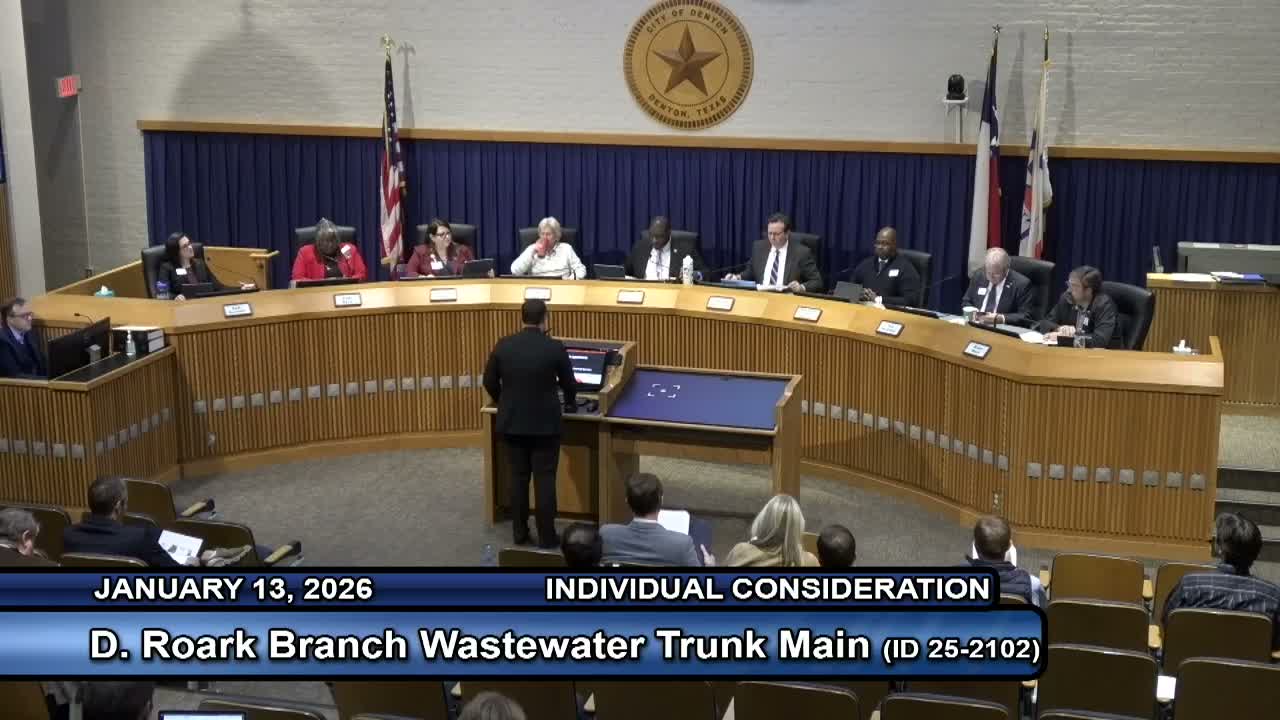
Charlie Rosenkall, Interim Director of Development Services, presented three related items for Hunter Ranch (also called Landmark): (1) a cost‑sharing agreement for the Rourke Branch wastewater interceptor and associated escrow arrangement; (2) a second amendment to the Hunter Ranch operating agreement to clarify funding and allow certain supplemental projects to proceed under the district’s taxing authority; and (3) a third amendment to the project agreement to refine definitions of "developer" so future buyers of platted property are not treated as developers under the agreement.
Rosenkall said the cost‑sharing methodology considered both a traditional oversizing approach (city pays ~24% of construction costs) and a benefits‑received methodology using wastewater flow apportionment. Based on benefits received, the city would pay a proportionate share of flow contributions; the presented breakdown showed an approximate city contribution of $13,000,000, Hunter Ranch/Hillwood $11,500,000 and Coal Ranch $4,500,000. Rosenkall noted that not upsizing the line now could require a second line within the next 10 years at an estimated $13M–$20M additional cost.
Council asked clarifying questions about risk allocation, whether serial projects increase exposure, and how future developers would be treated. Staff said the amendments clarify who is treated as the developer and how supplemental projects can be funded and reimbursed. Council approved the items (motions and roll‑call votes), each passing 7–0.
Rosenkall said construction is already underway for certain single‑family components and that the agreements align with earlier development‑agreement expectations for a master‑planned community.