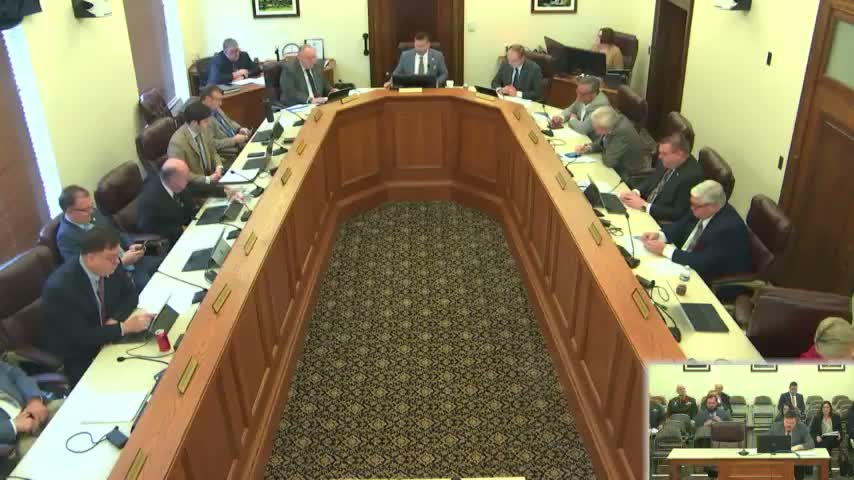
Adjutant general outlines Guard funding, construction plans and workforce constraints
Loading...
Summary
Adjutant General Jim Seward told the Senate Finance Committee the West Virginia National Guard is "about 6,000 strong," reported an $870 million estimate of supported economic activity, and described planned projects and deferred maintenance needs while answering senators’ questions about training and revenue opportunities.
Charleston — Adjutant General Jim Seward told the Senate Finance Committee on Tuesday that the West Virginia National Guard is "about 6,000 strong" and presented a budget outlook that emphasizes federal partnerships, capital projects and personnel management.
Seward said the Guard received about $18.9 million in state funding in fiscal year 2025 and roughly $491 million in total federal expenditures, figures he used to calculate an estimated $870 million in total supported economic activity for the state. "That's just the dollars," he said, describing the economic multiplier from federal investment.
He outlined several construction and renovation projects: joint force headquarters, Bluefield Readiness Center and Parkersburg Readiness Center, with design and contract milestones in 2026. He highlighted a Martinsburg Armory replacement with an estimated total cost of about $26 million, approximately 75% federal and 25% state-funded.
Seward also reviewed internal savings and workforce numbers, noting 635 state FTEs in the military authority and that many state positions carry a federal funding share. He flagged deferred maintenance needs — primarily roofs and HVAC — projected through 2031 and said some projects do not yet have identified state funding.
Senators questioned revenue-generation opportunities and constraints on using Guard personnel for paid training projects. Seward said the pool of opportunities has narrowed because of federal reimbursement rules and emphasized that Guard training priorities have shifted toward large-scale combat operations, limiting time available for community training projects.
Committee members thanked the Guard leadership for service and the presentation concluded with Seward offering to provide written follow-ups on specific questions about stored generators and program details.
The presentation will inform the committee’s budget deliberations as members reconcile state funding requests with federal partnerships and capital needs.