
Kerr County pauses on fire marshal hire but signs contracts for technical and legal reviews after battery‑storage proposals
Get AI-powered insights, summaries, and transcripts
Subscribe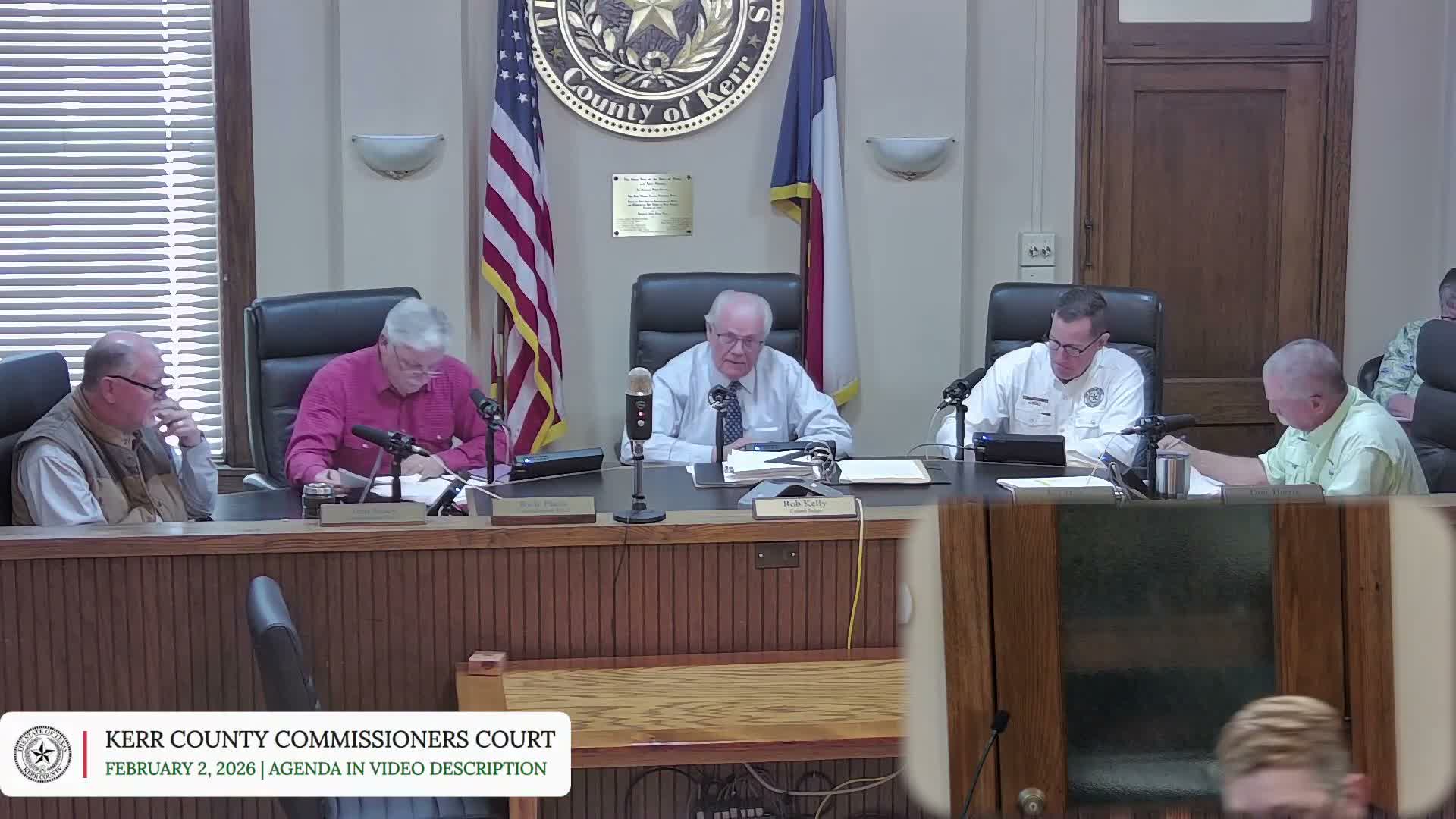
Summary
After developers paused two proposed battery energy storage projects and Governor Abbott moved to restrict certain battery technologies, Kerr County approved contracts for a technical consultant and outside counsel while a motion to hire a part‑time fire marshal failed; commissioners deferred final action until legal advice is received.
KERRVILLE, Texas — Kerr County commissioners on Monday discussed a string of developments around proposed battery energy storage projects, approved contracts for technical and legal reviews and declined, for now, to hire a part‑time fire marshal that would have enabled a local permit and fee schedule for such facilities.
Commissioner Pesos reported that Eastpointe Energy notified county officials it will no longer pursue a planned 250‑megawatt battery energy storage site on Flat Rock Creek; Key Capture Energy’s nearby project was also placed on hold. Pesos said the Mountain Home project by S Volta remains listed with ERCOT. Pesos told the court he believes community pushback, intercounty coordination and recent state restrictions influenced developers’ decisions.
Why it matters: Commissioners said the issues raise public safety and regulatory questions — including missing attestations required by the Lone Star Infrastructure Protection Act, cybersecurity and thermal‑runaway risks — and they sought outside expertise before changing county rules. Residents have pressed the court for stronger local authority to review and limit battery projects.
Contracting consultants and counsel: The court rescinded an earlier order and approved a new contract with Columbia Power Systems Inc. to provide technical consultant services, with Dr. Robert Steele contracted to review developer submissions and related safety documentation; commissioners set spending controls, amending the contract to cap total spending at $25,000. Separately, the court approved a fee agreement with outside counsel (Taylor Olson | Atkins et al.) not to exceed $5,000 to advise on legal authority and potential litigation strategy. Both votes were unanimous.
Public comment and the fire marshal proposal: Dozens of residents and speakers urged strong local action. Audrey Burner, who has led public opposition to several battery projects, urged commissioners to hire a fire marshal empowered to adopt an emergency management energy storage system guide and a permit and fee schedule similar to Kendall County’s. Barbara Ferguson and others suggested a limited, contract‑based marshal whose work would be funded by permit fees and narrowly scoped to avoid accusations of targeted enforcement.
Fiscal and legal caution: Several commissioners and the judge expressed support for stronger oversight but questioned the timing and cost given recent county fiscal strains; one commissioner said the county faces a significant budget shortfall and preferred a cautious, time‑limited approach. The motion to hire a part‑time, contracted fire marshal immediately failed on a 2‑2‑1 tally; commissioners agreed to return to the issue after receiving the outside counsel’s legal analysis.
Next steps: The court directed staff to bring the outside counsel into a future meeting and asked the technical consultant to prepare a prioritized list of deficiencies in developer filings. Commissioners said they will use those findings to decide whether to adopt a limited permit and fee schedule or pursue interlocal arrangements with neighboring counties.
What the court voted: The county approved the technical consultant engagement (rescinding the prior order) with amended spending limits and authorized the county judge to execute a fee agreement for outside counsel not to exceed $5,000. The motion to hire a part‑time fire marshal and adopt a permit and fee schedule did not pass; commissioners asked for a legal opinion and further cost estimates before revisiting the proposal.