Senate committee recommends SB48 to enable $92M bonds for State Fairgrounds redevelopment
Loading...
Summary
The Senate Finance Committee gave SB48 a due-pass recommendation to permit up to $92 million in bonds to buy a small privately owned parcel and pay infrastructure and demolition costs aimed at creating green space and traffic calming near the State Fairgrounds; the measure drew wide local support and two no votes on fiscal and access concerns.
Senator Stewart opened debate on SB48 by framing the bill as a technical follow-up to last year's legislation that created a tax-increment development district for the State Fairgrounds. The proposal would allow the fairgrounds district to use roughly 75% of gross receipts and gaming tax revenue generated by the district to pay debt service on up to $92 million in bonds for an initial phase of work on the southwest corner of the property.
Supporters from business and local government described the package as a limited, necessary step to improve safety and neighborhood conditions. Janice Torres, president of Blue Cross Blue Shield of New Mexico and chair of the Greater Albuquerque Chamber's Public Safety Bold Issues Group, told the committee that revitalization could "serve as a catalyst for reducing the property crime, burglaries, and drug activity" around the International District. Bernalillo County Commissioner Adrienne Barbola urged investment while objecting to portrayals of the community as blighted.
Sponsor Sen. Stewart and financial adviser Justin Horowitz explained the mechanics in committee: the bonds would primarily fund infrastructure (water and sewer), site clearing and grading, demolition of about 25 structures, horizontal improvements for future private or public development, sidewalk expansion, and traffic-calming measures on Central and San Pedro. Horowitz said about $8.6 million of the authorization would be used to buy a privately held portion of the southwest corner; most of the acreage involved is already state-owned and was not part of the acquisition costs.
Lawmakers pressed details about fiscal impacts and scope. Several senators sought clarity on whether the measure increases tax rates (it does not), whether redirected revenue would reduce general fund receipts (the sponsor acknowledged the district will use tax receipts that otherwise would flow to the general fund), and whether bond proceeds could be used for security or cameras (Sponsor: no; the funds are dedicated to infrastructure). Stewart said Stantec produced the cost estimates and stakeholder outreach the district used to design the initial phase.
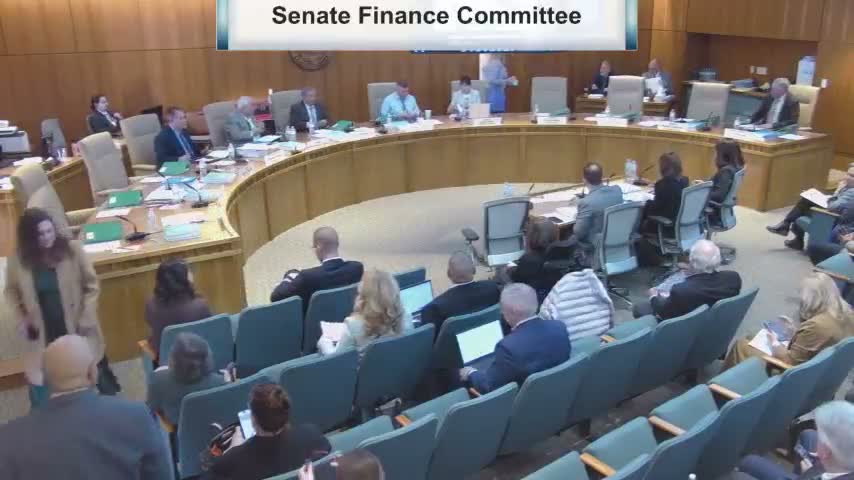
After questions the chair called a motion for a due-pass recommendation (mover: Senator Gonzales; second: Senator Padilla). The clerk recorded the roll call and the committee issued a due-pass recommendation, 8 in the affirmative, 2 in the negative. The two negative votes named on the record were Senator Lanier and Senator Woods. The committee's vote advances SB48 to the next legislative stage with the committee's recommendation.
Next steps: The bill will advance to the full Senate for further consideration; sponsor and stakeholders said additional planning and approvals would be required before larger redevelopment or any land-use changes on state-owned acreage.